Department of Biology, Indiana University-Purdue University Indianapolis, Indianapolis, Indiana 46202.
Department of Neuroscience and Center for Smell and Taste, University of Florida, Gainesville, Florida 32603.
eNeuro. 2023 Mar 13;10(3). doi: 10.1523/ENEURO.0360-22.2023. Print 2023 Mar.
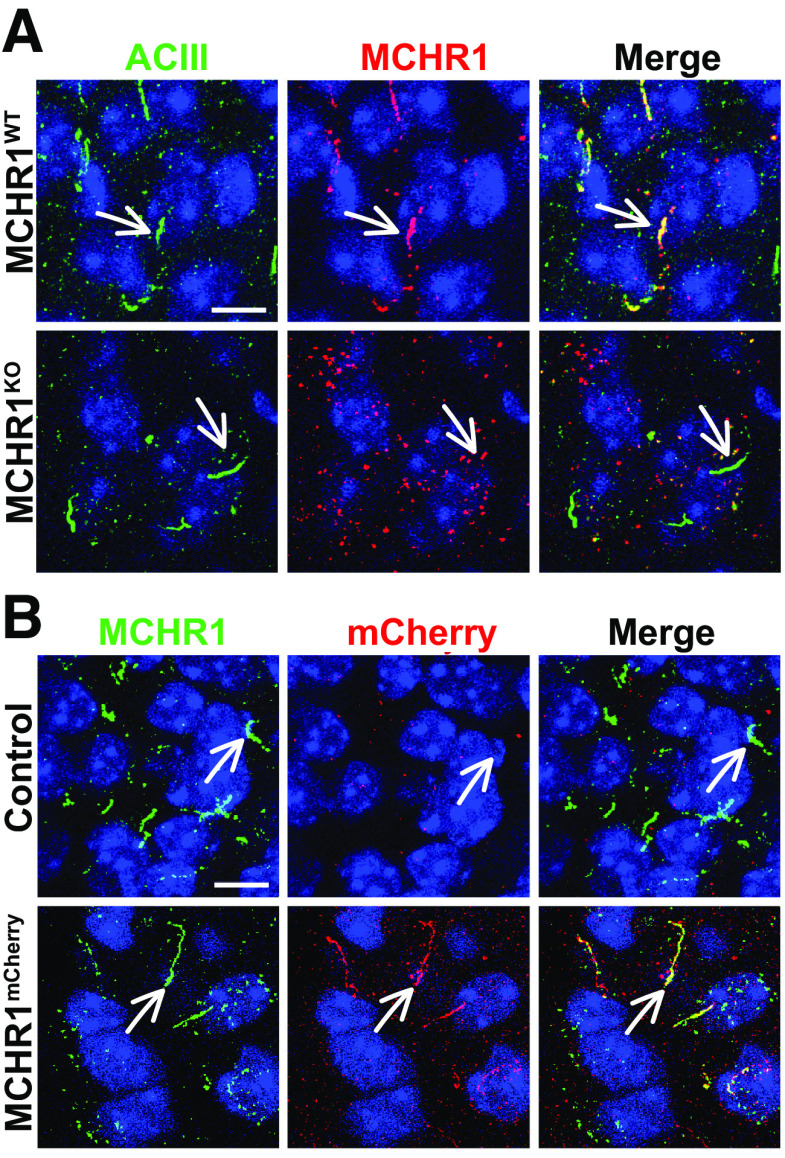
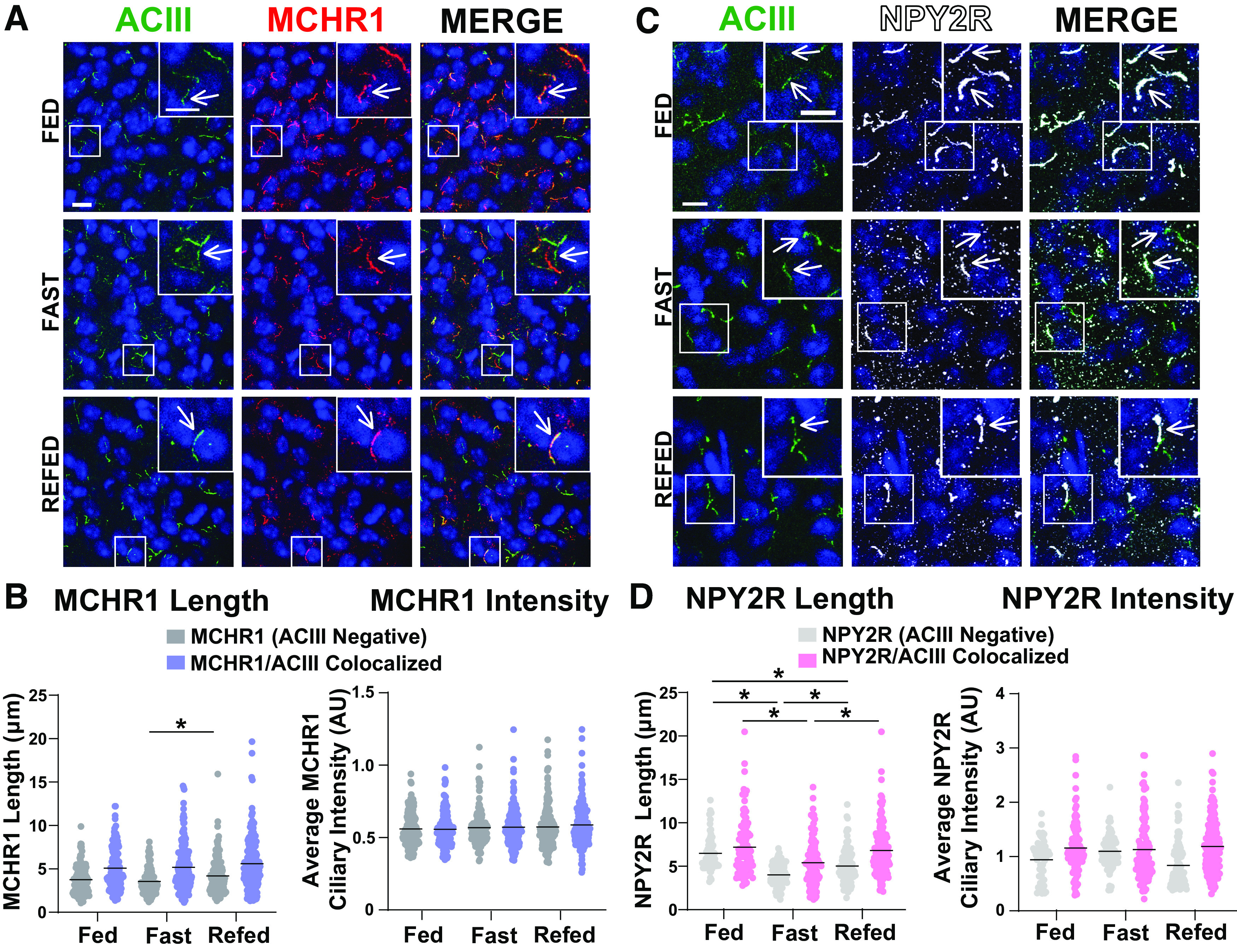
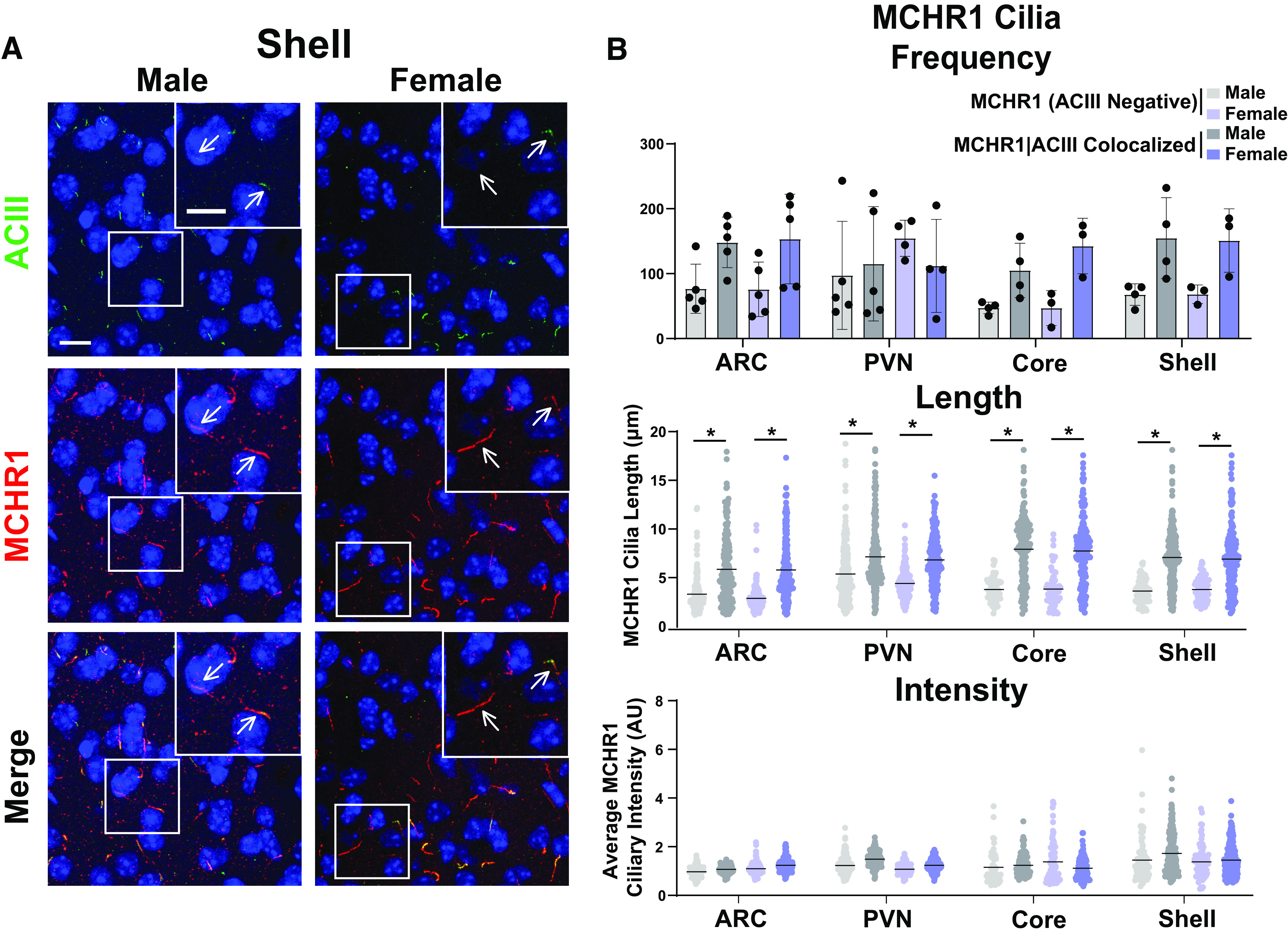
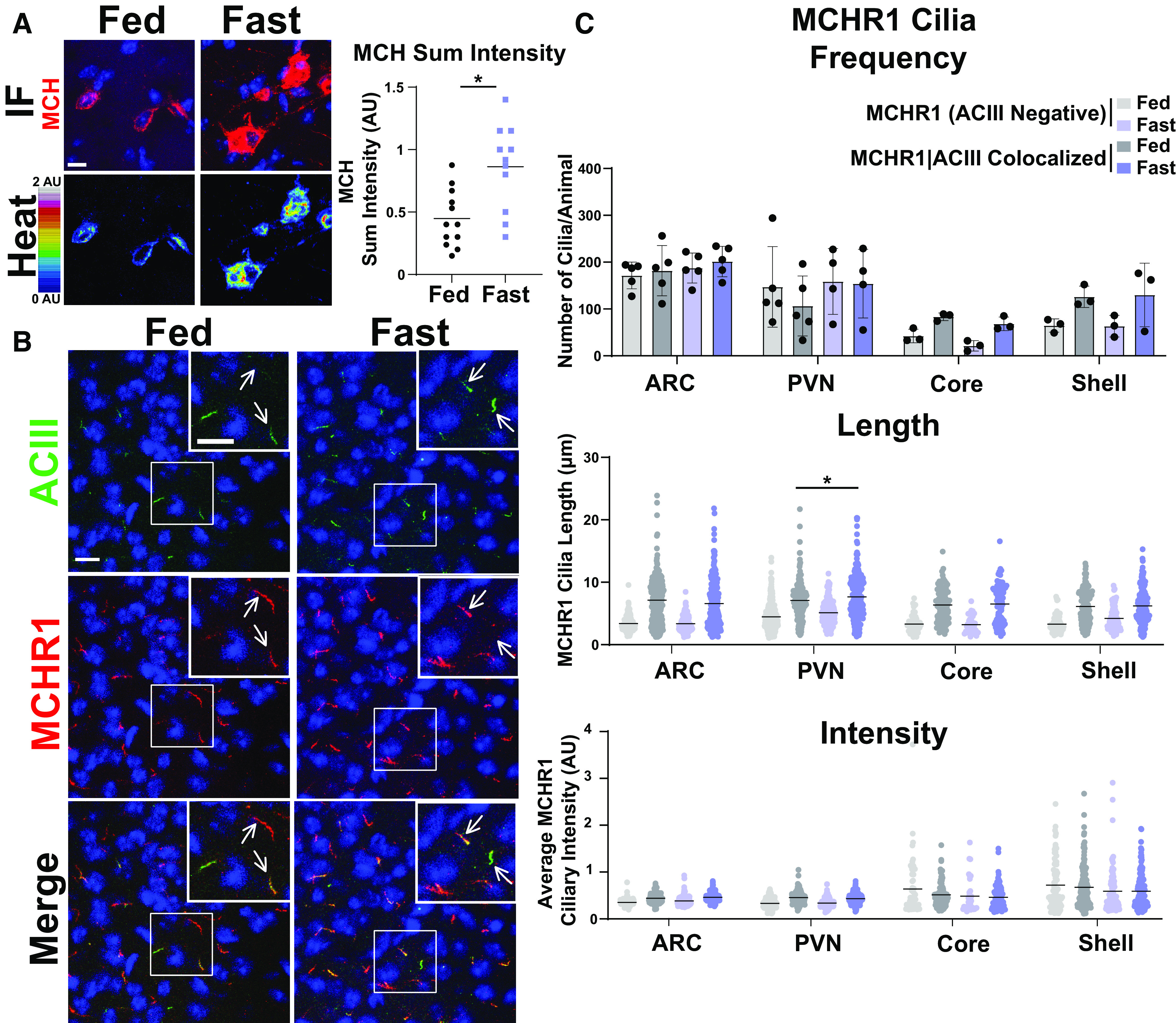
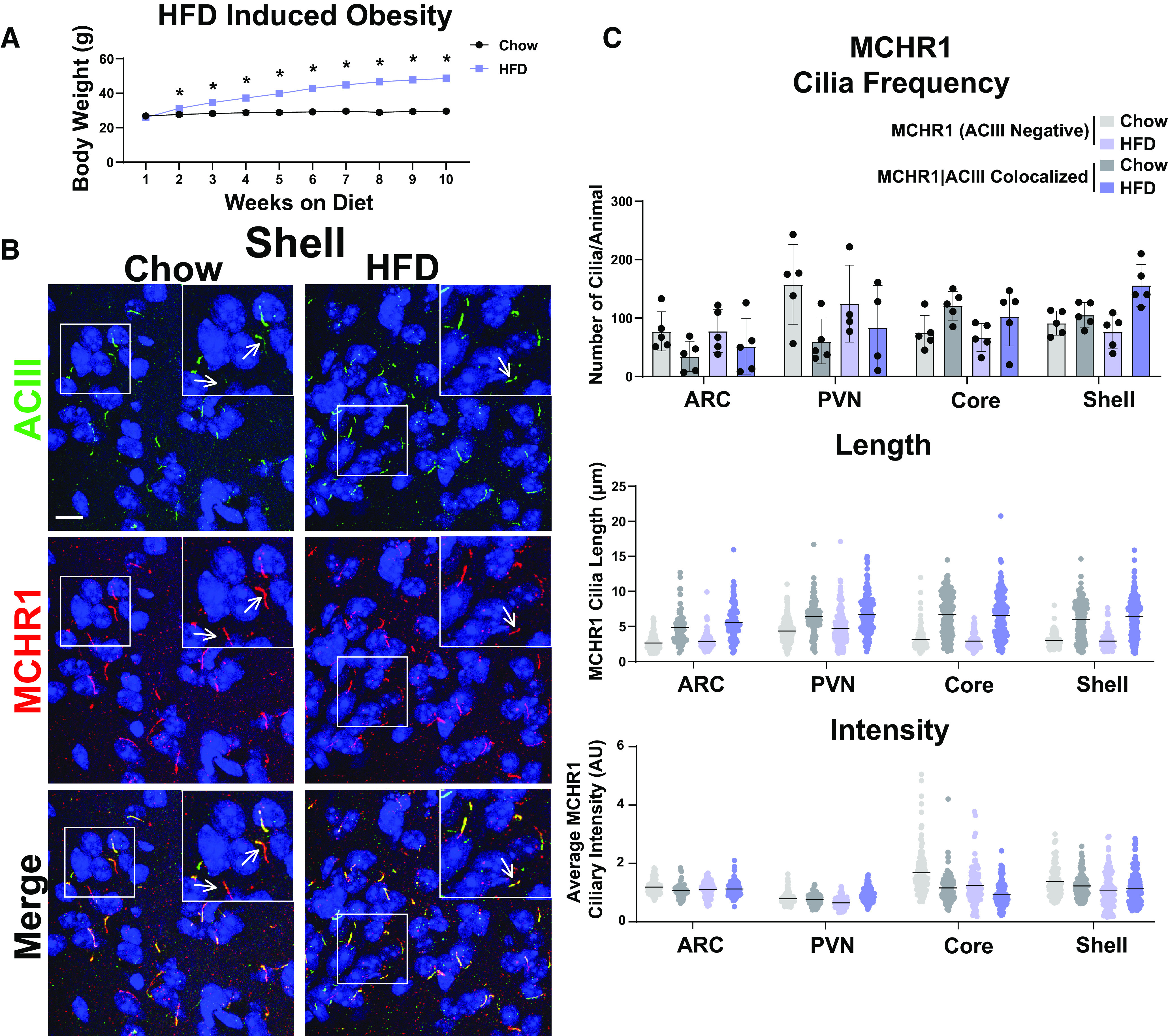
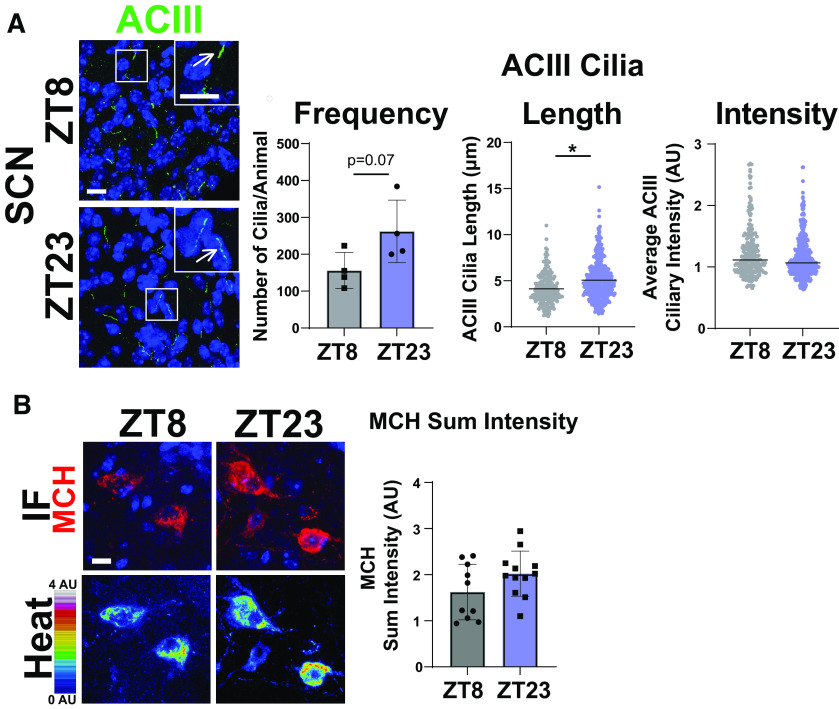
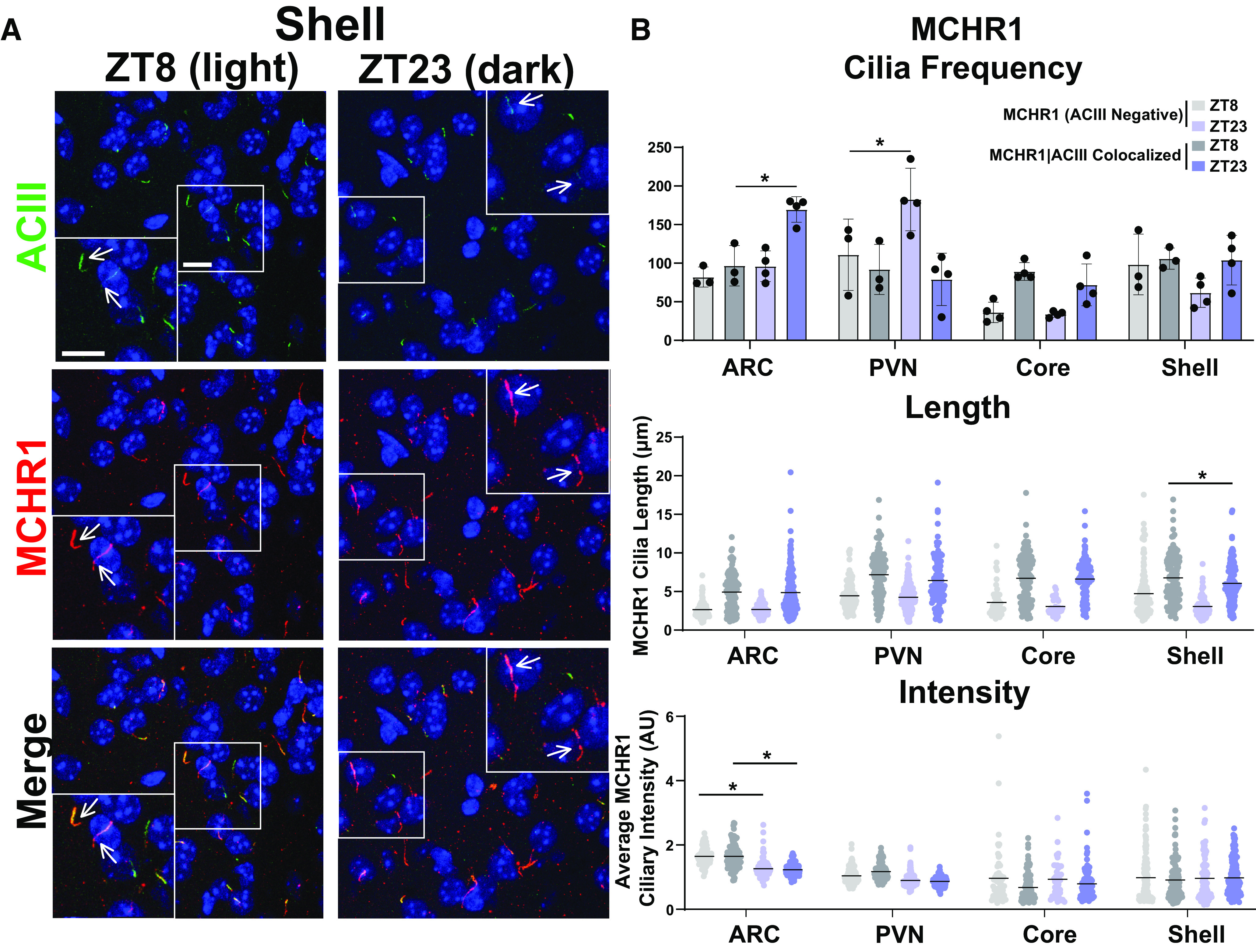
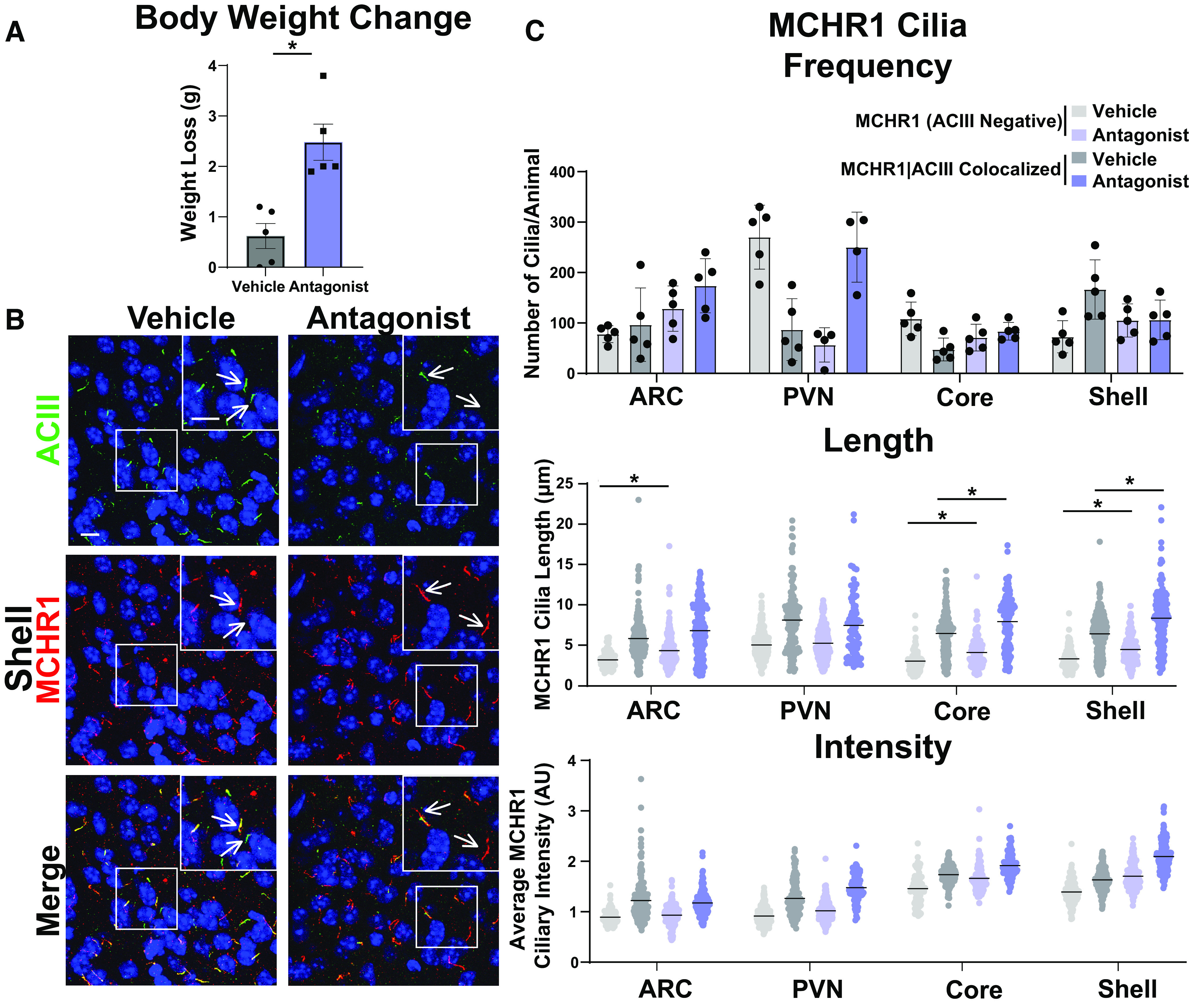
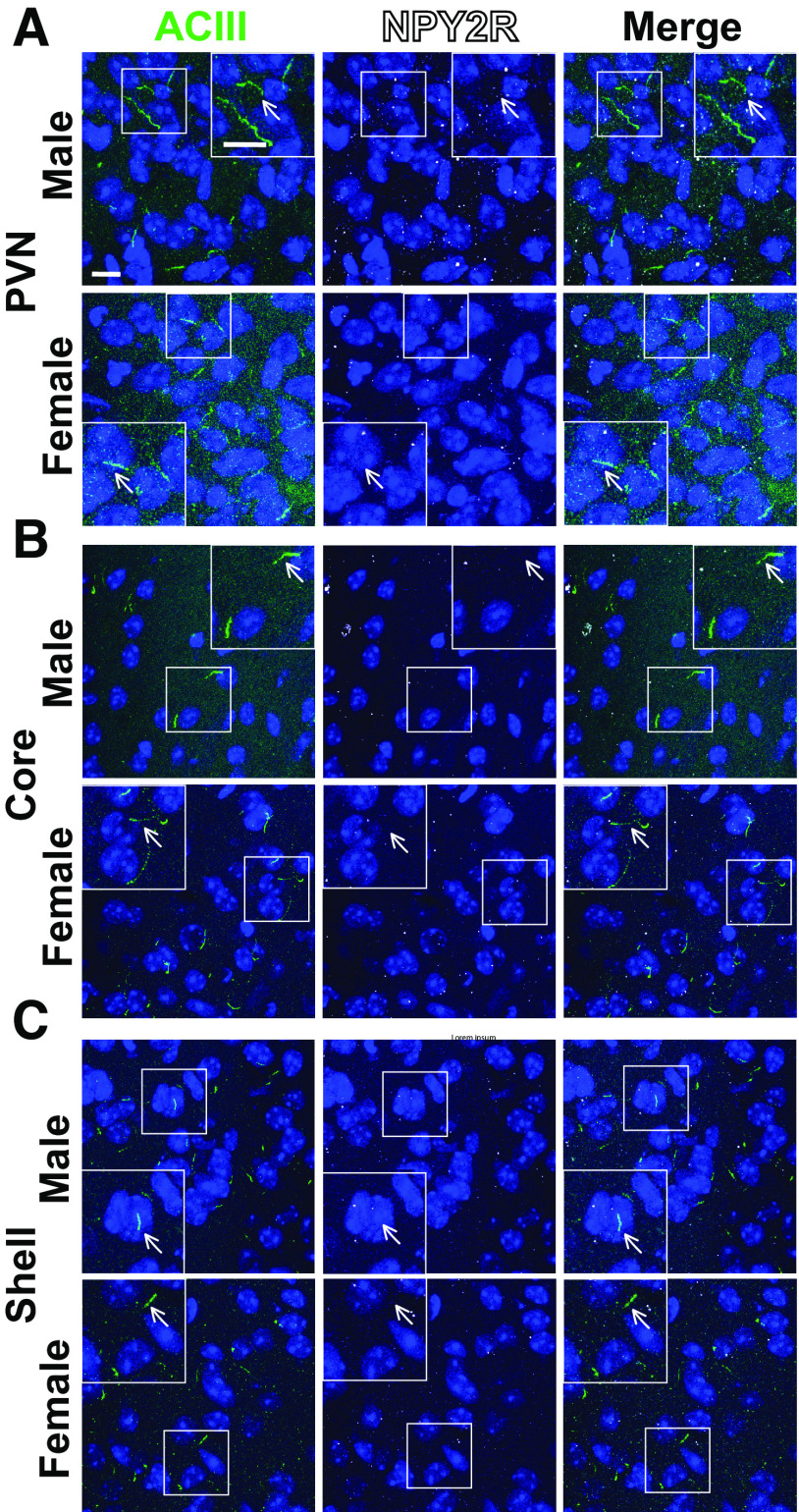
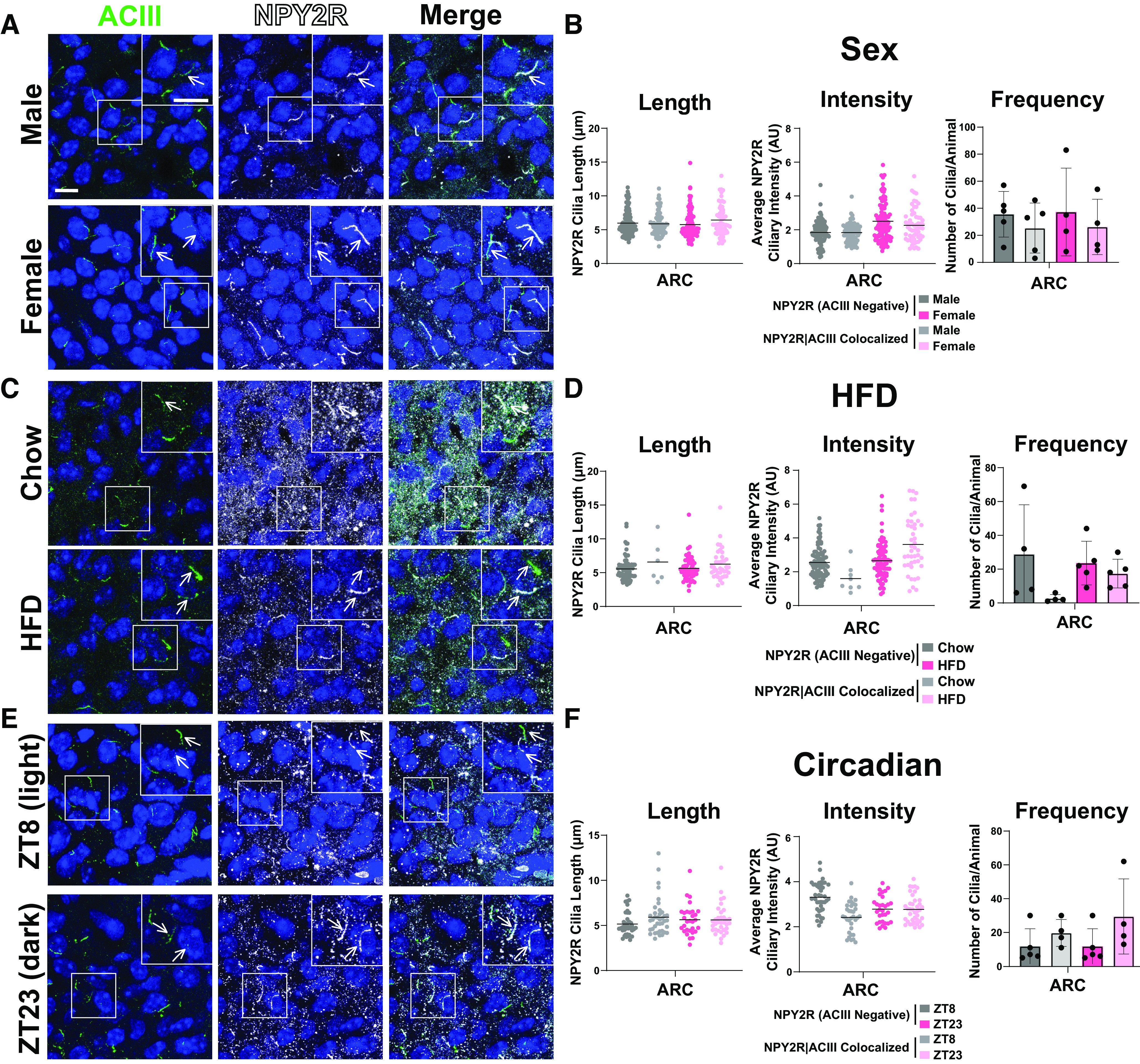
Primary cilia are cellular appendages critical for diverse types of Signaling. They are found on most cell types, including cells throughout the CNS. Cilia preferentially localize certain G-protein-coupled receptors (GPCRs) and are critical for mediating the signaling of these receptors. Several of these neuronal GPCRs have recognized roles in feeding behavior and energy homeostasis. Cell and model systems, such as and , have implicated both dynamic GPCR cilia localization and cilia length and shape changes as key for signaling. It is unclear whether mammalian ciliary GPCRs use similar mechanisms and under what conditions these processes may occur. Here, we assess two neuronal cilia GPCRs, melanin-concentrating hormone receptor 1 (MCHR1) and neuropeptide-Y receptor 2 (NPY2R), as mammalian model ciliary receptors in the mouse brain. We test the hypothesis that dynamic localization to cilia occurs under physiological conditions associated with these GPCR functions. Both receptors are involved in feeding behaviors, and MCHR1 is also associated with sleep and reward. Cilia were analyzed with a computer-assisted approach allowing for unbiased and high-throughput analysis. We measured cilia frequency, length, and receptor occupancy. We observed changes in ciliary length, receptor occupancy, and cilia frequency under different conditions for one receptor but not another and in specific brain regions. These data suggest that dynamic cilia localization of GPCRs depends on properties of individual receptors and cells where they are expressed. A better understanding of subcellular localization dynamics of ciliary GPCRs could reveal unknown molecular mechanisms regulating behaviors like feeding.
初级纤毛是细胞附属物,对于多种类型的信号转导至关重要。它们存在于大多数细胞类型中,包括中枢神经系统中的细胞。纤毛优先定位某些 G 蛋白偶联受体 (GPCR),对于这些受体的信号转导至关重要。这些神经元 GPCR 中的几个在摄食行为和能量稳态中具有公认的作用。细胞和模型系统,如 和 ,已经表明动态 GPCR 纤毛定位以及纤毛长度和形状变化是信号转导的关键。目前尚不清楚哺乳动物纤毛 GPCR 是否使用类似的机制,以及在什么条件下可能会发生这些过程。在这里,我们评估了两种神经元纤毛 GPCR,即黑色素浓缩激素受体 1 (MCHR1) 和神经肽 Y 受体 2 (NPY2R),作为小鼠大脑中的哺乳动物模型纤毛受体。我们检验了这样一个假设,即与这些 GPCR 功能相关的生理条件下会发生动态的纤毛定位。这两种受体都参与摄食行为,MCHR1 还与睡眠和奖励有关。使用允许进行无偏和高通量分析的计算机辅助方法分析纤毛。我们测量了纤毛频率、长度和受体占有率。我们观察到一个受体的纤毛长度、受体占有率和纤毛频率发生了变化,但另一个受体没有,并且在特定的脑区发生了变化。这些数据表明,GPCR 纤毛的动态定位取决于个体受体的特性以及它们表达的细胞。对纤毛 GPCR 亚细胞定位动力学的更好理解可能会揭示调节摄食等行为的未知分子机制。