Translational Medicine, Oncology R&D, AstraZeneca, Boston, MA, USA.
Department of Thoracic Oncology, H. Lee Moffitt Cancer Center & Research Institute, Tampa, FL, USA.
Nat Commun. 2023 Feb 27;14(1):1070. doi: 10.1038/s41467-023-35961-y.
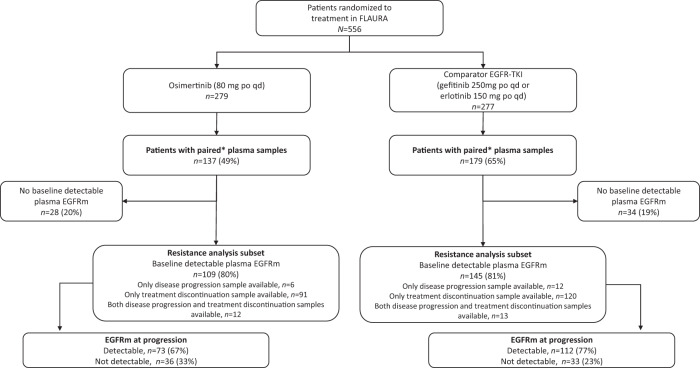
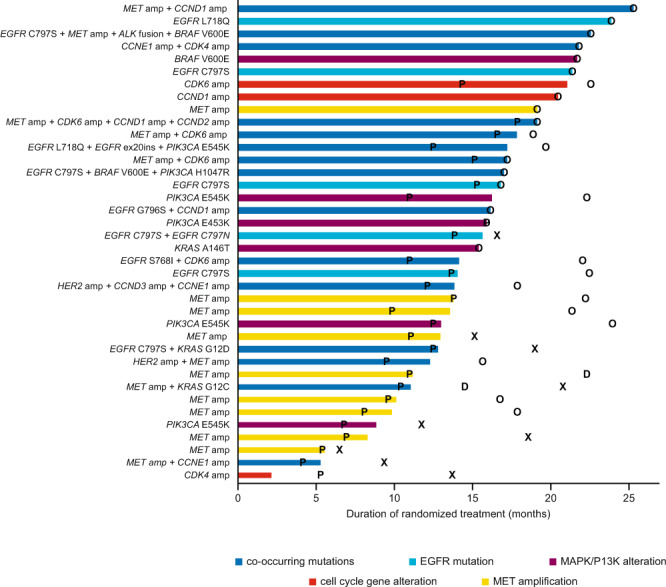
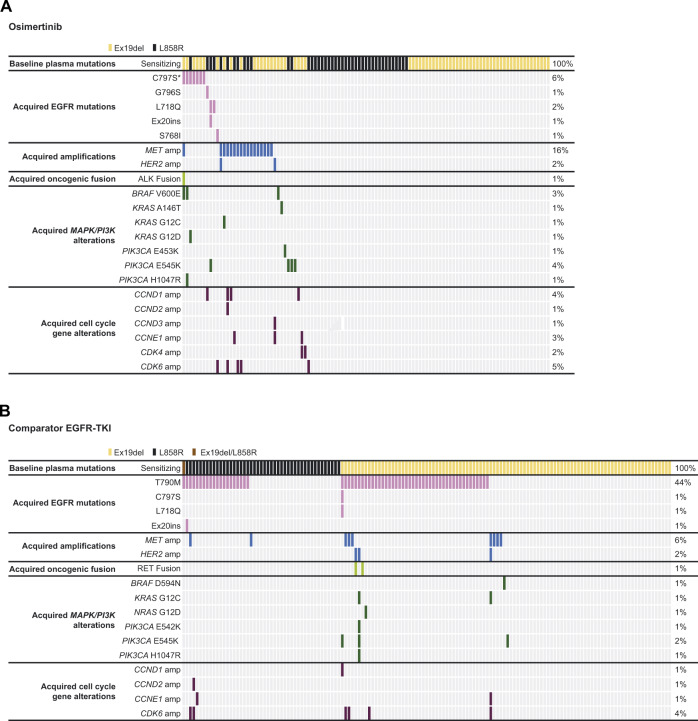
Osimertinib, an epidermal growth factor receptor tyrosine kinase inhibitor (EGFR-TKI), potently and selectively inhibits EGFR-TKI-sensitizing and EGFR T790M resistance mutations. In the Phase III FLAURA study (NCT02296125), first-line osimertinib improved outcomes vs comparator EGFR-TKIs in EGFRm advanced non-small cell lung cancer. This analysis identifies acquired resistance mechanisms to first-line osimertinib. Next-generation sequencing assesses circulating-tumor DNA from paired plasma samples (baseline and disease progression/treatment discontinuation) in patients with baseline EGFRm. No EGFR T790M-mediated acquired resistance are observed; most frequent resistance mechanisms are MET amplification (n = 17; 16%) and EGFR C797S mutations (n = 7; 6%). Future research investigating non-genetic acquired resistance mechanisms is warranted.
奥希替尼是一种表皮生长因子受体酪氨酸激酶抑制剂(EGFR-TKI),能强有力且选择性地抑制 EGFR-TKI 敏感和 EGFR T790M 耐药突变。在 III 期 FLAURA 研究(NCT02296125)中,一线奥希替尼在 EGFRm 晚期非小细胞肺癌中与比较的 EGFR-TKIs 相比改善了结局。本分析确定了一线奥希替尼获得性耐药的机制。在基线 EGFRm 的患者中,使用下一代测序评估配对血浆样本(基线和疾病进展/治疗终止)中的循环肿瘤 DNA。未观察到 EGFR T790M 介导的获得性耐药;最常见的耐药机制是 MET 扩增(n=17;16%)和 EGFR C797S 突变(n=7;6%)。有必要开展研究以探索非遗传获得性耐药机制。