Centre for Bioinnovation, University of the Sunshine Coast, Maroochydore DC, QLD, 4558, Australia.
School of Science, Technology and Engineering, University of the Sunshine Coast, Maroochydore DC, QLD, 4558, Australia.
Sci Rep. 2023 Feb 27;13(1):3349. doi: 10.1038/s41598-023-30425-1.
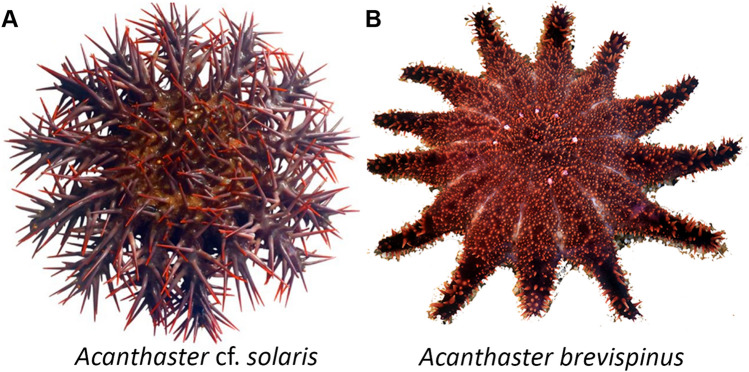
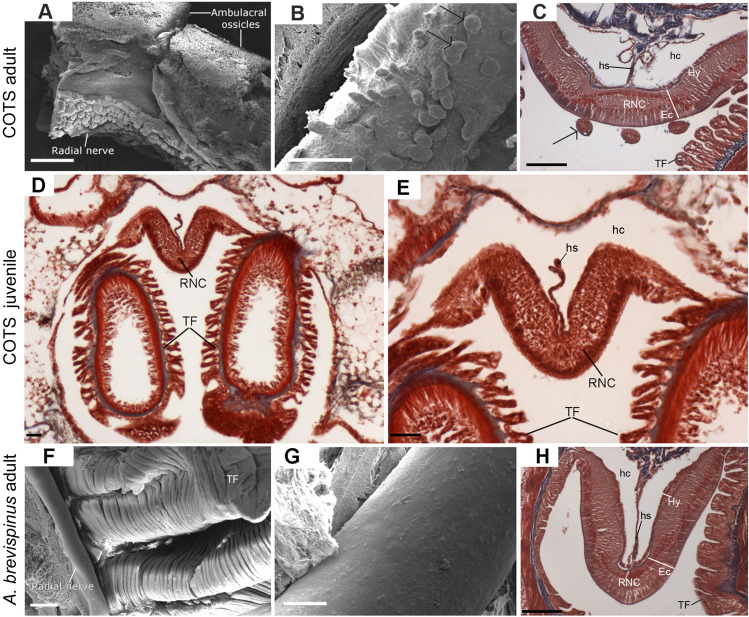
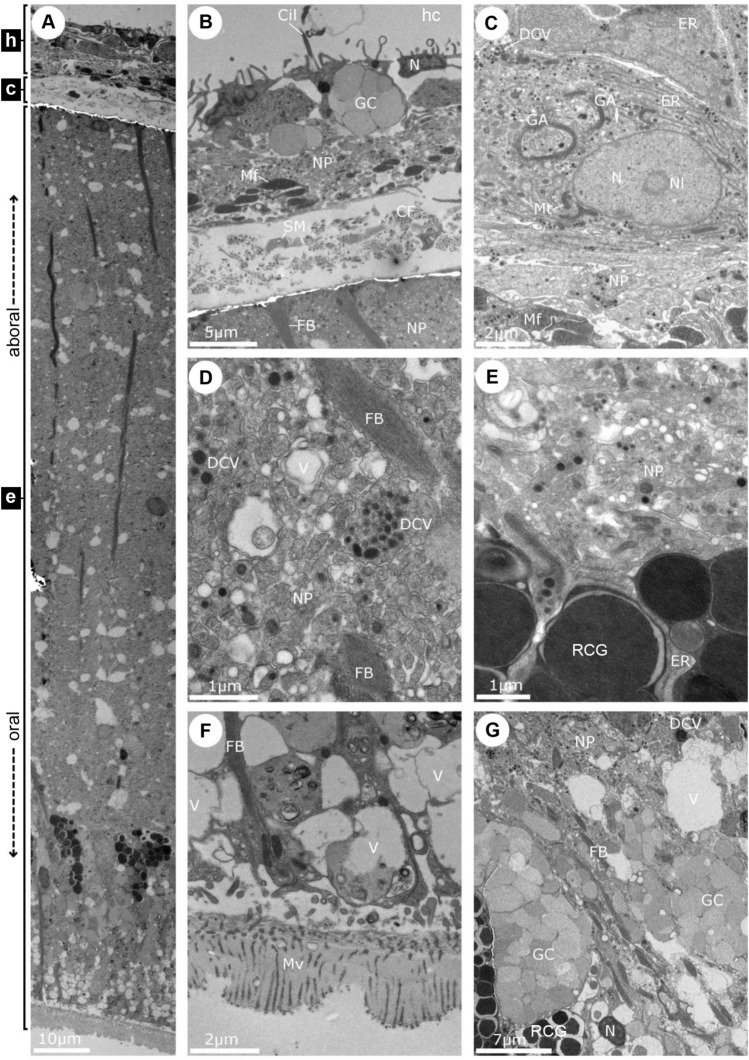
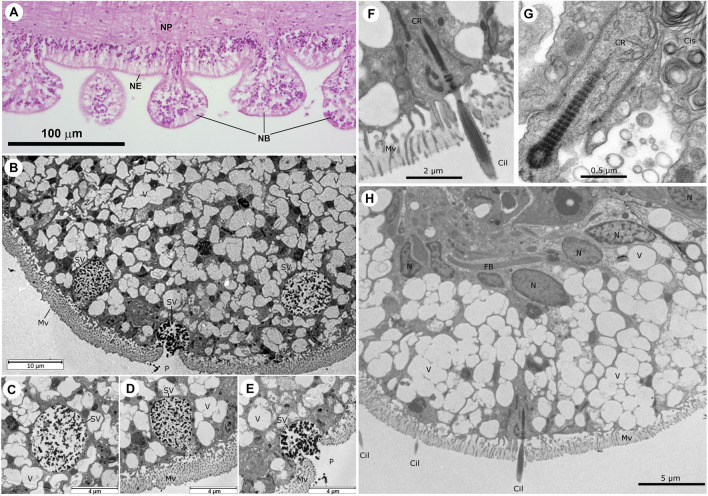
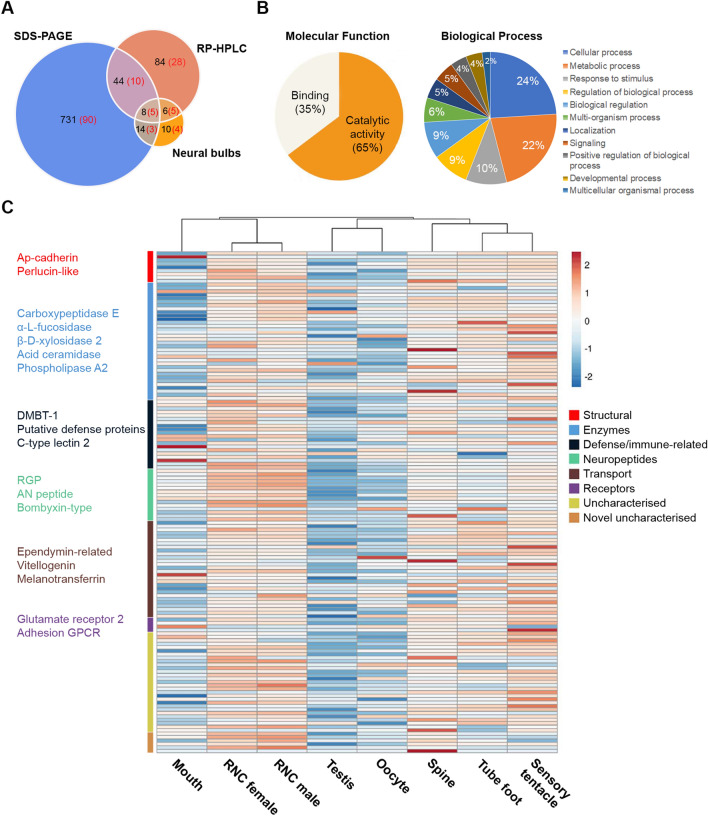
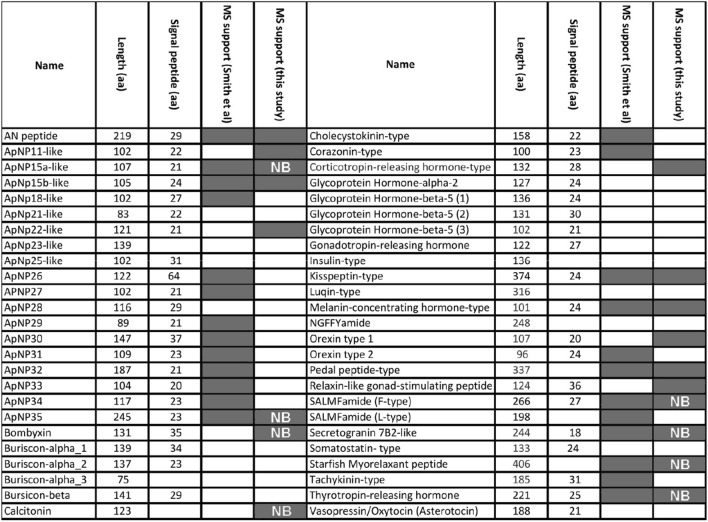
The nervous system of the Asteroidea (starfish or seastar) consists of radial nerve cords (RNCs) that interconnect with a ring nerve. Despite its relative simplicity, it facilitates the movement of multiple arms and numerous tube feet, as well as regeneration of damaged limbs. Here, we investigated the RNC ultrastructure and its molecular components within the of Pacific crown-of-thorns starfish (COTS; Acanthaster sp.), a well-known coral predator that in high-density outbreaks has major ecological impacts on coral reefs. We describe the presence of an array of unique small bulbous bulbs (40-100 μm diameter) that project from the ectoneural region of the adult RNC. Each comprise large secretory-like cells and prominent cilia. In contrast, juvenile COTS and its congener Acanthaster brevispinus lack these features, both of which are non-corallivorous. Proteomic analysis of the RNC (and isolated neural bulbs) provides the first comprehensive echinoderm protein database for neural tissue, including numerous secreted proteins associated with signalling, transport and defence. The neural bulbs contained several neuropeptides (e.g., bombyxin-type, starfish myorelaxant peptide, secretogranin 7B2-like, Ap15a-like, and ApNp35) and Deleted in Malignant Brain Tumor 1-like proteins. In summary, this study provides a new insight into the novel traits of COTS, a major pest on coral reefs, and a proteomics resource that can be used to develop (bio)control strategies and understand molecular mechanisms of regeneration.
棘皮动物(海星或海胆)的神经系统由与环神经相互连接的辐射神经索(RNC)组成。尽管其相对简单,但它促进了多个臂和众多管足的运动,以及受损肢体的再生。在这里,我们研究了太平洋棘冠海星(COTS;棘冠海星属)的 RNC 超微结构及其分子成分,COTS 是一种著名的珊瑚捕食者,在高密度爆发时对珊瑚礁具有重大的生态影响。我们描述了存在一系列独特的小泡状泡(直径 40-100μm),这些泡从成年 RNC 的外神经区伸出。每个泡都由大型分泌样细胞和突出的纤毛组成。相比之下,幼年 COTS 和它的同种棘冠海胆 Acanthaster brevispinus 缺乏这些特征,两者都不是珊瑚捕食者。RNC(和分离的神经泡)的蛋白质组学分析提供了第一个全面的棘皮动物神经组织蛋白质数据库,包括与信号转导、运输和防御相关的许多分泌蛋白。神经泡包含几种神经肽(例如,棉铃虫型、海星肌松肽、分泌颗粒蛋白 7B2 样、Ap15a 样和 ApNp35)和Deleted in Malignant Brain Tumor 1 样蛋白。总之,这项研究为珊瑚礁上的主要害虫 COTS 的新特征提供了新的见解,并为蛋白质组学资源提供了新的见解,可用于开发(生物)控制策略和理解再生的分子机制。