Wang Jun, Zhou Zhiyong
Department of Breast Surgery, Jiangxi Provincial People's Hospital, The First Affiliated Hospital of Nanchang Medical College, Nanchang, 330006, Jiangxi, China.
Department of Oncology, Jiangxi Provincial People's Hospital, The First Affiliated Hospital of Nanchang Medical College, 92 Aiguo Rd, Donghu District, Nanchang, 330006, Jiangxi, China.
Discov Oncol. 2023 Feb 28;14(1):28. doi: 10.1007/s12672-023-00635-0.
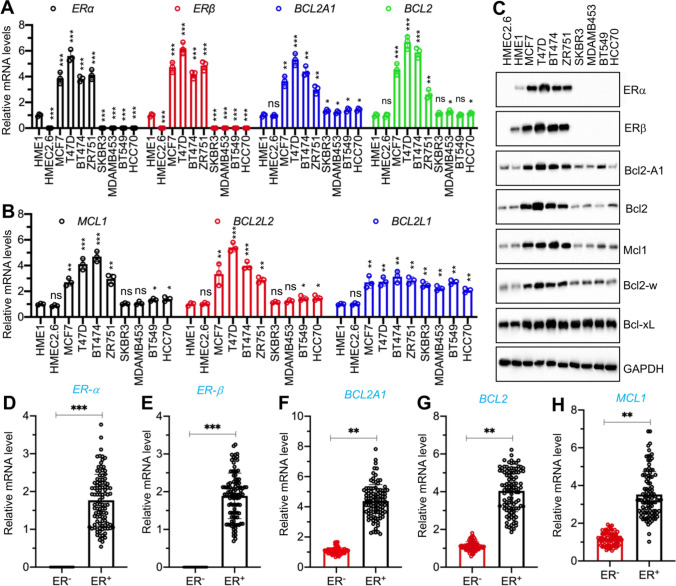
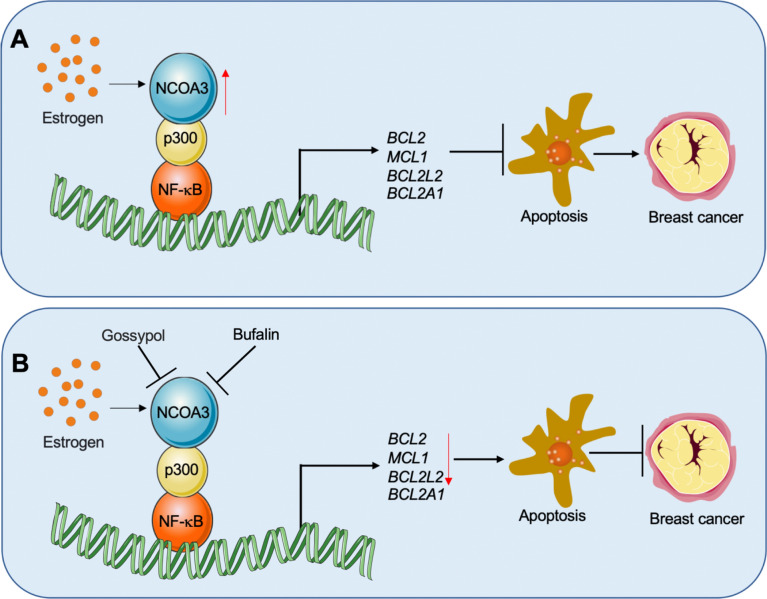
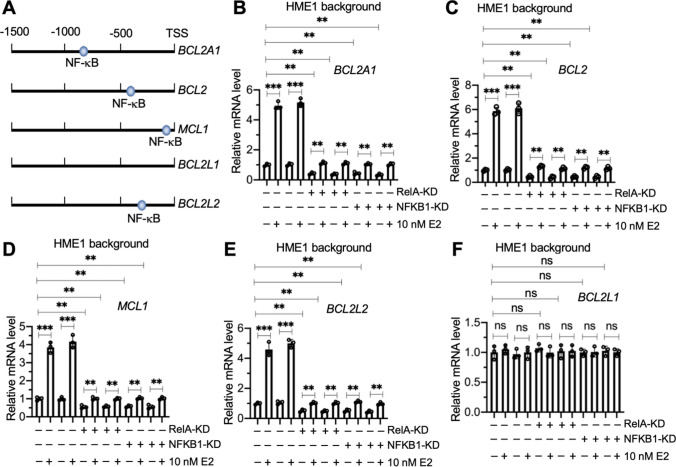
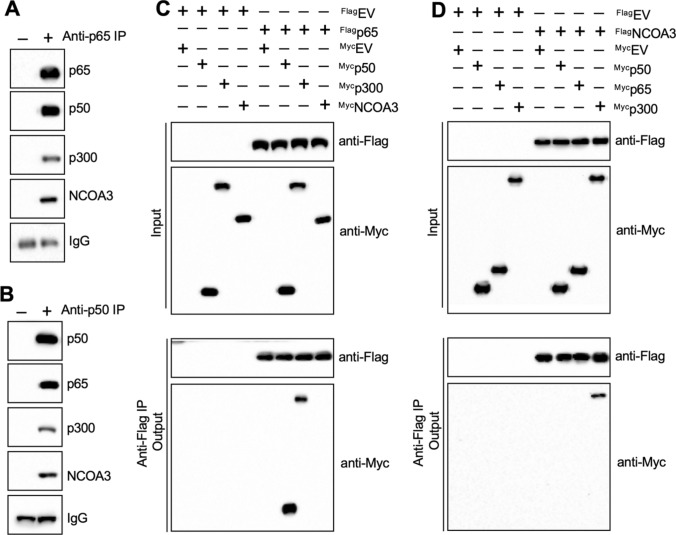
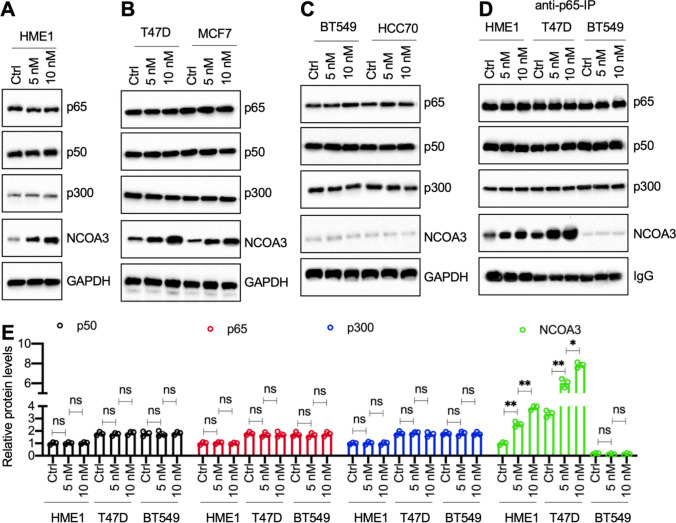
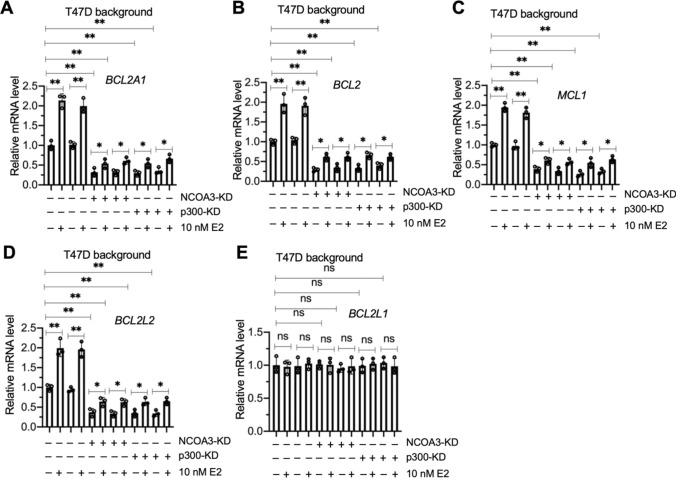
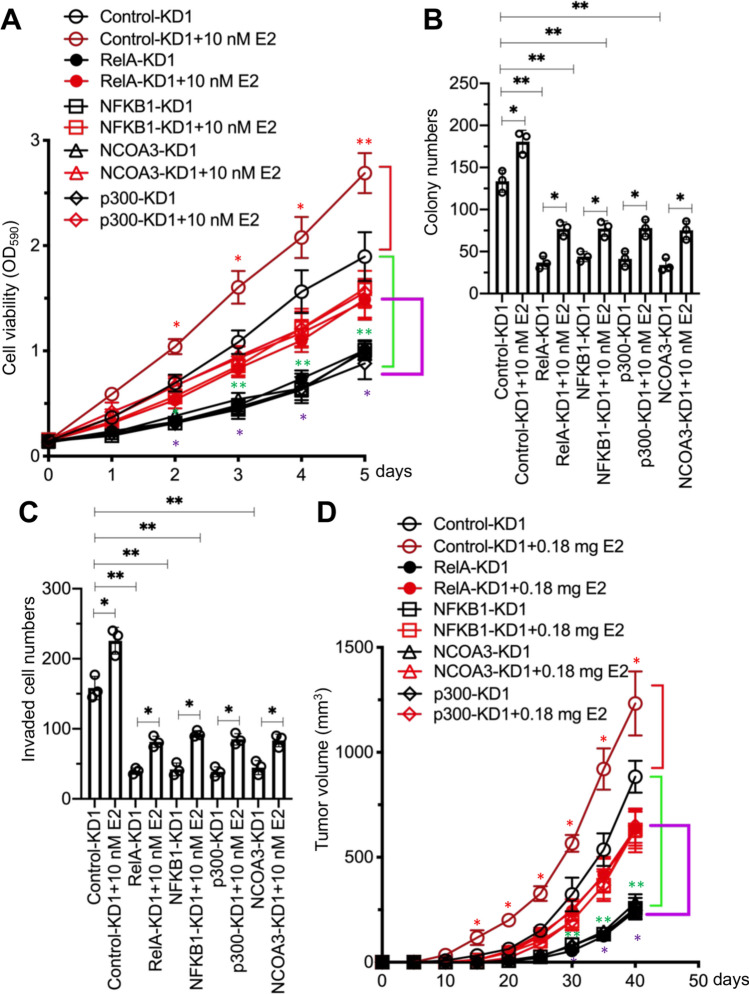
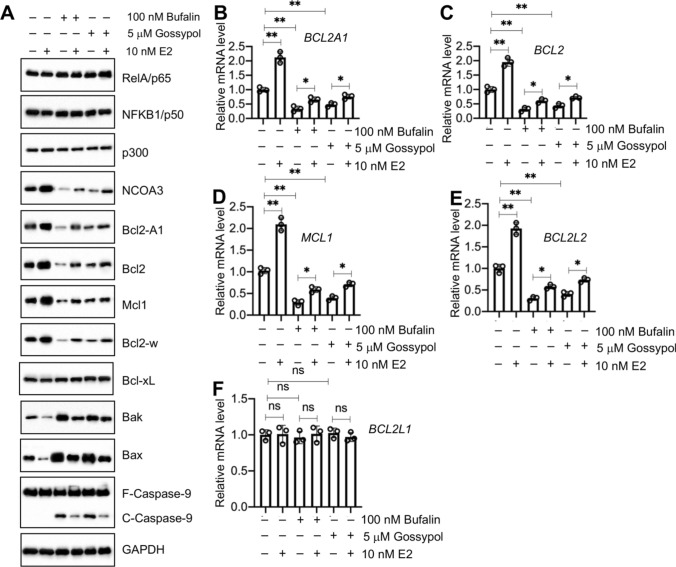
Circumvention of apoptosis by the elevation of antiapoptotic proteins is an important cause of carcinogenesis. The induction of antiapoptotic genes, including B-cell CLL/lymphoma 2 (BCL2), BCL2 related protein A1 (BCL2A1), BCL2 like 1 (BCL2L1), BCL2L2, and myeloid cell leukemia 1 (MCL1), has been observed in multiple cancers, including breast cancer. However, the underlying mechanisms of their overexpression are still being investigated. Here, we revealed that BCL2, BCL2A1, BCL2L2, and MCL1 but not BCL2L1 were overexpressed in estrogen receptor (ER)-positive breast cancer cells and clinical biopsies. Stimulation with estrogen in ER-positive cell lines resulted in a dose-dependent increase in BCL2, BCL2A1, BCL2L2, and MCL1 mRNA levels. Molecular investigation revealed that nuclear factor kappa B (NF-κB) recruited histone acetyltransferase p300 and nuclear receptor coactivator 3 (NCOA3) to form a transcriptional complex. This complex docked the promoters of BCL2, BCL2A1, BCL2L2, and MCL1 and activated their expression. Interestingly, estrogen exposure dose-dependently activated NCOA3. Depletion of the NCOA3-p300-NF-κB components or blockage of NCOA3 function with inhibitors (gossypol and bufalin) in ER-positive cells suppressed BCL2, BCL2A1, BCL2L2, and MCL1 expression, while also decreasing cell viability, colony formation, cell invasion, and tumor growth. Collectively, our results demonstrate an upstream signaling that activates four antiapoptotic genes in ER-positive breast cancer cells. Importantly, our results also imply that targeting NCOA3 or blocking the assembly of the NCOA3-p300-NF-κB complex may be promising therapeutic strategies for treating ER-positive breast cancer.
抗凋亡蛋白水平升高导致的凋亡规避是致癌作用的一个重要原因。在包括乳腺癌在内的多种癌症中,均观察到抗凋亡基因的诱导,这些基因包括B细胞淋巴瘤/白血病-2(BCL2)、BCL2相关蛋白A1(BCL2A1)、BCL2样蛋白1(BCL2L1)、BCL2L2和髓样细胞白血病-1(MCL1)。然而,它们过表达的潜在机制仍在研究中。在此,我们发现BCL2、BCL2A1、BCL2L2和MCL1在雌激素受体(ER)阳性乳腺癌细胞和临床活检组织中过表达,而BCL2L1未过表达。用雌激素刺激ER阳性细胞系导致BCL2、BCL2A1、BCL2L2和MCL1 mRNA水平呈剂量依赖性增加。分子研究表明,核因子κB(NF-κB)募集组蛋白乙酰转移酶p300和核受体辅激活因子3(NCOA3)形成转录复合物。该复合物与BCL2、BCL2A1、BCL2L2和MCL1的启动子结合并激活其表达。有趣的是,雌激素暴露呈剂量依赖性激活NCOA3。在ER阳性细胞中,通过抑制剂(棉酚和蟾蜍灵)耗尽NCOA3-p300-NF-κB成分或阻断NCOA3功能可抑制BCL2、BCL2A1、BCL2L2和MCL1的表达,同时也降低细胞活力、集落形成、细胞侵袭和肿瘤生长。总之,我们的结果证明了一种上游信号传导途径,该途径可激活ER阳性乳腺癌细胞中的四个抗凋亡基因。重要的是,我们的结果还表明,靶向NCOA3或阻断NCOA3-p300-NF-κB复合物的组装可能是治疗ER阳性乳腺癌的有前景的治疗策略。