Division of Nephrology, Icahn School of Medicine at Mount Sinai, New York, New York, USA.
Division of Nephrology and Hypertension, Department of Medicine, Weill Cornell Medicine, New York, New York, USA.
JCI Insight. 2023 Apr 10;8(7):e165002. doi: 10.1172/jci.insight.165002.
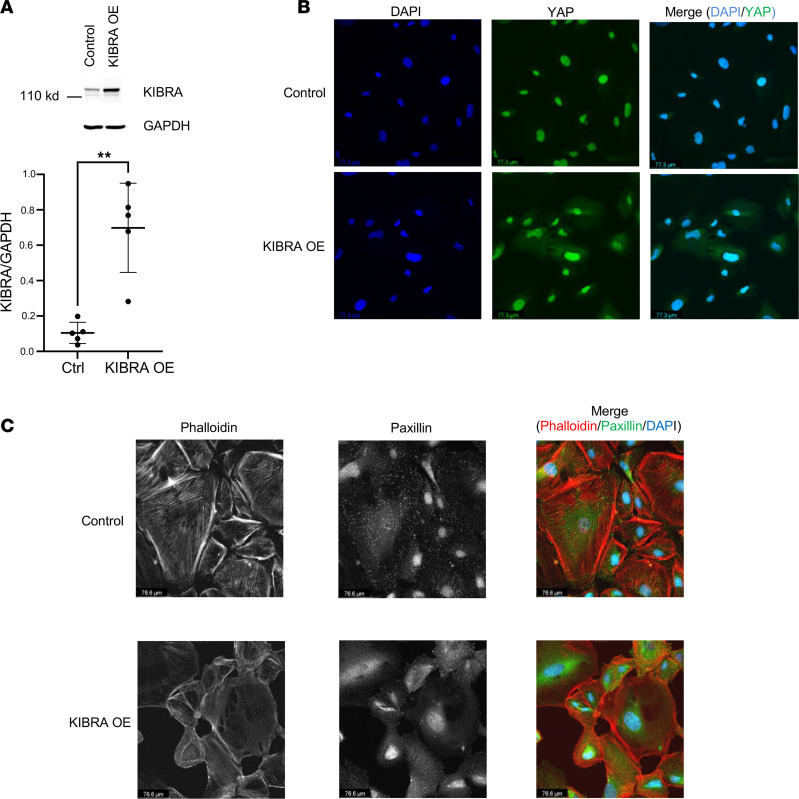
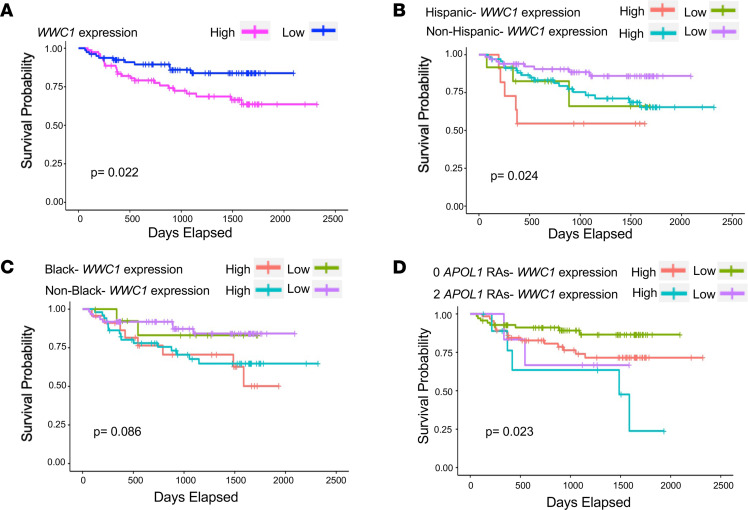
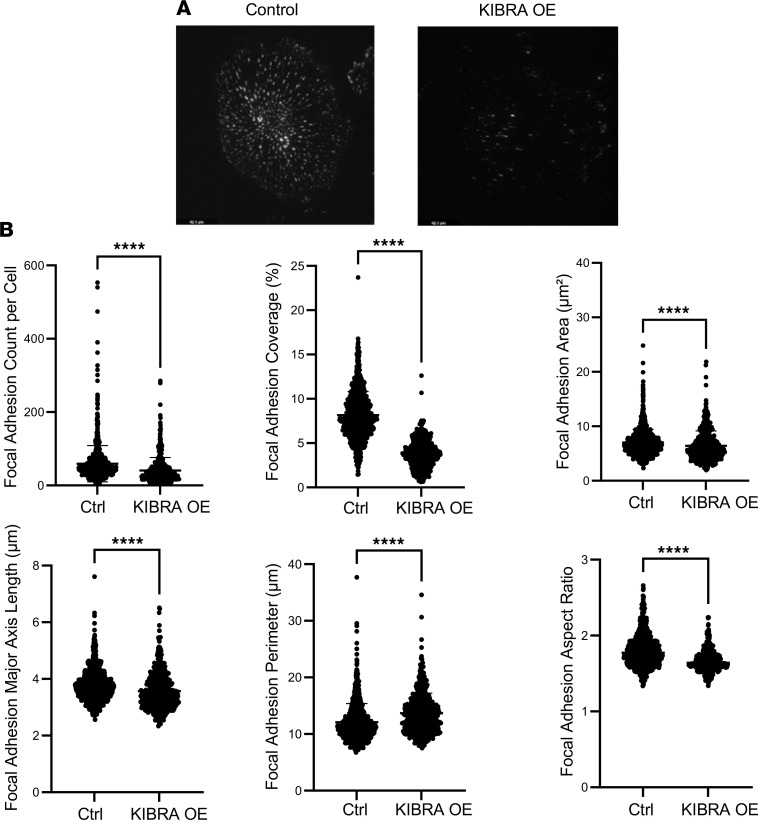
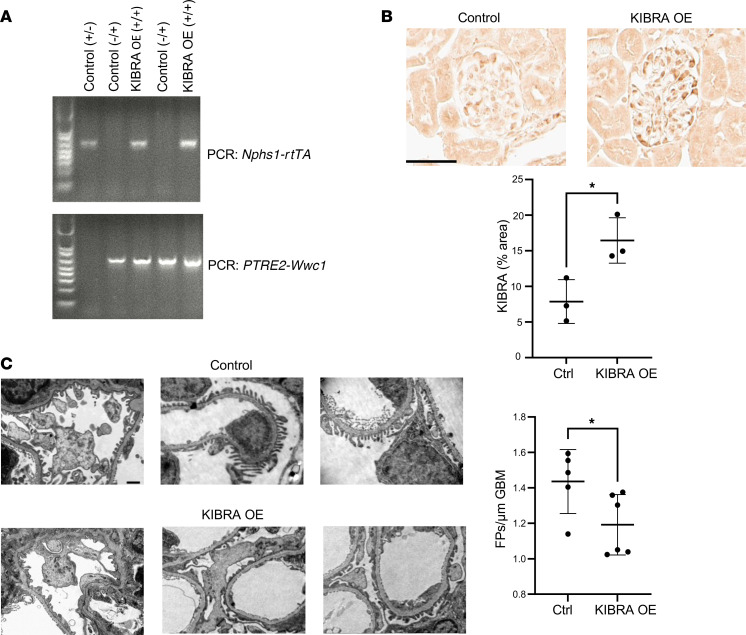
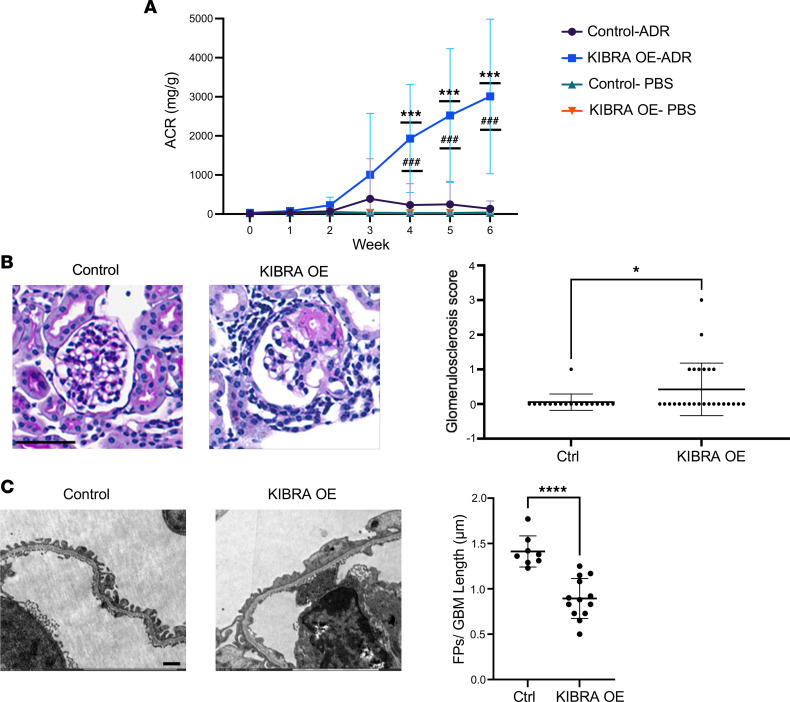
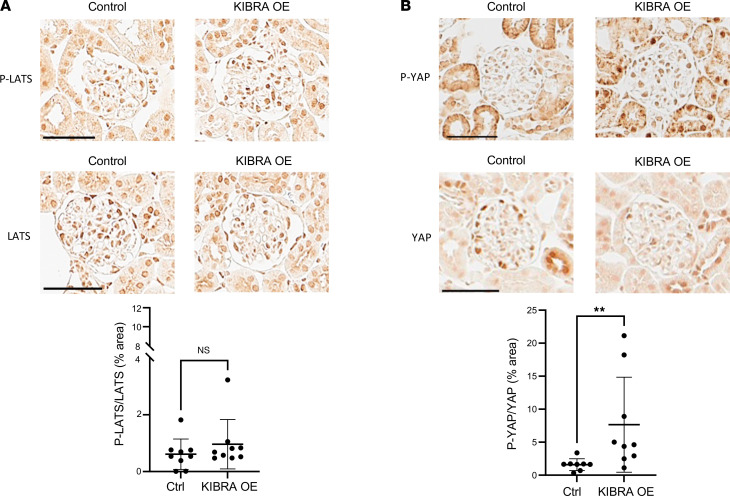
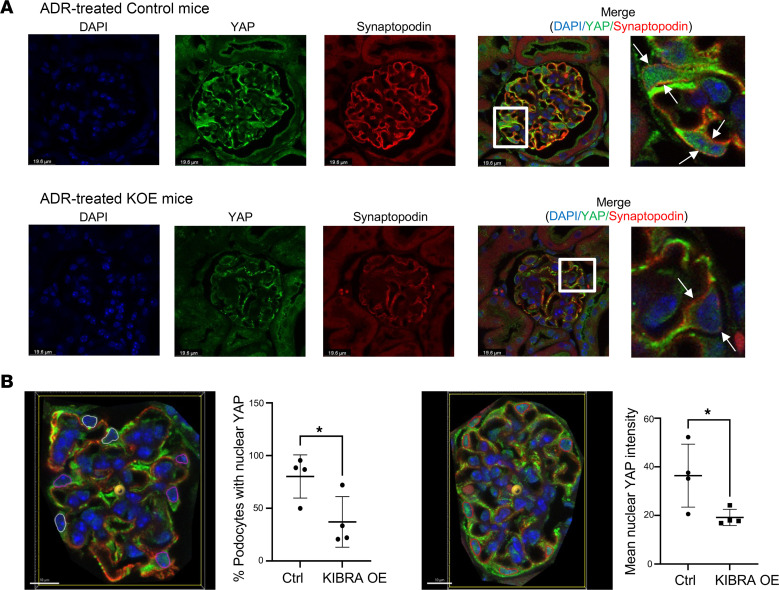
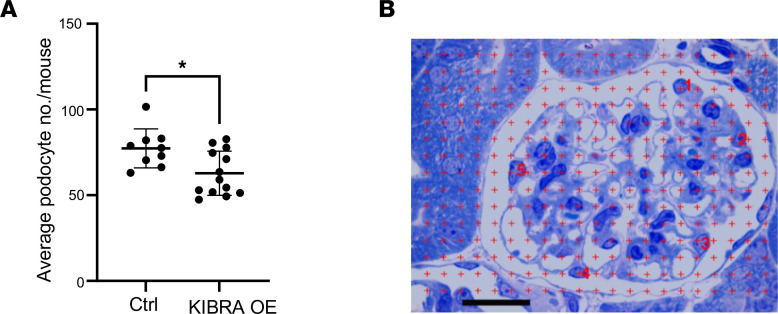
Despite recent progress in the identification of mediators of podocyte injury, mechanisms underlying podocyte loss remain poorly understood, and cell-specific therapy is lacking. We previously reported that kidney and brain expressed protein (KIBRA), encoded by WWC1, promotes podocyte injury in vitro through activation of the Hippo signaling pathway. KIBRA expression is increased in the glomeruli of patients with focal segmental glomerulosclerosis, and KIBRA depletion in vivo is protective against acute podocyte injury. Here, we tested the consequences of transgenic podocyte-specific WWC1 expression in immortalized human podocytes and in mice, and we explored the association between glomerular WWC1 expression and glomerular disease progression. We found that KIBRA overexpression in immortalized human podocytes promoted cytoplasmic localization of Yes-associated protein (YAP), induced actin cytoskeletal reorganization, and altered focal adhesion expression and morphology. WWC1-transgenic (KIBRA-overexpressing) mice were more susceptible to acute and chronic glomerular injury, with evidence of YAP inhibition in vivo. Of clinical relevance, glomerular WWC1 expression negatively correlated with renal survival among patients with primary glomerular diseases. These findings highlight the importance of KIBRA/YAP signaling to the regulation of podocyte structural integrity and identify KIBRA-mediated injury as a potential target for podocyte-specific therapy in glomerular disease.
尽管最近在鉴定足细胞损伤的介质方面取得了进展,但足细胞丢失的机制仍知之甚少,缺乏针对特定细胞的治疗方法。我们之前曾报道,由 WWC1 编码的肾脏和脑表达蛋白 (KIBRA) 通过激活 Hippo 信号通路促进体外足细胞损伤。局灶节段性肾小球硬化患者肾小球中 KIBRA 的表达增加,体内 KIBRA 耗竭可防止急性足细胞损伤。在这里,我们测试了在永生化的人足细胞和小鼠中转基因足细胞特异性 WWC1 表达的后果,并探讨了肾小球 WWC1 表达与肾小球疾病进展之间的关系。我们发现,永生化的人足细胞中 KIBRA 的过表达促进了 Yes 相关蛋白 (YAP) 的细胞质定位,诱导了肌动蛋白细胞骨架的重排,并改变了焦点粘连的表达和形态。WWC1 转基因 (KIBRA 过表达) 小鼠对急性和慢性肾小球损伤更敏感,体内存在 YAP 抑制的证据。具有临床相关性的是,原发性肾小球疾病患者的肾小球 WWC1 表达与肾脏存活率呈负相关。这些发现强调了 KIBRA/YAP 信号对足细胞结构完整性调节的重要性,并确定了 KIBRA 介导的损伤作为肾小球疾病中足细胞特异性治疗的潜在靶点。