Rizos Iris, Debeljak Pavla, Finet Thomas, Klein Dylan, Ayata Sakina-Dorothée, Not Fabrice, Bittner Lucie
Institut de Systématique, Evolution, Biodiversité (ISYEB), Muséum National d'Histoire Naturelle, CNRS, Sorbonne Université, EPHE, Université des Antilles, Paris, France.
Sorbonne Université, CNRS, AD2M-UMR7144 Station Biologique de Roscoff, 29680, Roscoff, France.
ISME Commun. 2023 Feb 28;3(1):16. doi: 10.1038/s43705-022-00203-7.
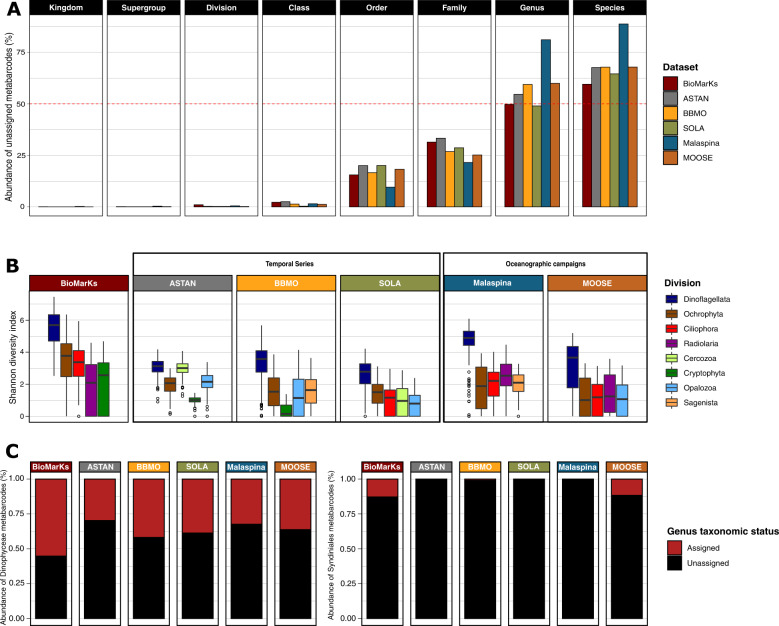
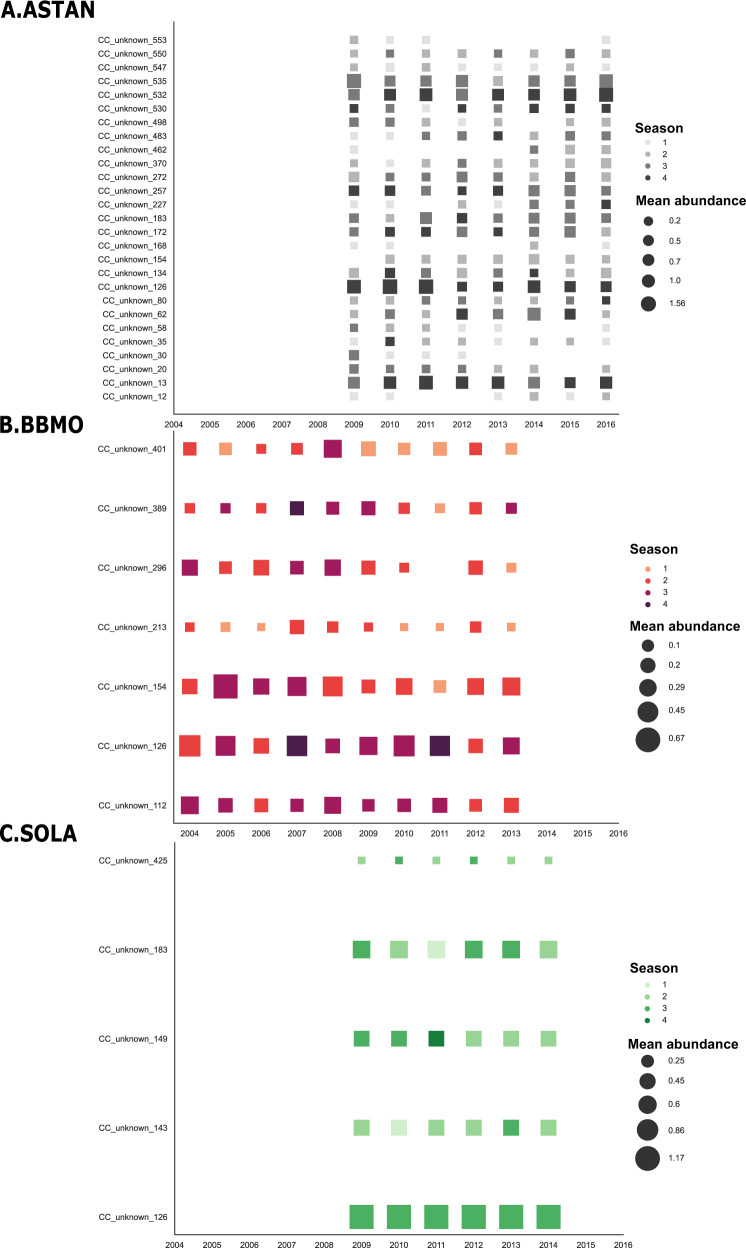
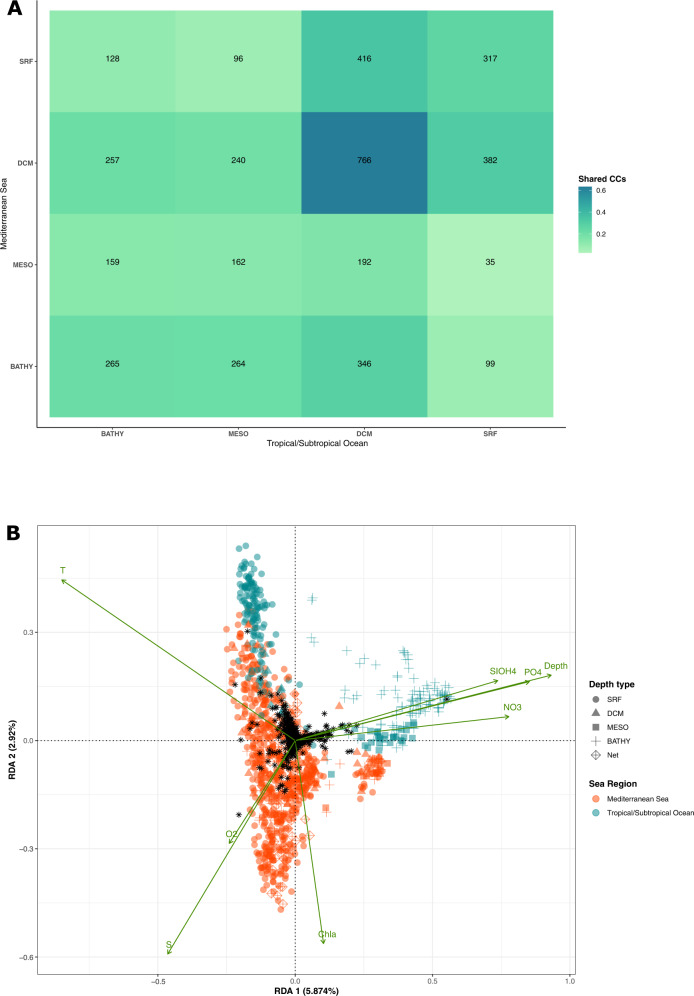
Marine protists are major components of the oceanic microbiome that remain largely unrepresented in culture collections and genomic reference databases. The exploration of this uncharted protist diversity in oceanic communities relies essentially on studying genetic markers from the environment as taxonomic barcodes. Here we report that across 6 large scale spatio-temporal planktonic surveys, half of the genetic barcodes remain taxonomically unassigned at the genus level, preventing a fine ecological understanding for numerous protist lineages. Among them, parasitic Syndiniales (Dinoflagellata) appear as the least described protist group. We have developed a computational workflow, integrating diverse 18S rDNA gene metabarcoding datasets, in order to infer large-scale ecological patterns at 100% similarity of the genetic marker, overcoming the limitation of taxonomic assignment. From a spatial perspective, we identified 2171 unassigned clusters, i.e., Syndiniales sequences with 100% similarity, exclusively shared between the Tropical/Subtropical Ocean and the Mediterranean Sea among all Syndiniales orders and 25 ubiquitous clusters shared within all the studied marine regions. From a temporal perspective, over 3 time-series, we highlighted 39 unassigned clusters that follow rhythmic patterns of recurrence and are the best indicators of parasite community's variation. These clusters withhold potential as ecosystem change indicators, mirroring their associated host community responses. Our results underline the importance of Syndiniales in structuring planktonic communities through space and time, raising questions regarding host-parasite association specificity and the trophic mode of persistent Syndiniales, while providing an innovative framework for prioritizing unassigned protist taxa for further description.
海洋原生生物是海洋微生物群落的主要组成部分,但在培养物保藏中心和基因组参考数据库中大多未得到体现。探索海洋群落中这种未知的原生生物多样性主要依赖于研究来自环境的遗传标记作为分类条形码。在此我们报告,在6次大规模时空浮游生物调查中,一半的遗传条形码在属水平上仍未得到分类归属,这妨碍了对众多原生生物谱系进行精细的生态学理解。其中,寄生的聚缩虫目(甲藻纲)似乎是描述最少的原生生物类群。我们开发了一种计算流程,整合多样的18S rDNA基因宏条形码数据集,以便在遗传标记100%相似性的水平上推断大规模生态模式,克服分类归属的局限性。从空间角度来看,我们识别出2171个未归属的聚类,即100%相似的聚缩虫目序列,在所有聚缩虫目分类阶元中仅在热带/亚热带海洋和地中海之间共享,以及25个在所有研究海洋区域内共享的普遍存在的聚类。从时间角度来看,在3个时间序列中,我们突出显示了39个遵循节律性复发模式且是寄生虫群落变化最佳指标的未归属聚类。这些聚类具有作为生态系统变化指标的潜力,反映了与其相关的宿主群落反应。我们的结果强调了聚缩虫目在时空构建浮游生物群落中的重要性,引发了关于宿主 - 寄生虫关联特异性以及持久性聚缩虫目营养模式的问题,同时提供了一个创新框架,用于优先考虑未归属的原生生物分类单元以便进一步描述。