School of Public Health and Preventive Medicine, Monash University, Melbourne,VIC, Australia.
Translational Immunology and Nanotechnology Research Theme, School of Health and Biomedical Sciences, RMIT University, Bundoora, VIC, Australia.
JNCI Cancer Spectr. 2023 Mar 1;7(2). doi: 10.1093/jncics/pkad017.
Metformin and aspirin are commonly co-prescribed to people with diabetes. Metformin may prevent cancer, but in older people (over 70 years), aspirin has been found to increase cancer mortality. This study examined whether metformin reduces cancer mortality and incidence in older people with diabetes; it used randomization to 100 mg aspirin or placebo in the ASPirin in Reducing Events in the Elderly (ASPREE) trial to quantify aspirin's impact on metformin users.
Analysis included community-dwelling ASPREE participants (aged ≥70 years, or ≥65 years for members of US minority populations) with diabetes. Diabetes was defined as a fasting blood glucose level greater than 125 mg/dL, self-report of diabetes, or antidiabetic medication use. Cox proportional hazards regression models were used to analyze the association of metformin and a metformin-aspirin interaction with cancer incidence and mortality, with adjustment for confounders.
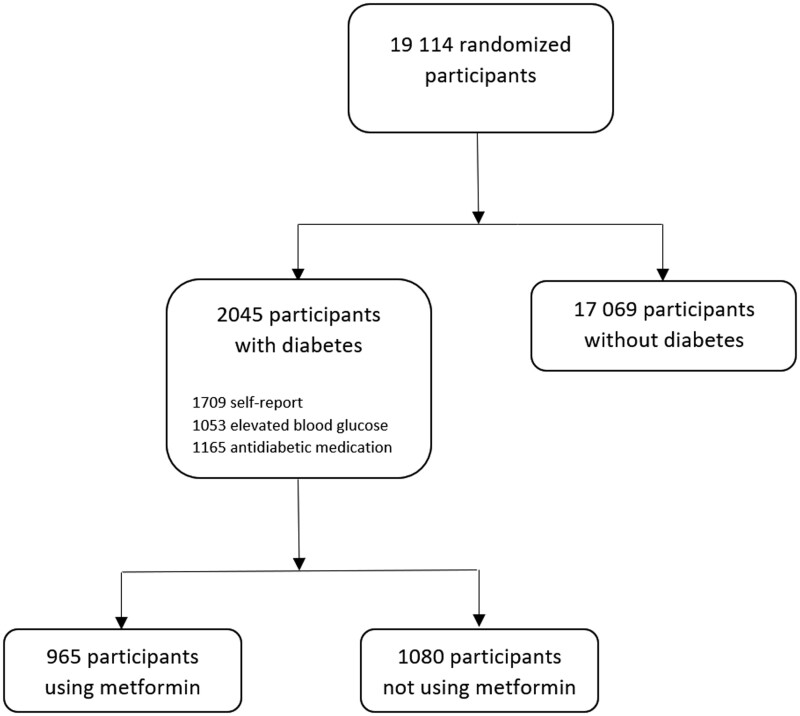
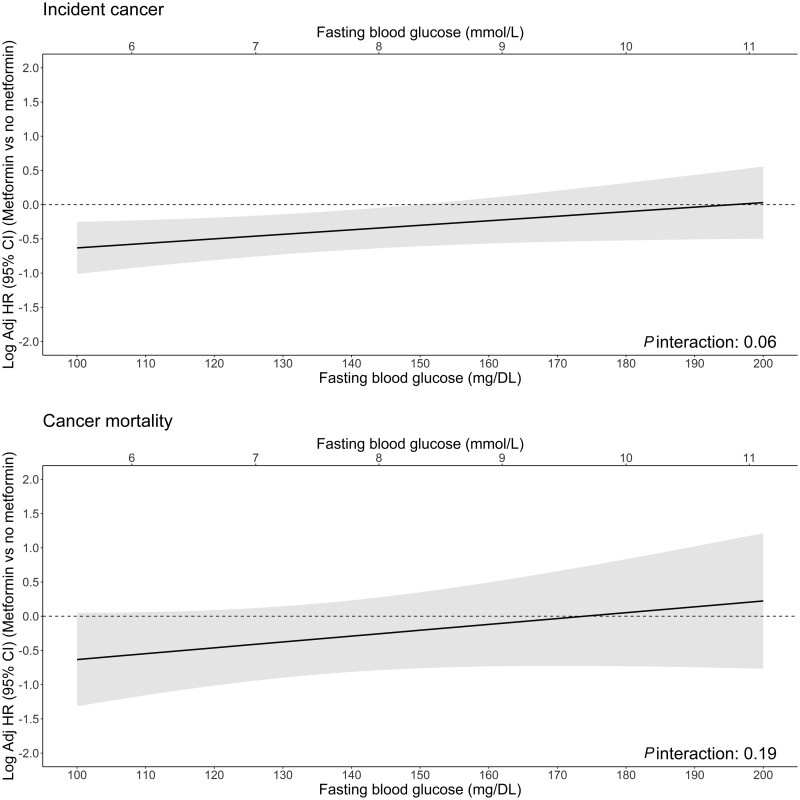
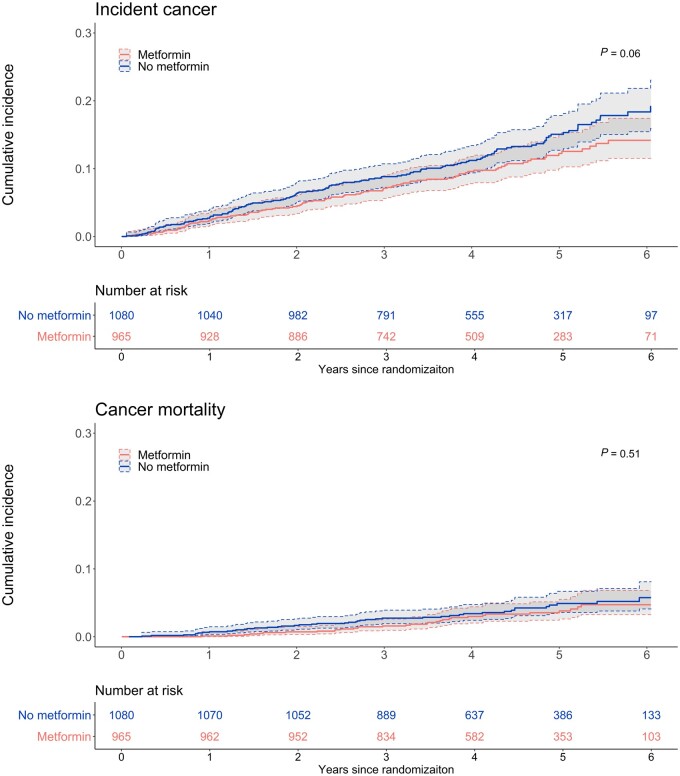
Of 2045 participants with diabetes at enrollment, 965 were concurrently using metformin. Metformin was associated with a reduced cancer incidence risk (adjusted hazard ratio [HR] = 0.68, 95% confidence interval [CI] = 0.51 to 0.90), but no conclusive benefit for cancer mortality (adjusted HR = 0.72, 95% CI = 0.43 to 1.19). Metformin users randomized to aspirin had greater risk of cancer mortality compared with placebo (HR = 2.53, 95% CI = 1.18 to 5.43), but no effect was seen for cancer incidence (HR = 1.11, 95% CI = 0.75 to 1.64). The possible effect modification of aspirin on cancer mortality, however, was not statistically significant (interaction P = .11).
In community-dwelling older adults with diabetes, metformin use was associated with reduced cancer incidence. Increased cancer mortality risk in metformin users randomized to aspirin warrants further investigation.
ClinicalTrials.gov ID NCT01038583.
二甲双胍和阿司匹林常被同时用于治疗糖尿病患者。二甲双胍可能具有预防癌症的作用,但在老年人(70 岁以上)中,阿司匹林已被发现会增加癌症死亡率。本研究旨在探讨二甲双胍是否能降低老年糖尿病患者的癌症死亡率和发病率;本研究使用随机分组的方法,在 ASPREE 试验中给 100mg 阿司匹林或安慰剂,以量化阿司匹林对二甲双胍使用者的影响。
分析纳入了社区居住的 ASPREE 参与者(年龄≥70 岁,或美国少数民族人群的年龄≥65 岁),这些参与者患有糖尿病。糖尿病的定义为空腹血糖水平大于 125mg/dL、自我报告患有糖尿病或使用抗糖尿病药物。使用 Cox 比例风险回归模型分析了二甲双胍和二甲双胍-阿司匹林相互作用与癌症发病率和死亡率的关系,并进行了混杂因素的调整。
在入组时患有糖尿病的 2045 名参与者中,有 965 名同时使用二甲双胍。二甲双胍与癌症发病率降低相关(调整后的危险比[HR]为 0.68,95%置信区间[CI]为 0.51 至 0.90),但对癌症死亡率无明显获益(调整后的 HR 为 0.72,95% CI 为 0.43 至 1.19)。与安慰剂相比,被随机分配到阿司匹林组的二甲双胍使用者的癌症死亡率风险更高(HR 为 2.53,95% CI 为 1.18 至 5.43),但对癌症发病率无影响(HR 为 1.11,95% CI 为 0.75 至 1.64)。然而,阿司匹林对癌症死亡率的可能的效应修饰作用并不具有统计学意义(交互 P=0.11)。
在患有糖尿病的社区居住的老年人中,使用二甲双胍与癌症发病率降低有关。在被随机分配到阿司匹林的二甲双胍使用者中,癌症死亡率风险增加需要进一步研究。
ASPREE 试验注册:ClinicalTrials.gov ID NCT01038583。