Libin Cardiovascular Institute of Alberta, University of Calgary, Calgary, AB, Canada.
O'Brien Institute for Public Health, University of Calgary, Calgary, AB, Canada.
BMC Med Res Methodol. 2023 Mar 1;23(1):56. doi: 10.1186/s12874-023-01875-y.
Science is becoming increasingly data intensive as digital innovations bring new capacity for continuous data generation and storage. This progress also brings challenges, as many scientific initiatives are challenged by the shear volumes of data produced. Here we present a case study of a data intensive randomized clinical trial assessing the utility of continuous pressure imaging (CPI) for reducing pressure injuries.
To explore an approach to reducing the amount of CPI data required for analyses to a manageable size without loss of critical information using a nested subset of pressure data.
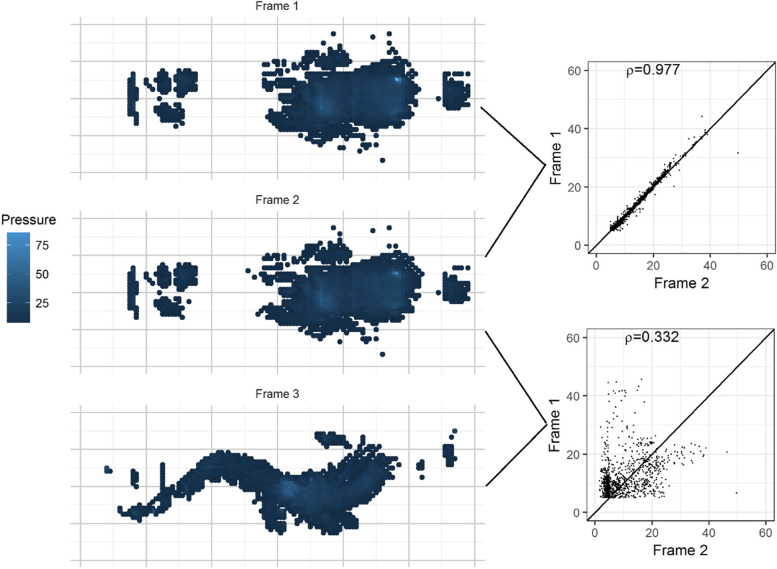
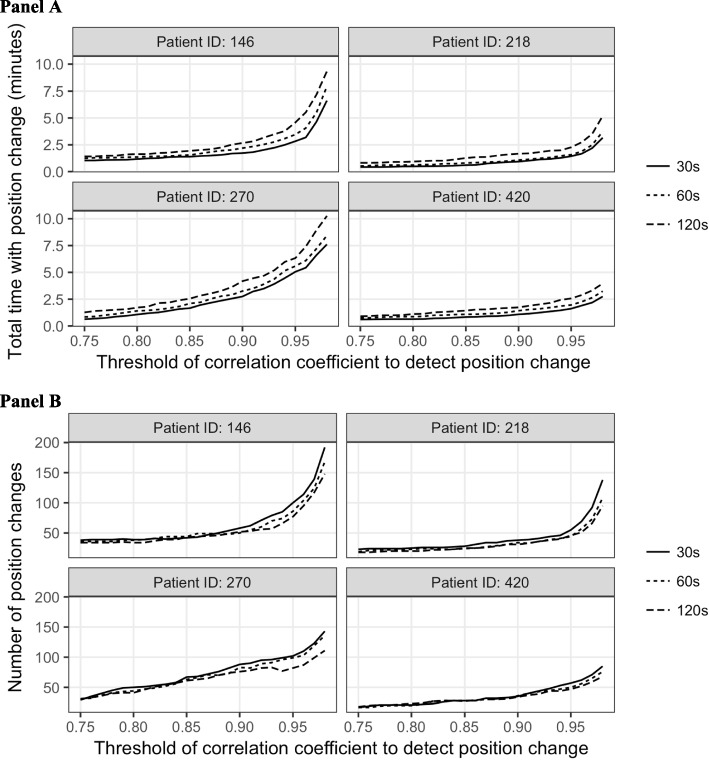
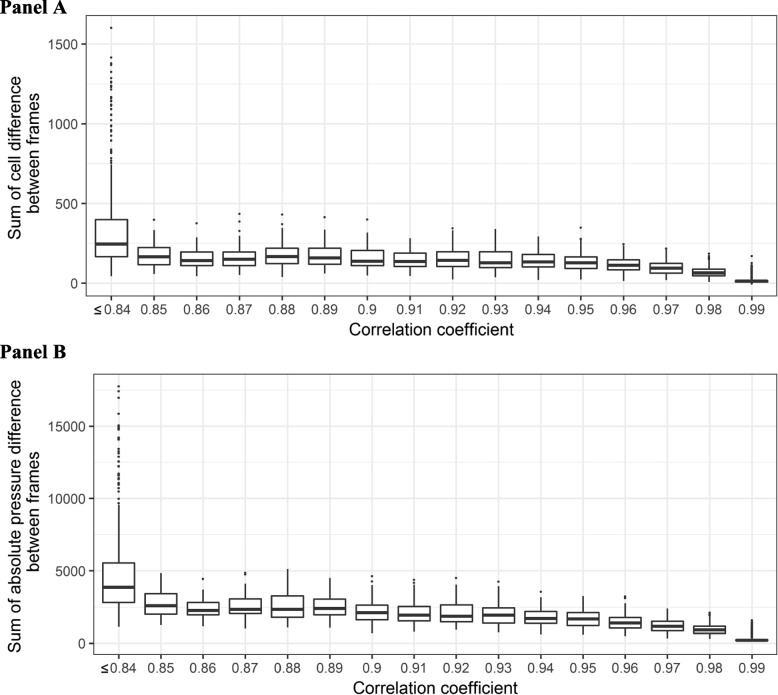
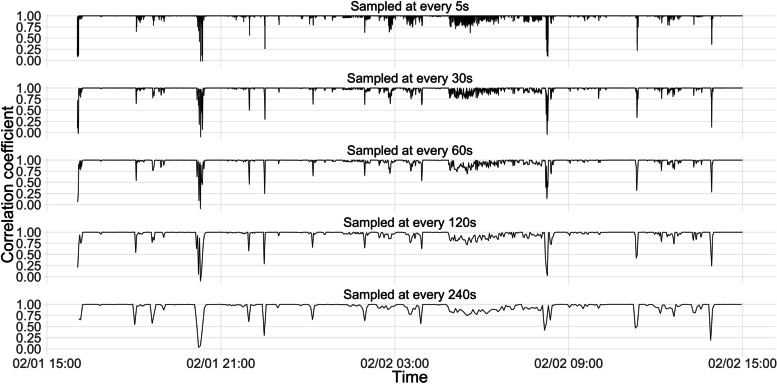
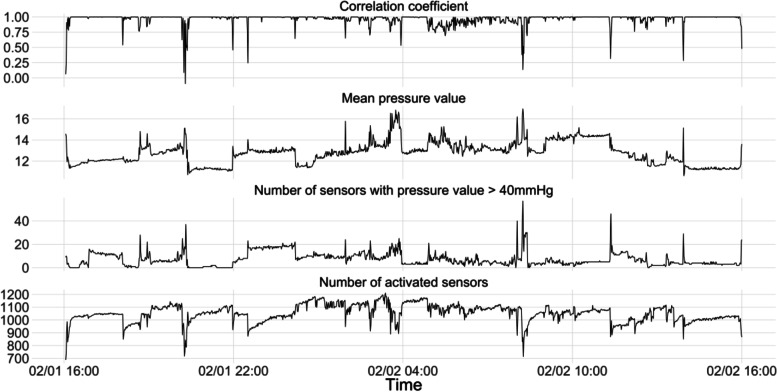
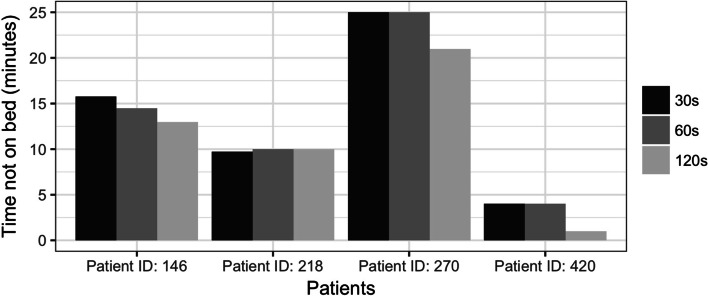
Data from four enrolled study participants excluded from the analytical phase of the study were used to develop an approach to data reduction. A two-step data strategy was used. First, raw data were sampled at different frequencies (5, 30, 60, 120, and 240 s) to identify optimal measurement frequency. Second, similarity between adjacent frames was evaluated using correlation coefficients to identify position changes of enrolled study participants. Data strategy performance was evaluated through visual inspection using heat maps and time series plots.
A sampling frequency of every 60 s provided reasonable representation of changes in interface pressure over time. This approach translated to using only 1.7% of the collected data in analyses. In the second step it was found that 160 frames within 24 h represented the pressure states of study participants. In total, only 480 frames from the 72 h of collected data would be needed for analyses without loss of information. Only ~ 0.2% of the raw data collected would be required for assessment of the primary trial outcome.
Data reduction is an important component of big data analytics. Our two-step strategy markedly reduced the amount of data required for analyses without loss of information. This data reduction strategy, if validated, could be used in other CPI and other settings where large amounts of both temporal and spatial data must be analysed.
随着数字创新带来持续的数据生成和存储能力,科学正变得越来越数据密集。这一进展也带来了挑战,因为许多科学计划都受到所产生数据量的挑战。在这里,我们介绍了一个数据密集型随机临床试验的案例研究,该研究评估了连续压力成像(CPI)用于减少压力损伤的效用。
探索一种方法,通过嵌套压力数据子集,在不丢失关键信息的情况下,将用于分析的 CPI 数据量减少到可管理的大小。
使用从研究分析阶段排除的四名入组研究参与者的数据,开发一种数据减少方法。采用两步数据策略。首先,以不同的频率(5、30、60、120 和 240 s)对原始数据进行采样,以确定最佳测量频率。其次,使用相关系数评估相邻帧之间的相似性,以确定入组研究参与者的位置变化。通过使用热图和时间序列图进行视觉检查来评估数据策略的性能。
每 60 s 采样一次提供了对界面压力随时间变化的合理表示。这种方法在分析中仅使用了所收集数据的 1.7%。在第二步中,发现 24 小时内的 160 个帧代表了研究参与者的压力状态。总共,在没有信息丢失的情况下,仅需要从 72 小时收集的数据中分析 480 个帧。仅需要所收集原始数据的约 0.2%来评估主要试验结果。
数据减少是大数据分析的重要组成部分。我们的两步策略显著减少了分析所需的数据量,而不会丢失信息。如果得到验证,这种数据减少策略可以用于其他 CPI 和其他需要分析大量时间和空间数据的环境。