Institute of Clinical Medicine, China-Japan Friendship Hospital, Beijing, China.
Graduate School of Peking Union Medical College, Chinese Academy of Medical Sciences/Peking Union Medical College, Beijing, China.
Mol Cancer. 2023 Mar 1;22(1):42. doi: 10.1186/s12943-022-01704-8.
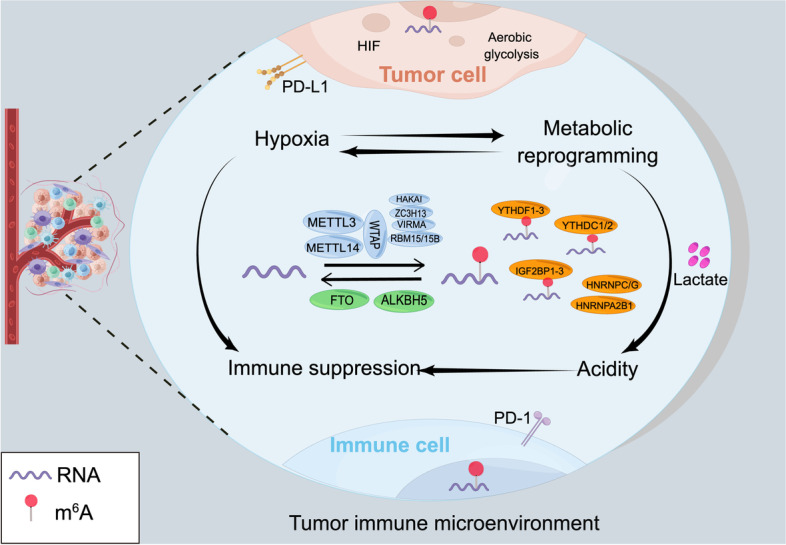
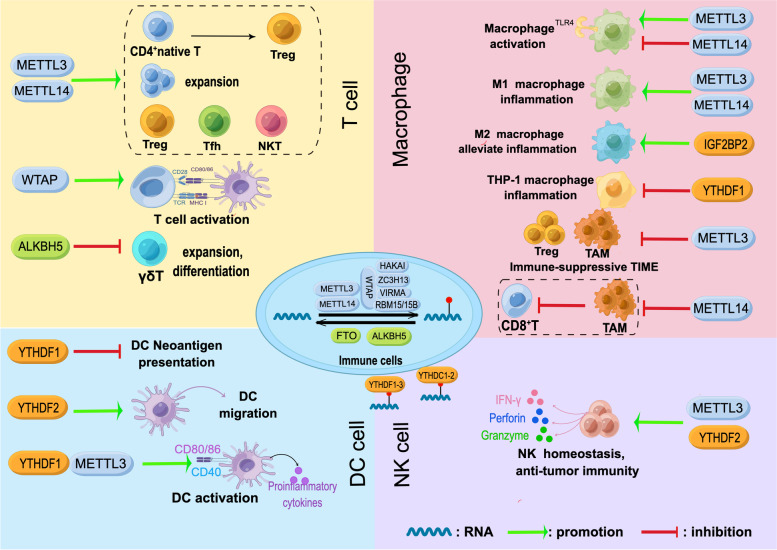
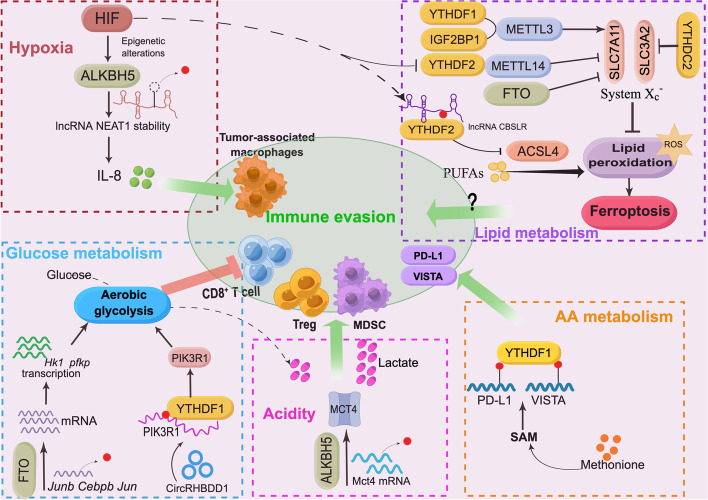
N6-methyladenosine (mA) methylation is the most universal internal modification in eukaryotic mRNA. With elaborate functions executed by mA writers, erasers, and readers, mA modulation is involved in myriad physiological and pathological processes. Extensive studies have demonstrated mA modulation in diverse tumours, with effects on tumorigenesis, metastasis, and resistance. Recent evidence has revealed an emerging role of mA modulation in tumour immunoregulation, and divergent mA methylation patterns have been revealed in the tumour microenvironment. To depict the regulatory role of mA methylation in the tumour immune microenvironment (TIME) and its effect on immune evasion, this review focuses on the TIME, which is characterized by hypoxia, metabolic reprogramming, acidity, and immunosuppression, and outlines the mA-regulated TIME and immune evasion under divergent stimuli. Furthermore, mA modulation patterns in anti-tumour immune cells are summarized.
N6-甲基腺苷(mA)甲基化是真核 mRNA 中最普遍的内部修饰。mA writer、eraser 和 reader 通过精心执行功能,mA 调节参与了众多生理和病理过程。广泛的研究表明,mA 调节在多种肿瘤中存在,对肿瘤发生、转移和耐药性有影响。最近的证据揭示了 mA 调节在肿瘤免疫调节中的新作用,并且在肿瘤微环境中发现了不同的 mA 甲基化模式。为了描绘 mA 甲基化在肿瘤免疫微环境(TIME)中的调节作用及其对免疫逃逸的影响,本综述重点关注以缺氧、代谢重编程、酸性和免疫抑制为特征的 TIME,并概述了在不同刺激下 mA 调节的 TIME 和免疫逃逸。此外,还总结了抗肿瘤免疫细胞中的 mA 调节模式。