Department of Orthopedics and Trauma Surgery, Division of Trauma Surgery, Medical University of Vienna, Vienna, Austria.
Center for Medical Physics and Biomedical Engineering, Medical University of Vienna, Vienna, Austria.
Sci Rep. 2023 Mar 1;13(1):3493. doi: 10.1038/s41598-023-30373-w.
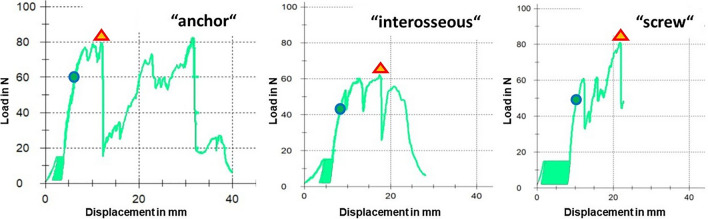
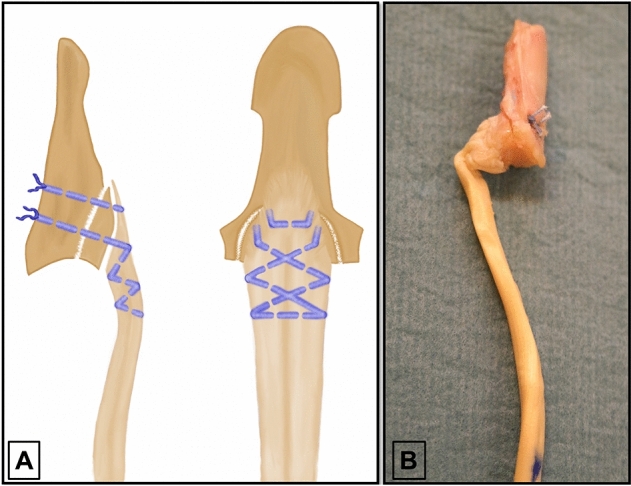
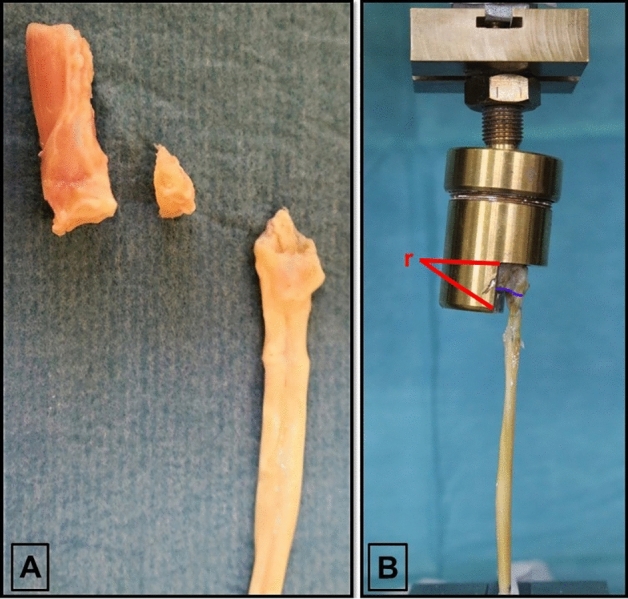
The aim of this biomechanical investigation was to evaluate a repair technique for type IV FDP tendon avulsions using a suture anchor, addressing the bony and the tendinous aspect of this injury simultaneously. In 45 distal phalanges from human anatomical specimens the injury was simulated and repairs were performed with a suture anchor using an innovative technique, interosseous sutures and a combination of screws and an interosseous suture. Repetitive loading for 500 cycles simulated postoperative mobilization. Repairs were loaded to failure thereafter. Elongation of the tendon-suture complex, gap formation at the bone-bone contact line and at the bone-tendon insertion line, load at first noteworthy displacement (2 mm), load at failure and the mechanism of failure were assessed. The suture anchor technique was superior biomechanically considering load at failure (mean: 72.8 N), bony gap formation (mean: 0.1 mm) as well as tendinous gap formation (mean: 0.7 mm), implying a preferable stability of the repair. Overall, this study demonstrates good ex vivo mechanical stability for a proposed suture anchor repair technique for type IV FDP tendon avulsion injuries, which might enable early postoperative mobilization in patients. The technique's subcutaneous implant placement and low implant load are expected to reduce potential complications observed in other commonly used repair techniques. This approach warrants further evaluation in vivo.
本生物力学研究旨在评估一种使用缝合锚钉修复 IV 型 FDP 肌腱撕脱伤的技术,同时解决该损伤的骨和肌腱方面的问题。在 45 个人体解剖标本的远节指骨中模拟了损伤,并使用创新技术、骨间缝线以及螺钉和骨间缝线的组合,通过缝合锚钉进行修复。随后进行了 500 次循环的重复加载,模拟术后的活动度。此后,修复物被加载至失效。随后评估了肌腱-缝线复合物的伸长、骨-骨接触线和骨-肌腱插入线处的间隙形成、首次显著位移(2mm)时的负载、失效时的负载以及失效机制。考虑到失效时的负载(平均值:72.8N)、骨间隙形成(平均值:0.1mm)以及肌腱间隙形成(平均值:0.7mm),缝合锚钉技术在生物力学方面具有优势,这意味着修复的稳定性更好。总的来说,这项研究表明,对于 IV 型 FDP 肌腱撕脱伤,提出的缝合锚钉修复技术具有良好的离体机械稳定性,这可能使患者术后早期活动成为可能。预计该技术的皮下植入物放置和低植入物负载将减少其他常用修复技术中观察到的潜在并发症。这种方法值得进一步在体内评估。