Shen Hongliang, Geng Zixiang, Nie Xiaoli, Liu Te
Department of Urology, Beijing Friendship Hospital, Capital Medical University, Beijing 100050, China.
Shuguang Hospital Affiliated to Shanghai University of Traditional Chinese Medicine, Shanghai 200031, China.
J Cancer. 2023 Jan 22;14(3):367-378. doi: 10.7150/jca.81027. eCollection 2023.
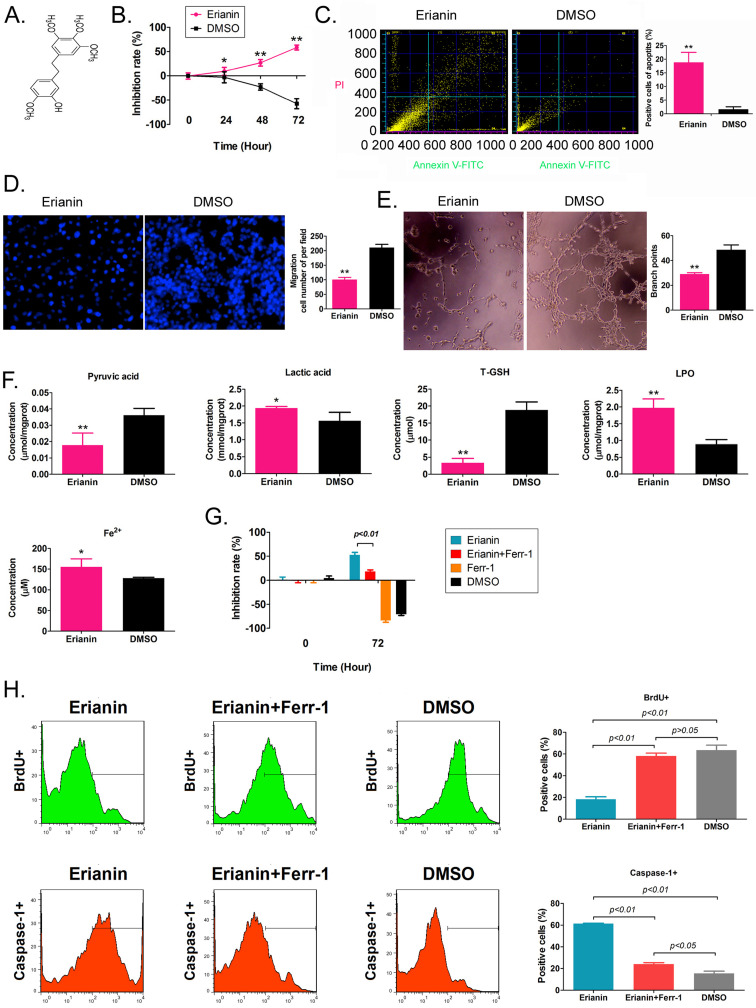
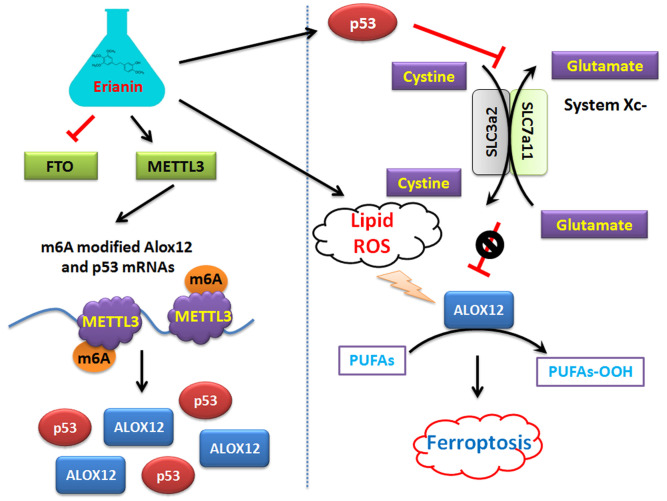
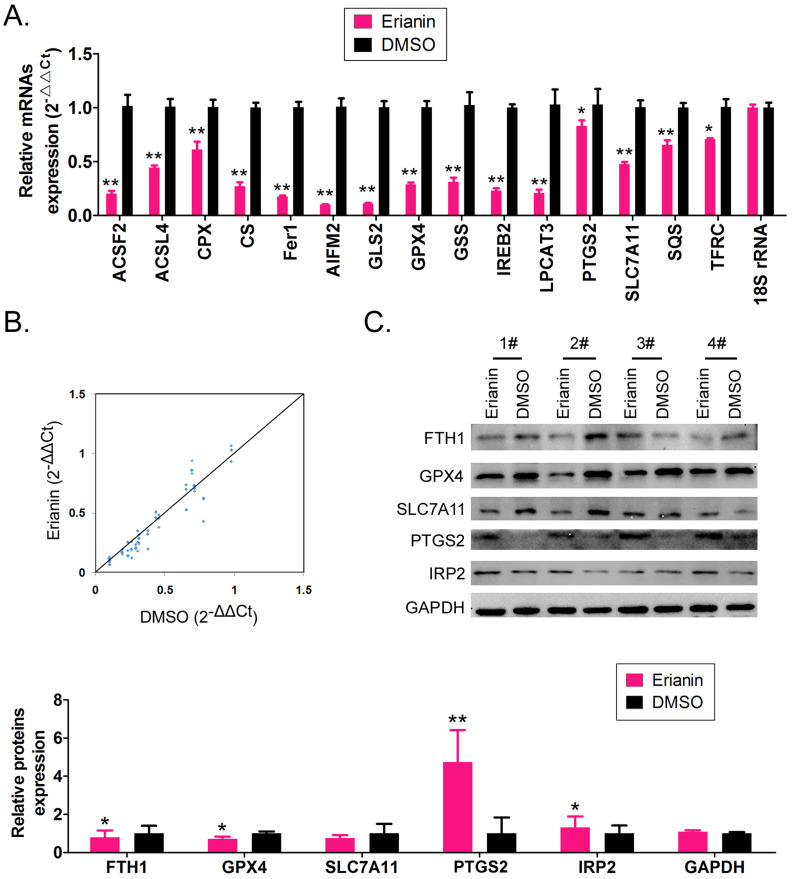
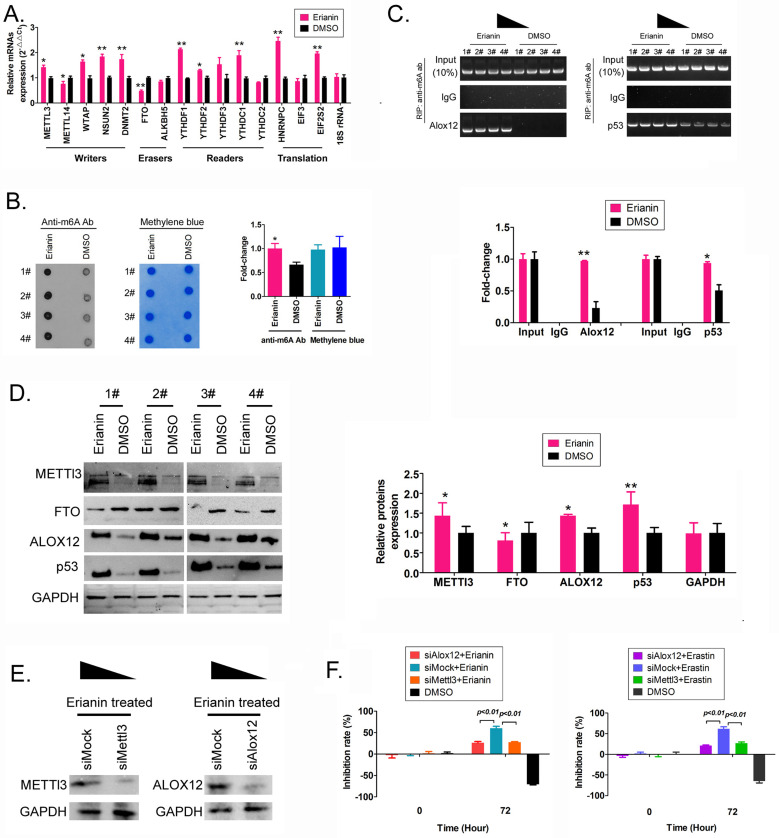
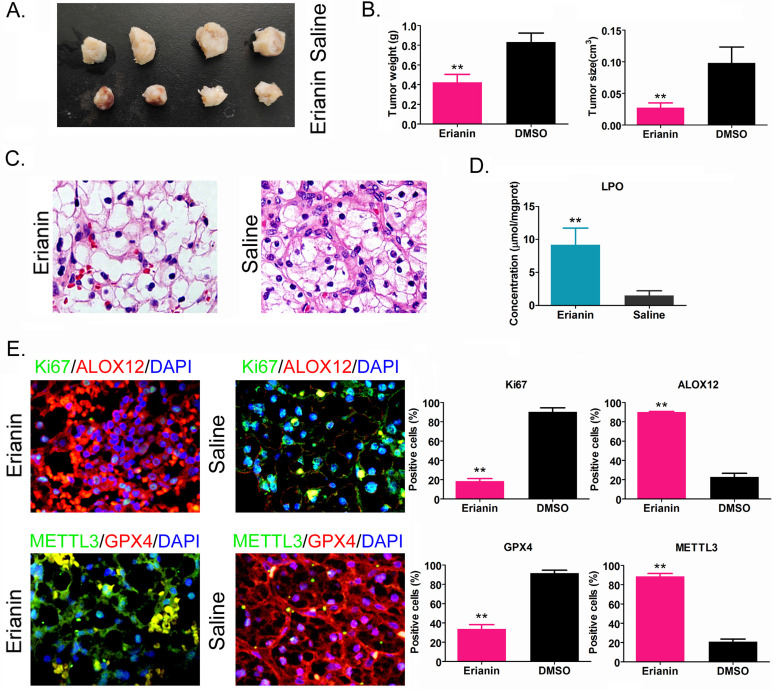
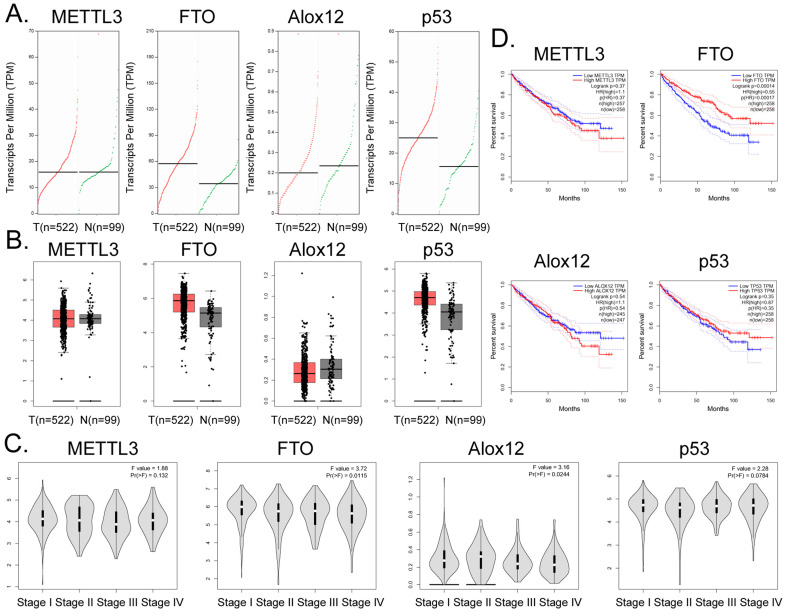
Renal cell carcinoma (RCC) is the most common type of primary renal parenchymal malignancy in adults, with a high degree of malignancy and poor prognosis. Human renal cancer stem cells (HuRCSCs) are reported to be the main cause of drug resistance, metastasis, recurrence, and poor prognosis. Erianin is a low molecular-weight bibenzyl natural product extracted from , which inhibits the and activity of a variety of cancer cells. However, the molecular mechanisms of Erianin's therapeutic effect on HuRCSCs are unknown. Here, we isolated CD44+/CD105+ HuRCSCs from patients with renal cell carcinoma. The experiments confirmed that Erianin significantly inhibited the proliferation, invasion, angiogenesis, and tumorigenesis of HuRCSCs, and induced oxidative stress injury and Fe accumulation. qRT-PCR and western blotting showed that Erianin significantly reduced the expression levels of cellular Ferroptosis protective factors, and upregulated the expression of METTL3 and downregulated that of FTO. Dot blotting results indicated that Erianin significantly upregulated the mRNA N6-methyladenosine (m6A) modification of HuRCSCs. The results of RNA immunoprecipitation-PCR also indicated that Erianin significantly enhanced the m6A modification level of the 3' untranslated region of and mRNA in HuRCSCs, resulting in increased stability, prolonged half-life, and improved translation activity. In addition, clinical data analysis showed that the expression of correlated negatively with adverse events in patient with renal cell carcinoma. Thus, this study suggested that Erianin can induce Ferroptosis in renal cancer stem cells by promoting N6-methyladenosine modification of / mRNA, ultimately achieving a therapeutic effect on renal cancer.
肾细胞癌(RCC)是成人原发性肾实质恶性肿瘤中最常见的类型,具有高度恶性和预后不良的特点。据报道,人肾癌干细胞(HuRCSCs)是耐药、转移、复发和预后不良的主要原因。毛兰素是一种从[植物名称未给出]中提取的低分子量联苄天然产物,它能抑制多种癌细胞的[具体酶名称未给出]和[具体酶名称未给出]活性。然而,毛兰素对HuRCSCs治疗作用的分子机制尚不清楚。在此,我们从肾细胞癌患者中分离出CD44+/CD105+ HuRCSCs。实验证实,毛兰素显著抑制HuRCSCs的增殖、侵袭、血管生成和肿瘤发生,并诱导氧化应激损伤和铁蓄积。qRT-PCR和蛋白质免疫印迹分析表明,毛兰素显著降低细胞铁死亡保护因子的表达水平,并上调METTL3的表达,下调FTO的表达。斑点杂交结果表明,毛兰素显著上调HuRCSCs的mRNA N6-甲基腺苷(m6A)修饰。RNA免疫沉淀-PCR结果也表明,毛兰素显著提高HuRCSCs中[基因名称未给出]和[基因名称未给出] mRNA 3'非翻译区的m6A修饰水平,导致稳定性增加、半衰期延长和翻译活性提高。此外,临床数据分析表明,[基因名称未给出]的表达与肾细胞癌患者的不良事件呈负相关。因此,本研究表明,毛兰素可通过促进/ mRNA的N6-甲基腺苷修饰诱导肾癌干细胞铁死亡,最终实现对肾癌的治疗作用。