Department of Neuroscience, University of Padua, Via Niccolò Giustiniani, 5, 35128, Padua, Italy.
J Neurol. 2023 Jun;270(6):3270-3277. doi: 10.1007/s00415-023-11650-0. Epub 2023 Mar 2.
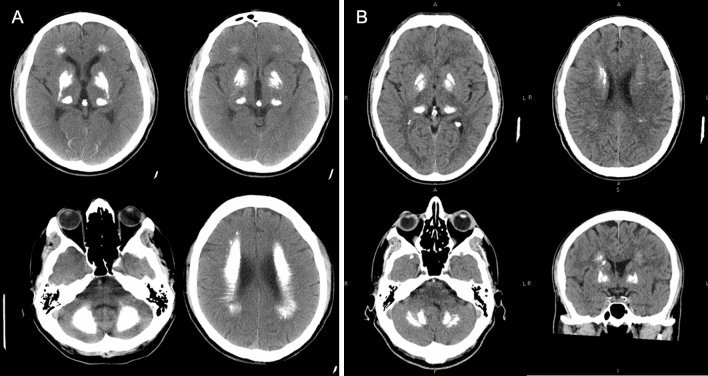
Primary familial brain calcification (PFBC), formerly known as Fahr's disease, is a rare neurodegenerative disease characterized by bilateral progressive calcification of the microvessels of the basal ganglia and other cerebral and cerebellar structures. PFBC is thought to be due to an altered function of the Neurovascular Unit (NVU), where abnormal calcium-phosphorus metabolism, functional and microanatomical alterations of pericytes and mitochondrial alterations cause a dysfunction of the blood-brain barrier (BBB) and the generation of an osteogenic environment with surrounding astrocyte activation and progressive neurodegeneration. Seven causative genes have been discovered so far, of which four with dominant (SLC20A2, PDGFB, PDGFRB, XPR1) and three with recessive inheritance (MYORG, JAM2, CMPK2). Clinical presentation ranges from asymptomatic subjects to movement disorders, cognitive decline and psychiatric disturbances alone or in various combinations. Radiological patterns of calcium deposition are similar in all known genetic forms, but central pontine calcification and cerebellar atrophy are highly suggestive of MYORG mutations and extensive cortical calcification has been associated with JAM2 mutations. Currently, no disease-modifying drugs or calcium-chelating agents are available and only symptomatic treatments can be offered.
原发性家族性脑钙化为一种罕见的神经退行性疾病,其特征是基底节区和其他脑区和小脑区的微血管进行性双侧钙化。原发性家族性脑钙化被认为是由于神经血管单元(Neurovascular Unit,NVU)功能异常所致,其中钙磷代谢异常、周细胞的功能和微观结构改变以及线粒体改变导致血脑屏障(Blood-Brain Barrier,BBB)功能障碍,并产生成骨环境,伴周围星形胶质细胞激活和进行性神经退行性变。迄今为止,已经发现了七个致病基因,其中四个具有显性遗传(SLC20A2、PDGFB、PDGFRB、XPR1),三个具有隐性遗传(MYORG、JAM2、CMPK2)。临床表现从无症状患者到运动障碍、认知能力下降和精神障碍单独或多种组合均可出现。在所有已知的遗传形式中,钙沉积的放射学模式相似,但中央脑桥钙化和小脑萎缩高度提示 MYORG 突变,广泛的皮质钙化与 JAM2 突变有关。目前,尚无疾病修饰药物或钙螯合剂可用,只能提供对症治疗。