Department of Anesthesiology and Pain Medicine, Inselspital, Bern University Hospital, University of Bern, Bern, Switzerland.
Department of Anesthesiology, Perioperative and Pain Medicine, Arthur S. Keats Division of Pediatric Cardiovascular Anesthesia, Texas Children's Hospital, Baylor College of Medicine, Houston, Texas.
Anesthesiology. 2023 May 1;138(5):535-560. doi: 10.1097/ALN.0000000000004520.
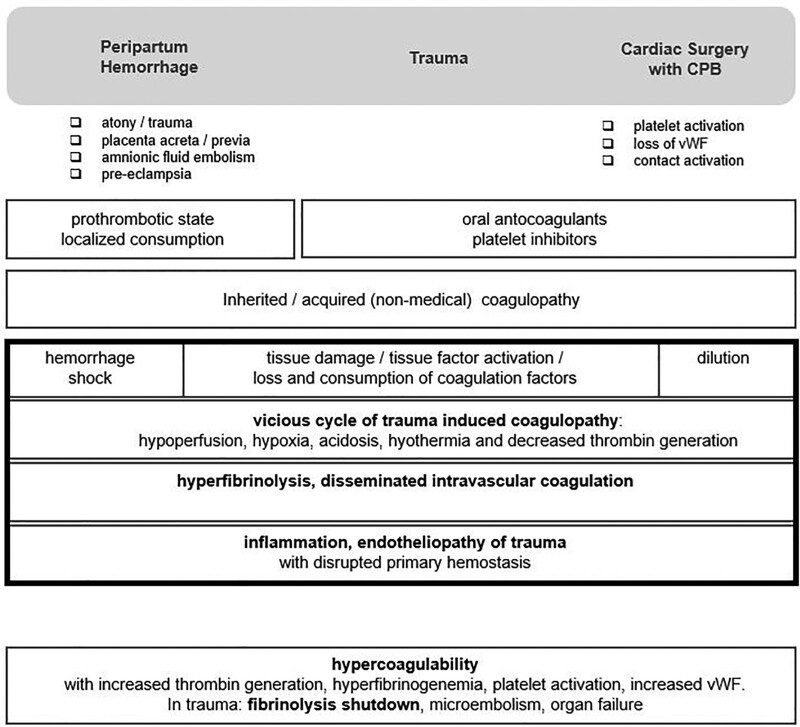
Inherited and acquired coagulopathy are frequently associated with major bleeding in severe trauma, cardiac surgery with cardiopulmonary bypass, and postpartum hemorrhage. Perioperative management is multifactorial and includes preoperative optimization and discontinuation of anticoagulants and antiplatelet therapy in elective procedures. Prophylactic or therapeutic use of antifibrinolytic agents is strongly recommended in guidelines and has been shown to reduce bleeding and need for allogeneic blood administration. In the context of bleeding induced by anticoagulants and/or antiplatelet therapy, reversal strategies should be considered when available. Targeted goal-directed therapy using viscoelastic point-of-care monitoring is increasingly used to guide the administration of coagulation factors and allogenic blood products. In addition, damage control surgery, which includes tamponade of large wound areas, leaving surgical fields open, and other temporary maneuvers, should be considered when bleeding is refractory to hemostatic measures.
遗传性和获得性凝血功能障碍常与严重创伤、体外循环心脏手术和产后出血相关。围手术期管理是多因素的,包括择期手术前的优化和抗凝及抗血小板治疗的停药。指南强烈推荐预防性或治疗性使用抗纤维蛋白溶解药物,并已证明可减少出血和异体输血的需求。在由抗凝和/或抗血小板治疗引起的出血的情况下,应在有条件时考虑逆转策略。使用粘弹性即时检测的靶向目标导向治疗越来越多地用于指导凝血因子和异体血液制品的给药。此外,当止血措施无效时,应考虑使用损伤控制性手术,包括填塞大的伤口区域、使手术区域敞开和其他临时操作。