National Clinical Research Center for Metabolic Disease, Department of Metabolism and Endocrinology, The Second Xiangya Hospital, Central South University, Changsha, Hunan, 410011, China.
Department of Orthopaedics, The Second Xiangya Hospital, Central South University, Changsha, Hunan, 410011, China.
Signal Transduct Target Ther. 2023 Mar 2;8(1):98. doi: 10.1038/s41392-023-01333-7.
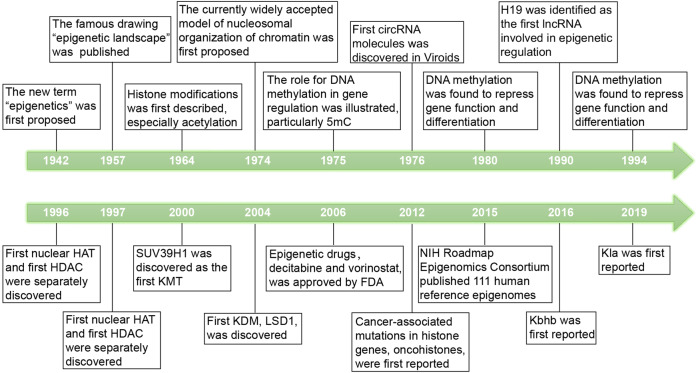
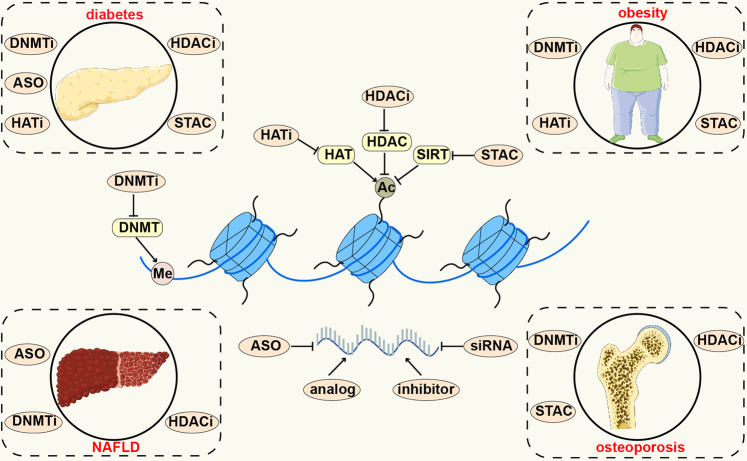
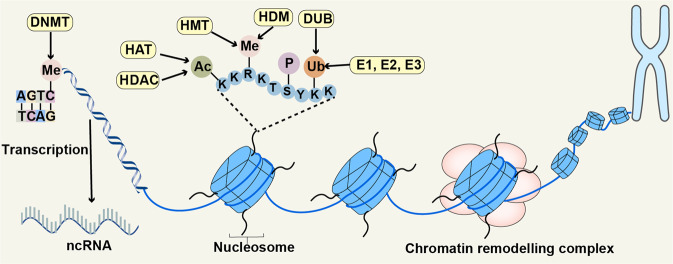
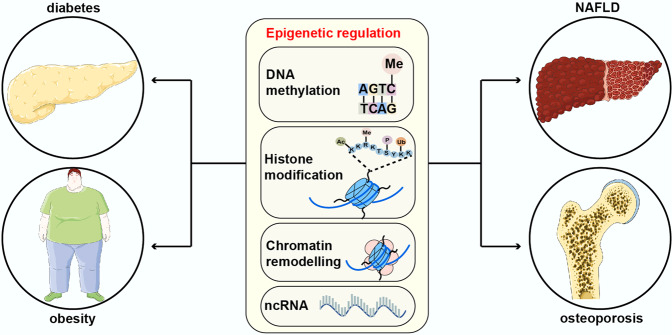
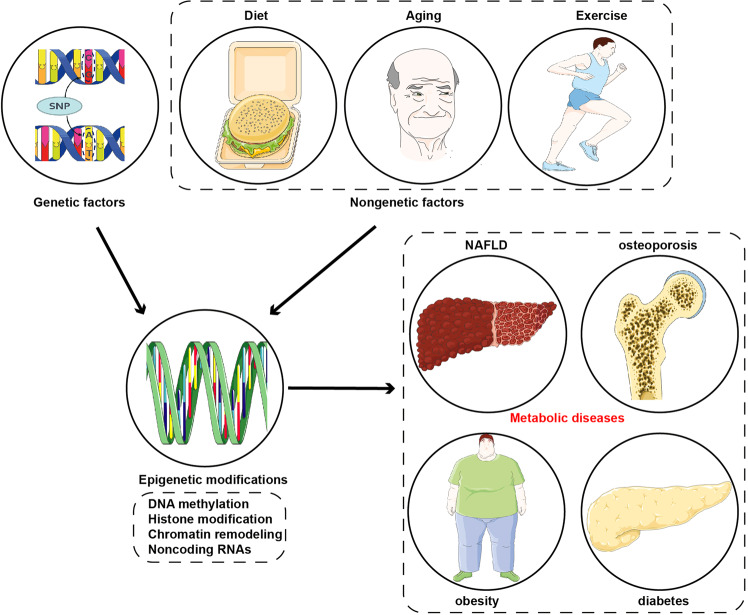
Epigenetics regulates gene expression and has been confirmed to play a critical role in a variety of metabolic diseases, such as diabetes, obesity, non-alcoholic fatty liver disease (NAFLD), osteoporosis, gout, hyperthyroidism, hypothyroidism and others. The term 'epigenetics' was firstly proposed in 1942 and with the development of technologies, the exploration of epigenetics has made great progresses. There are four main epigenetic mechanisms, including DNA methylation, histone modification, chromatin remodelling, and noncoding RNA (ncRNA), which exert different effects on metabolic diseases. Genetic and non-genetic factors, including ageing, diet, and exercise, interact with epigenetics and jointly affect the formation of a phenotype. Understanding epigenetics could be applied to diagnosing and treating metabolic diseases in the clinic, including epigenetic biomarkers, epigenetic drugs, and epigenetic editing. In this review, we introduce the brief history of epigenetics as well as the milestone events since the proposal of the term 'epigenetics'. Moreover, we summarise the research methods of epigenetics and introduce four main general mechanisms of epigenetic modulation. Furthermore, we summarise epigenetic mechanisms in metabolic diseases and introduce the interaction between epigenetics and genetic or non-genetic factors. Finally, we introduce the clinical trials and applications of epigenetics in metabolic diseases.
表观遗传学调控基因表达,并已被证实在多种代谢性疾病中发挥关键作用,如糖尿病、肥胖症、非酒精性脂肪性肝病(NAFLD)、骨质疏松症、痛风、甲状腺功能亢进症、甲状腺功能减退症等。“表观遗传学”一词于 1942 年首次提出,随着技术的发展,对表观遗传学的探索取得了巨大进展。有四种主要的表观遗传机制,包括 DNA 甲基化、组蛋白修饰、染色质重塑和非编码 RNA(ncRNA),它们对代谢性疾病有不同的影响。遗传和非遗传因素,包括衰老、饮食和运动,与表观遗传学相互作用,并共同影响表型的形成。了解表观遗传学可以应用于临床代谢性疾病的诊断和治疗,包括表观遗传生物标志物、表观遗传药物和表观遗传编辑。在这篇综述中,我们介绍了表观遗传学的简要历史以及自提出“表观遗传学”一词以来的里程碑事件。此外,我们总结了表观遗传学的研究方法,并介绍了四种主要的表观遗传调控机制。此外,我们总结了代谢性疾病中的表观遗传机制,并介绍了表观遗传学与遗传或非遗传因素之间的相互作用。最后,我们介绍了代谢性疾病中表观遗传学的临床试验和应用。