Garcia Joseph H, Akins Erin A, Jain Saket, Wolf Kayla J, Zhang Jason, Choudhary Nikita, Lad Meeki, Shukla Poojan, Gill Sabraj, Carson Will, Carette Luis, Zheng Allison, Kumar Sanjay, Aghi Manish K
Department of Neurosurgery; University of California San Francisco (UCSF).
Department of Bioengineering; Stanley Hall; University of California, Berkeley (UC Berkeley), Berkeley, CA 94720.
bioRxiv. 2023 Feb 24:2023.02.23.529575. doi: 10.1101/2023.02.23.529575.
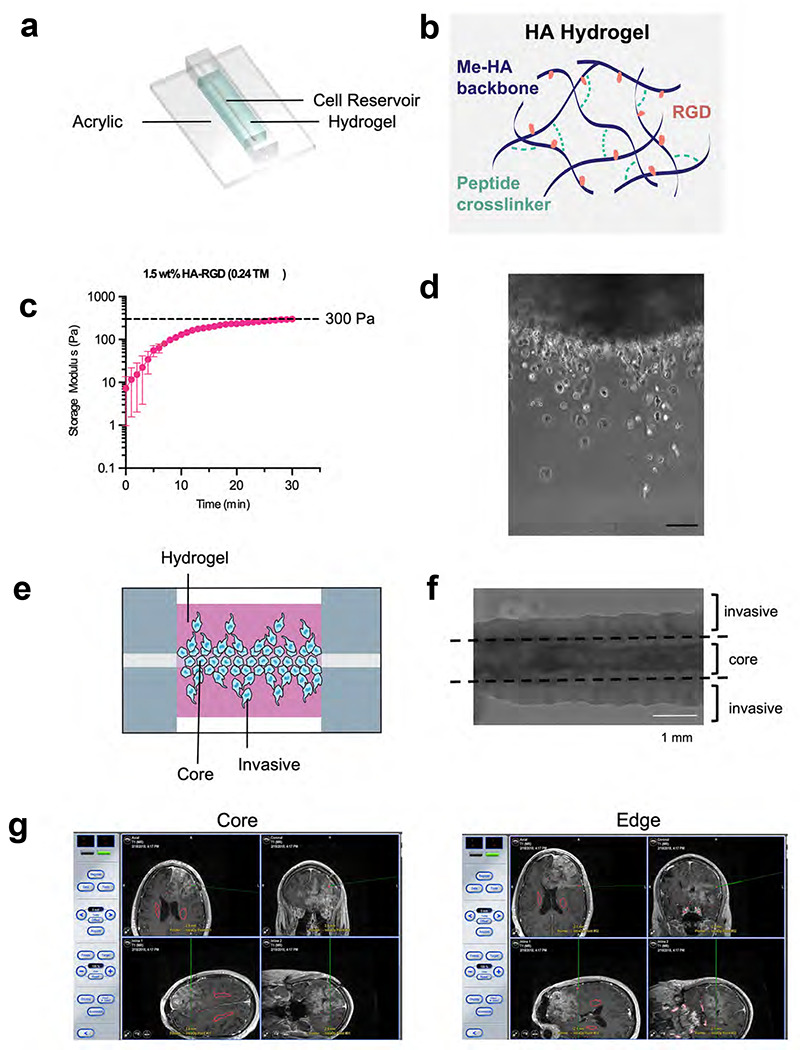
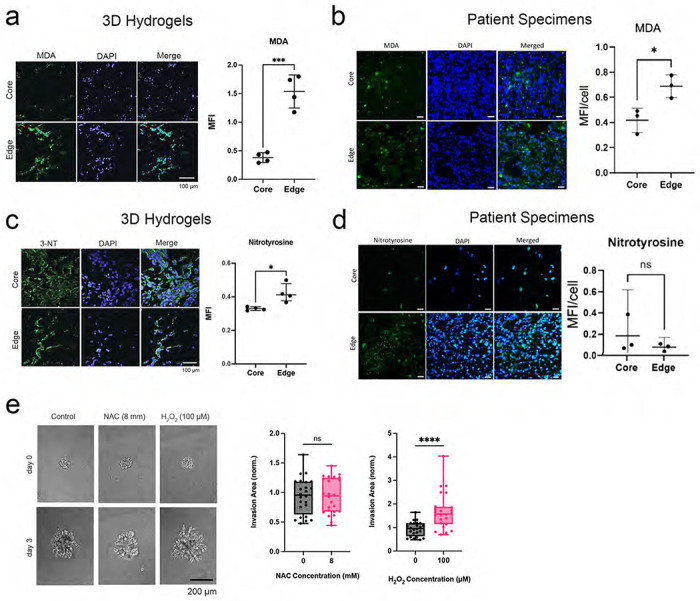
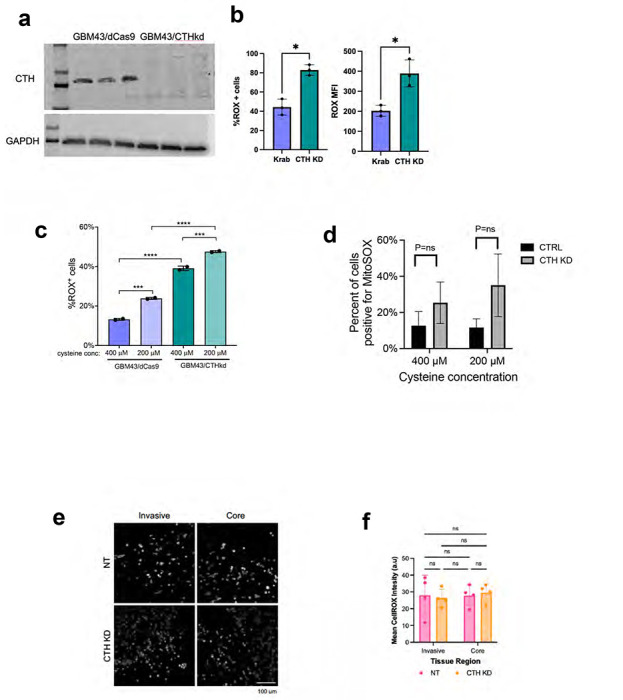
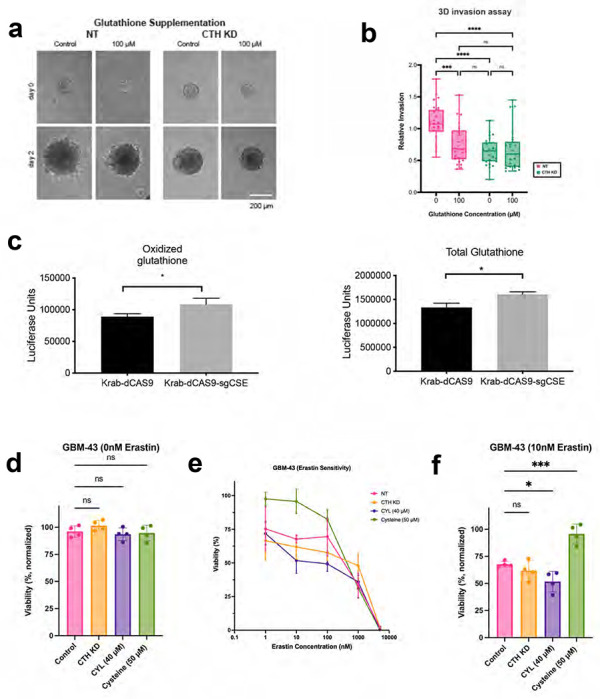
While the poor prognosis of glioblastoma arises from the invasion of a subset of tumor cells, little is known of the metabolic alterations within these cells that fuel invasion. We integrated spatially addressable hydrogel biomaterial platforms, patient site-directed biopsies, and multi-omics analyses to define metabolic drivers of invasive glioblastoma cells. Metabolomics and lipidomics revealed elevations in the redox buffers cystathionine, hexosylceramides, and glucosyl ceramides in the invasive front of both hydrogel-cultured tumors and patient site-directed biopsies, with immunofluorescence indicating elevated reactive oxygen species (ROS) markers in invasive cells. Transcriptomics confirmed upregulation of ROS-producing and response genes at the invasive front in both hydrogel models and patient tumors. Amongst oncologic ROS, hydrogen peroxide specifically promoted glioblastoma invasion in 3D hydrogel spheroid cultures. A CRISPR metabolic gene screen revealed cystathionine gamma lyase (CTH), which converts cystathionine to the non-essential amino acid cysteine in the transsulfuration pathway, to be essential for glioblastoma invasion. Correspondingly, supplementing CTH knockdown cells with exogenous cysteine rescued invasion. Pharmacologic CTH inhibition suppressed glioblastoma invasion, while CTH knockdown slowed glioblastoma invasion . Our studies highlight the importance of ROS metabolism in invasive glioblastoma cells and support further exploration of the transsulfuration pathway as a mechanistic and therapeutic target.
虽然胶质母细胞瘤的预后不良源于一部分肿瘤细胞的侵袭,但对于这些促进侵袭的细胞内的代谢改变却知之甚少。我们整合了可进行空间寻址的水凝胶生物材料平台、患者部位定向活检和多组学分析,以确定侵袭性胶质母细胞瘤细胞的代谢驱动因素。代谢组学和脂质组学研究表明,在水凝胶培养肿瘤和患者部位定向活检的侵袭前沿,氧化还原缓冲剂胱硫醚、己糖神经酰胺和葡萄糖神经酰胺均有所升高,免疫荧光显示侵袭性细胞中的活性氧(ROS)标记物升高。转录组学证实,在水凝胶模型和患者肿瘤的侵袭前沿,产生ROS和对ROS作出反应的基因均上调。在肿瘤相关的ROS中,过氧化氢在三维水凝胶球状体培养中特异性促进了胶质母细胞瘤的侵袭。一项CRISPR代谢基因筛选显示,胱硫醚γ-裂解酶(CTH)在转硫途径中将胱硫醚转化为非必需氨基酸半胱氨酸,是胶质母细胞瘤侵袭所必需的。相应地,用外源性半胱氨酸补充CTH基因敲低的细胞可挽救侵袭能力。药理学上对CTH的抑制作用可抑制胶质母细胞瘤的侵袭,而敲低CTH则会减缓胶质母细胞瘤的侵袭。我们的研究突出了ROS代谢在侵袭性胶质母细胞瘤细胞中的重要性,并支持进一步探索转硫途径作为一种机制和治疗靶点。