Petersen Marvin, Hoffstaedter Felix, Nägele Felix L, Mayer Carola, Schell Maximilian, Rimmele D Leander, Zyriax Birgit-Christiane, Zeller Tanja, Kühn Simone, Gallinat Jürgen, Fiehler Jens, Twerenbold Raphael, Omidvarnia Amir, Patil Kaustubh R, Eickhoff Simon B, Thomalla Götz, Cheng Bastian
Department of Neurology, University Medical Center Hamburg-Eppendorf, Martinistraße 52, 20251 Hamburg, Germany.
Institute for Systems Neuroscience, Medical Faculty, Heinrich-Heine University Düsseldorf, Moorenstraße 5, 40225 Düsseldorf, Germany.
bioRxiv. 2023 Dec 23:2023.02.22.529531. doi: 10.1101/2023.02.22.529531.
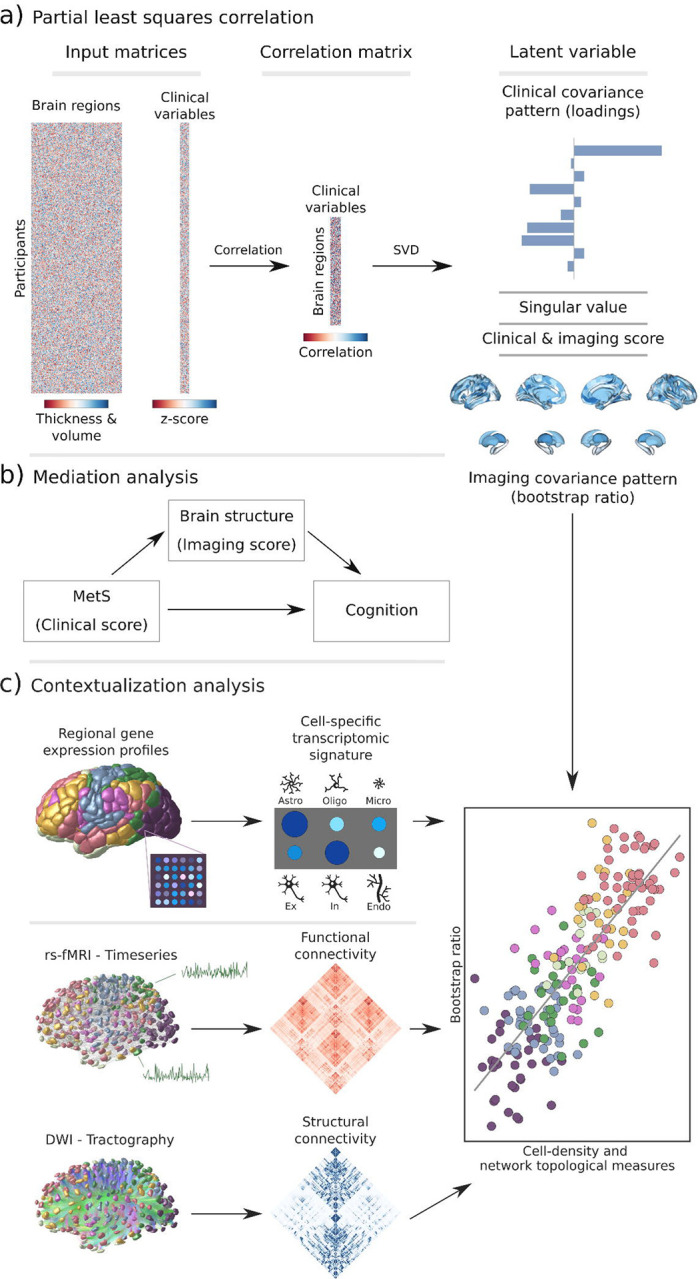
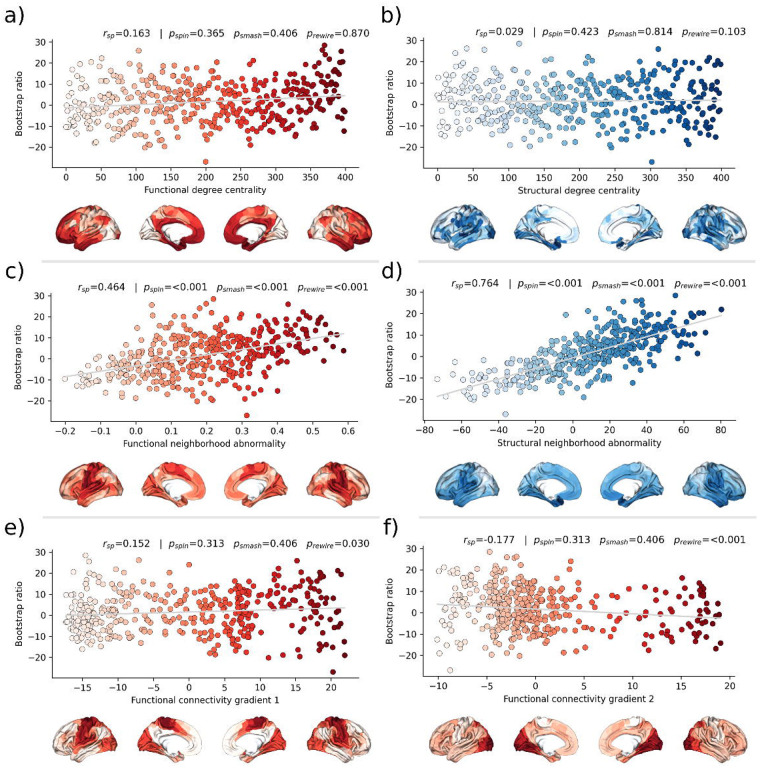
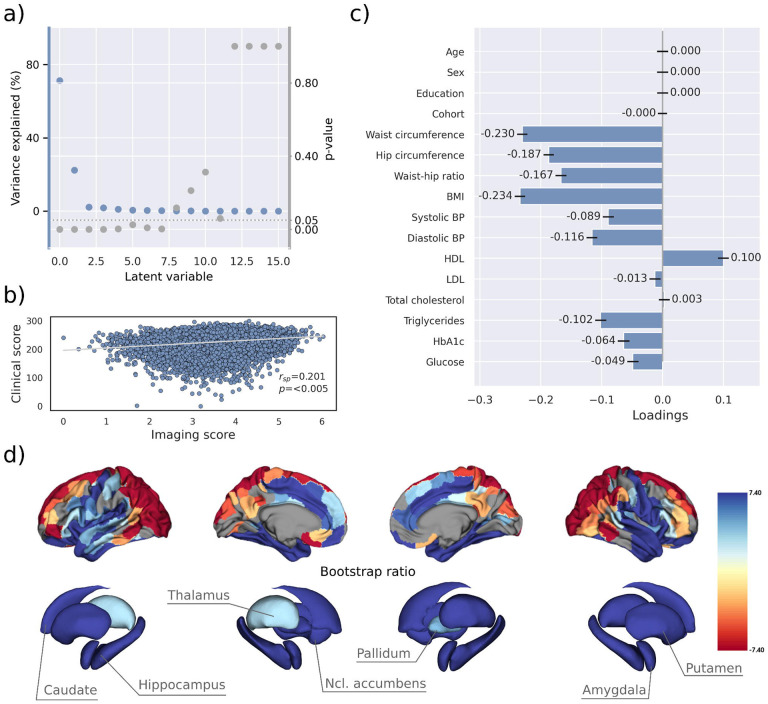
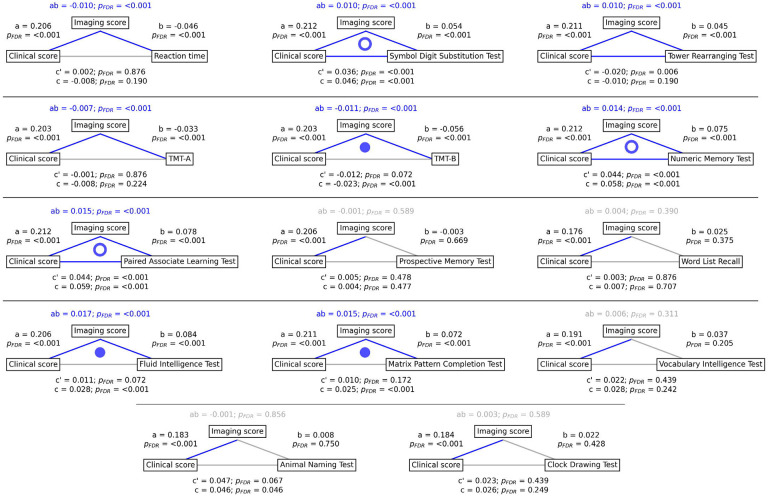
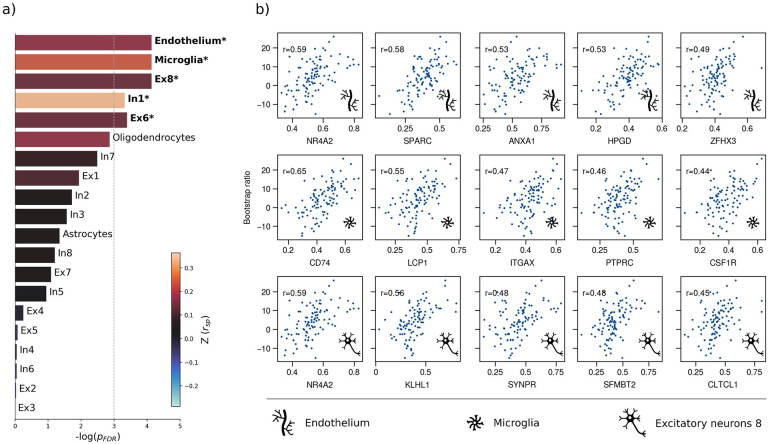
The link between metabolic syndrome (MetS) and neurodegenerative as well cerebrovascular conditions holds substantial implications for brain health in at-risk populations. This study elucidates the complex relationship between MetS and brain health by conducting a comprehensive examination of cardiometabolic risk factors, cortical morphology, and cognitive function in 40,087 individuals. Multivariate, data-driven statistics identified a latent dimension linking more severe MetS to widespread brain morphological abnormalities, accounting for up to 71% of shared variance in the data. This dimension was replicable across sub-samples. In a mediation analysis we could demonstrate that MetS-related brain morphological abnormalities mediated the link between MetS severity and cognitive performance in multiple domains. Employing imaging transcriptomics and connectomics, our results also suggest that MetS-related morphological abnormalities are linked to the regional cellular composition and macroscopic brain network organization. By leveraging extensive, multi-domain data combined with a dimensional stratification approach, our analysis provides profound insights into the association of MetS and brain health. These findings can inform effective therapeutic and risk mitigation strategies aimed at maintaining brain integrity.
代谢综合征(MetS)与神经退行性疾病以及脑血管疾病之间的联系对高危人群的大脑健康具有重大影响。本研究通过对40,087名个体的心脏代谢危险因素、皮质形态和认知功能进行全面检查,阐明了MetS与大脑健康之间的复杂关系。多变量数据驱动统计确定了一个潜在维度,将更严重的MetS与广泛的脑形态异常联系起来,占数据中共享方差的71%。这一维度在子样本中具有可重复性。在中介分析中,我们可以证明,与MetS相关的脑形态异常介导了MetS严重程度与多个领域认知表现之间的联系。利用成像转录组学和连接组学,我们的结果还表明,与MetS相关的形态异常与区域细胞组成和宏观脑网络组织有关。通过利用广泛的多领域数据并结合维度分层方法,我们的分析为MetS与大脑健康的关联提供了深刻见解。这些发现可为旨在维持大脑完整性的有效治疗和风险缓解策略提供参考。