Wang Ning, Lu Yangfan, Rothrauff Benjamin B, Zheng Aojie, Lamb Alexander, Yan Youzhen, Lipa Katelyn E, Lei Guanghua, Lin Hang
Department of Orthopaedic Surgery, Xiangya Hospital, Central South University, Changsha, 410008, Hunan, China.
Department of Orthopaedic Surgery, University of Pittsburgh School of Medicine, Pittsburgh, PA, 15219, USA.
Bone Res. 2023 Mar 3;11(1):13. doi: 10.1038/s41413-023-00248-x.
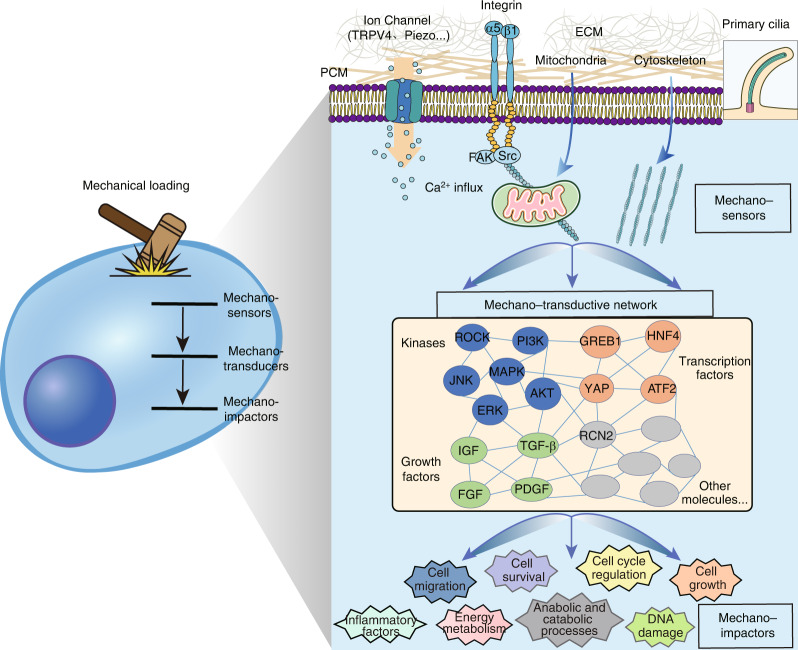
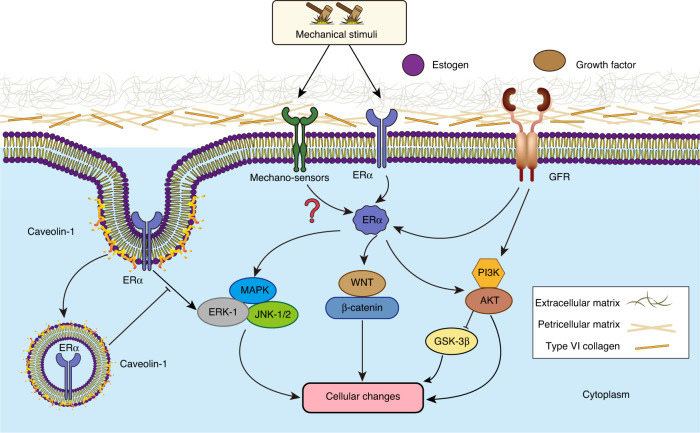
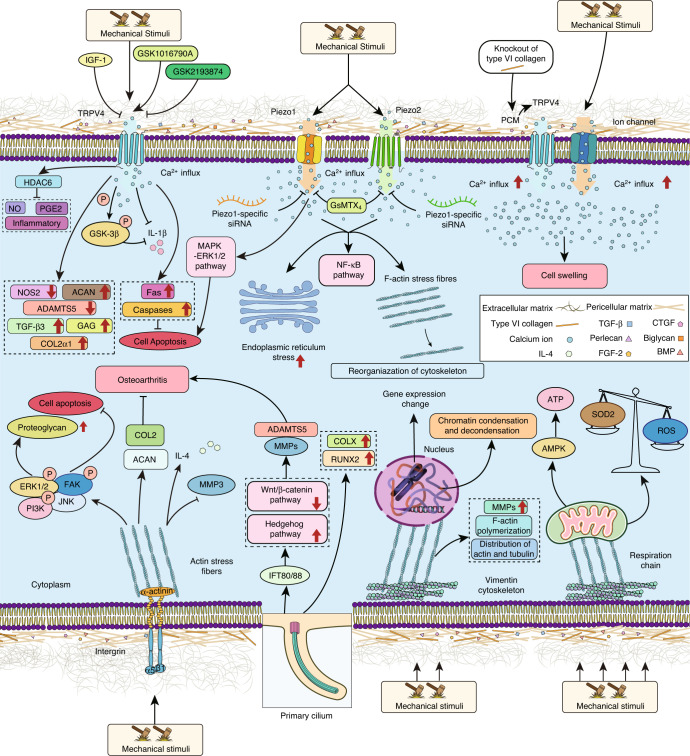
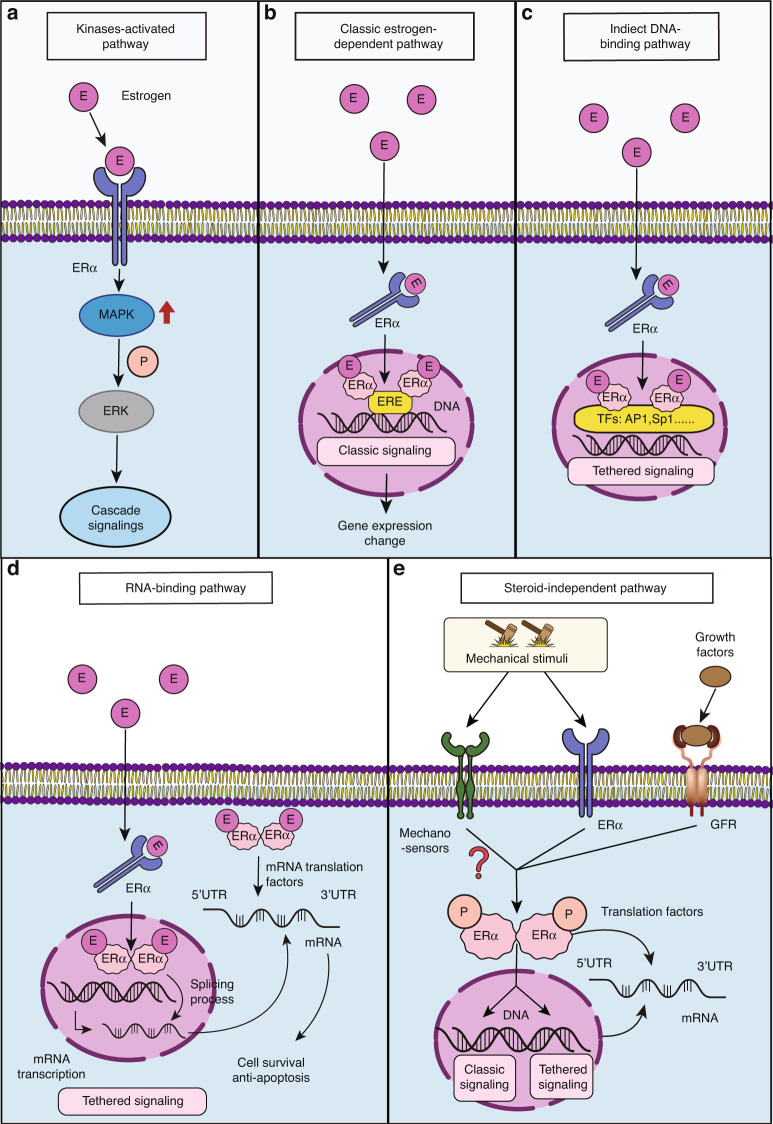
In the synovial joint, mechanical force creates an important signal that influences chondrocyte behavior. The conversion of mechanical signals into biochemical cues relies on different elements in mechanotransduction pathways and culminates in changes in chondrocyte phenotype and extracellular matrix composition/structure. Recently, several mechanosensors, the first responders to mechanical force, have been discovered. However, we still have limited knowledge about the downstream molecules that enact alterations in the gene expression profile during mechanotransduction signaling. Recently, estrogen receptor α (ERα) has been shown to modulate the chondrocyte response to mechanical loading through a ligand-independent mechanism, in line with previous research showing that ERα exerts important mechanotransduction effects on other cell types, such as osteoblasts. In consideration of these recent discoveries, the goal of this review is to position ERα into the mechanotransduction pathways known to date. Specifically, we first summarize our most recent understanding of the mechanotransduction pathways in chondrocytes on the basis of three categories of actors, namely mechanosensors, mechanotransducers, and mechanoimpactors. Then, the specific roles played by ERα in mediating the chondrocyte response to mechanical loading are discussed, and the potential interactions of ERα with other molecules in mechanotransduction pathways are explored. Finally, we propose several future research directions that may advance our understanding of the roles played by ERα in mediating biomechanical cues under physiological and pathological conditions.
在滑膜关节中,机械力产生一种影响软骨细胞行为的重要信号。机械信号向生化信号的转化依赖于机械转导途径中的不同元件,并最终导致软骨细胞表型和细胞外基质组成/结构的变化。最近,已经发现了几种机械传感器,它们是对机械力的第一响应者。然而,对于在机械转导信号传导过程中引起基因表达谱改变的下游分子,我们仍然了解有限。最近,雌激素受体α(ERα)已被证明通过一种不依赖配体的机制调节软骨细胞对机械负荷的反应,这与之前的研究结果一致,即ERα对其他细胞类型(如成骨细胞)发挥重要的机械转导作用。考虑到这些最新发现,本综述的目的是将ERα置于目前已知的机械转导途径中。具体而言,我们首先基于三类参与者(即机械传感器、机械转导器和机械影响因子)总结我们对软骨细胞中机械转导途径的最新认识。然后,讨论ERα在介导软骨细胞对机械负荷反应中所起的具体作用,并探讨ERα与机械转导途径中其他分子的潜在相互作用。最后,我们提出了几个未来的研究方向,这些方向可能会增进我们对ERα在生理和病理条件下介导生物力学信号中所起作用的理解。