Rasheed Md Zeeshan, Khatoon Rehana, Talat Faizia, Alam Mohammad Mumtaz, Tabassum Heena, Parvez Suhel
Department of Toxicology, School of Chemical and Life Sciences, Jamia Hamdard, New Delhi 110062, India.
Drug Design and Medicinal Chemistry Lab, Department of Pharmaceutical Chemistry, School of Pharmaceutical Education and Research, Jamia Hamdard, New Delhi 110062, India.
ACS Omega. 2023 Feb 20;8(8):7279-7288. doi: 10.1021/acsomega.2c03992. eCollection 2023 Feb 28.
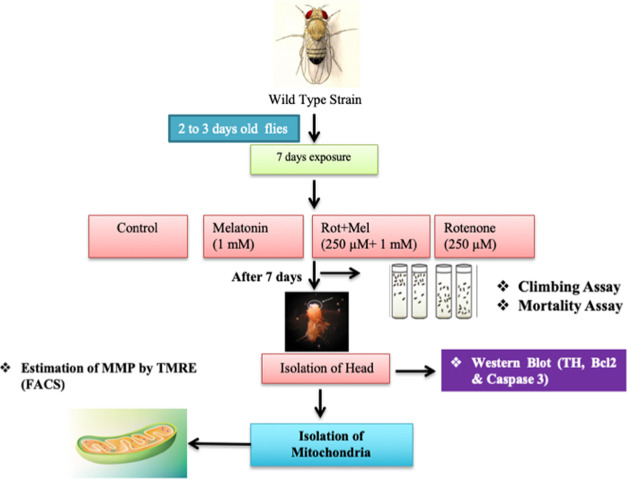
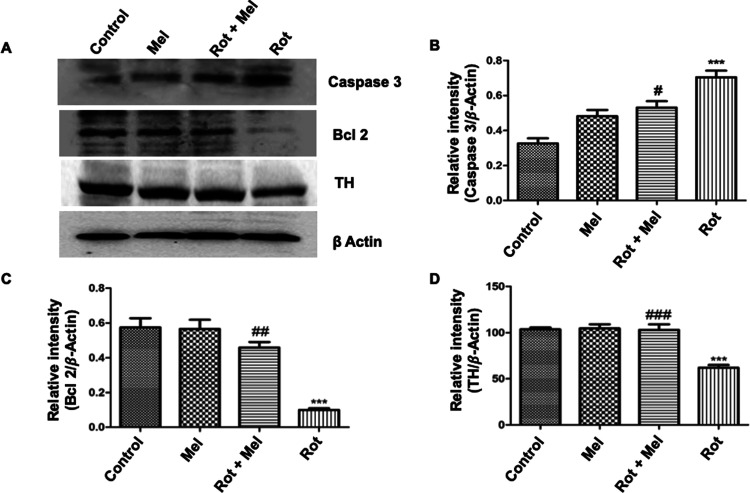
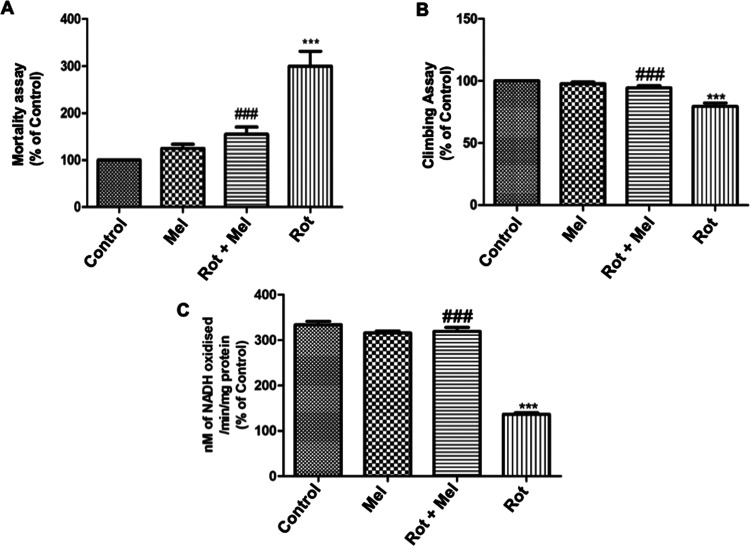
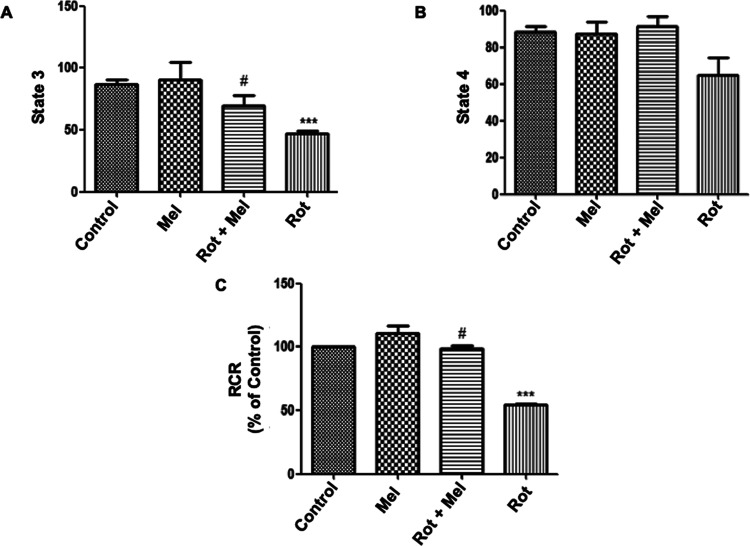
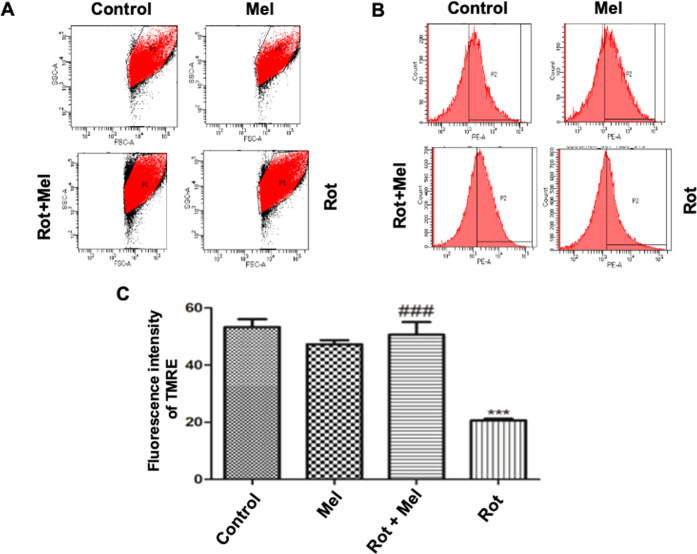
Parkinson's disease (PD) is the second most common neurodegenerative disorder; however, its etiology remains elusive. Antioxidants are considered to be a promising approach for decelerating neurodegenerative disease progression owing to extensive examination of the relationship between oxidative stress and neurodegenerative diseases. In this study, we investigated the therapeutic effect of melatonin against rotenone-induced toxicity in the model of PD. The 3-5 day old flies were divided into four groups: control, melatonin alone, melatonin and rotenone, and rotenone alone groups. According to their respective groups, flies were exposed to a diet containing rotenone and melatonin for 7 days. We found that melatonin significantly reduced the mortality and climbing ability of because of its antioxidative potency. It alleviated the expression of Bcl 2, tyrosine hydroxylase (TH), NADH dehydrogenase, mitochondrial membrane potential, and mitochondrial bioenergetics and decreased caspase 3 expression in the model of rotenone-induced PD-like symptoms. These results indicate the neuromodulatory effect of melatonin, and that it is likely modulated against rotenone-induced neurotoxicity by suppressing oxidative stress and mitochondrial dysfunctions.
帕金森病(PD)是第二常见的神经退行性疾病;然而,其病因仍然不明。由于对氧化应激与神经退行性疾病之间的关系进行了广泛研究,抗氧化剂被认为是减缓神经退行性疾病进展的一种有前景的方法。在本研究中,我们研究了褪黑素对鱼藤酮诱导的帕金森病模型毒性的治疗作用。将3至5日龄的果蝇分为四组:对照组、单独使用褪黑素组、褪黑素与鱼藤酮组以及单独使用鱼藤酮组。根据各自的分组,果蝇暴露于含有鱼藤酮和褪黑素的食物中7天。我们发现,由于其抗氧化能力,褪黑素显著降低了果蝇的死亡率并提高了其攀爬能力。在鱼藤酮诱导的帕金森病样症状模型中,它减轻了Bcl 2、酪氨酸羟化酶(TH)、NADH脱氢酶的表达、线粒体膜电位和线粒体生物能量学,并降低了半胱天冬酶3的表达。这些结果表明了褪黑素的神经调节作用,并且它可能通过抑制氧化应激和线粒体功能障碍来对抗鱼藤酮诱导的神经毒性。