Pelczar Michal P, Nowakowski Andrej M
Department of Orthopaedic Surgery and Traumatology, Kantonsspital Baselland (Bruderholz, Liestal, Laufen), Bruderholz, Switzerland.
Department for Orthopaedics and Traumatology, University of Basel, Medical Faculty, Basel, Switzerland.
J Orthop Case Rep. 2022 Sep;12(9):52-55. doi: 10.13107/jocr.2022.v12.i09.3014.
Tuberculous coxitis accounts for about 15% of all osteoarticular tuberculosis cases and is the second most common after spinal tuberculosis. In extensive cases, Girdlestone resection arthroplasty is an option for primary surgical treatment followed in the course of time, with total hip arthroplasty (THR) to increase function. However, the remaining bone stock is generally poor. In these cases, the Wagner cone stem offers good pre-conditions for bone restoration even seven decades after Girdlestone, as presented here.
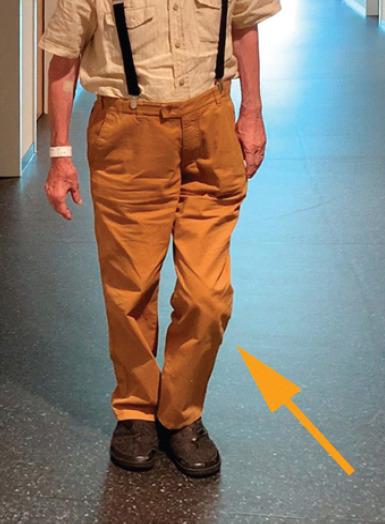
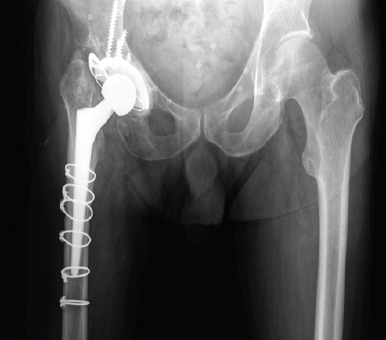
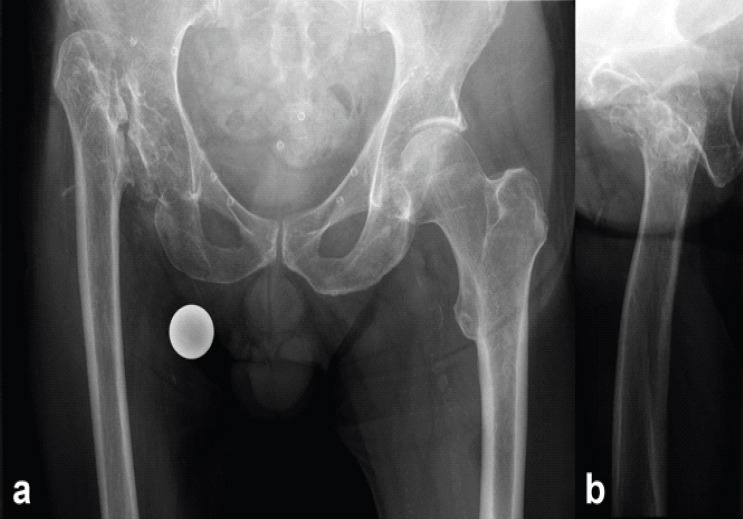
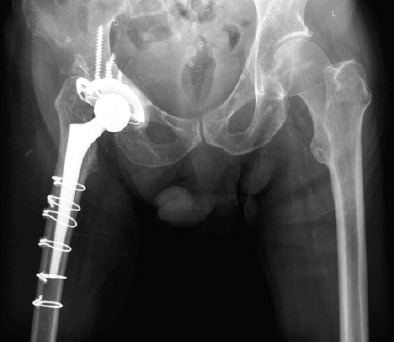
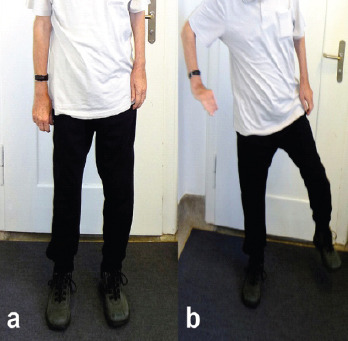
A 76-year-old male patient was admitted to our department with a painful hip, who had previously been treated with Girdlestone at the age of 5 years after being diagnosed with tuberculous coxitis. After an intensive and very detailed evaluation of treatment options, the decision fell on rearticulating with a THR, even though primary surgery lay seven decades back. Since it was not possible to insert an appropriate non-cemented pressfit-cup, an acetabular reinforcement ring and a PE low profile cup were inserted, cemented with less inclination to avoid or reduce hip instability. A fissure around the implant (Wagner cone stem) was secured with numerous cerclages. Surgery was performed by the senior author (A.M.N.) postoperatively, the patient suffered a prolonged delirium. Ten months after surgery, the patient was satisfied with the result and reported a meaningful improvement in his daily quality of life. His mobility increased significantly and represented by his ability to climb stairs without being in pain or needing walking aids. Today, 2 ½ years after THR surgery, the patient still reports being satisfied and pain free.
Despite transient complications postoperatively, we are happy to report a very satisfactory clinical and radiologic outcome after 10 months. The today 79-year-old patient reports having a higher quality of life since rearticulation of his Girdlestone situation. However, the long-term effects and survival rate of this procedure need to be observed furthermore.
结核性髋关节炎约占所有骨关节结核病例的15%,是仅次于脊柱结核的第二常见类型。在广泛病变的病例中,Girdlestone切除关节成形术是原发性手术治疗的一种选择,随着时间推移,后续可进行全髋关节置换术(THR)以改善功能。然而,剩余的骨量通常较差。在这些病例中,如本文所述,即使在Girdlestone手术七十年后,Wagner锥形柄仍为骨修复提供了良好的前提条件。
一名76岁男性患者因髋关节疼痛入住我院,他在5岁时被诊断为结核性髋关节炎,曾接受过Girdlestone手术治疗。在对治疗方案进行深入且非常详细的评估后,决定采用THR进行关节重建,尽管初次手术已过去七十年。由于无法植入合适的非骨水泥压配髋臼杯,因此植入了髋臼加强环和PE低剖面髋臼杯,并采用较小的倾斜角度进行骨水泥固定,以避免或减少髋关节不稳定。用大量钢丝环扎固定植入物(Wagner锥形柄)周围的裂缝。手术由资深作者(A.M.N.)实施,术后患者出现了长时间的谵妄。术后十个月,患者对结果感到满意,并报告其日常生活质量有了显著改善。他的活动能力显著提高,表现为能够无痛爬楼梯且无需助行器。如今,在THR手术后两年半,患者仍表示满意且无疼痛。
尽管术后出现了短暂并发症,但我们很高兴地报告,十个月后临床和影像学结果非常令人满意。如今这位79岁的患者表示,自从对其Girdlestone术后情况进行关节重建后,生活质量有所提高。然而,该手术的长期效果和生存率仍需进一步观察。