Department of Microbiology, Tumor and Cell Biology, Karolinska Institutet, Stockholm, Sweden.
Department of Women's and Children's Health, Karolinska Institutet, Stockholm, Sweden.
Cancer Res Commun. 2022 Mar 31;2(3):182-201. doi: 10.1158/2767-9764.CRC-21-0019. eCollection 2022 Mar.
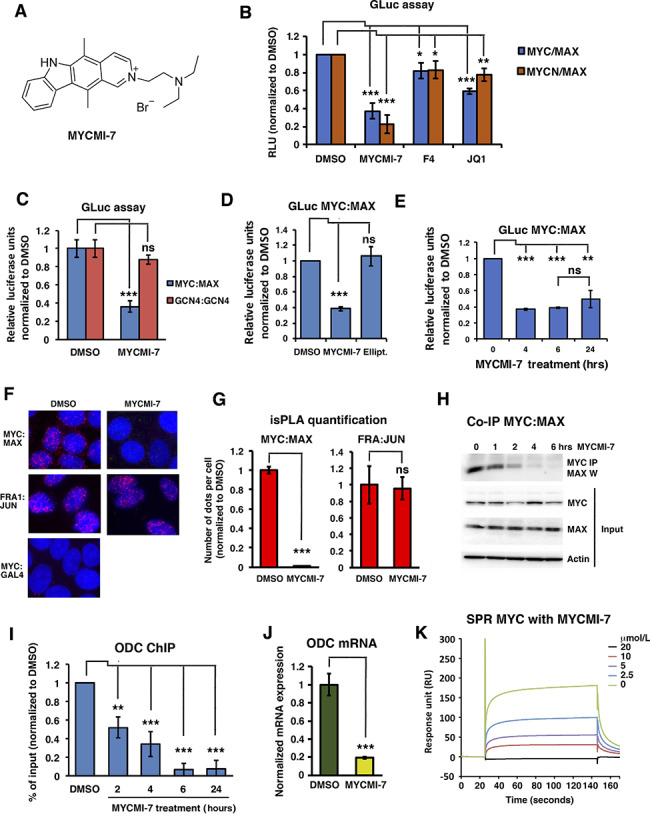
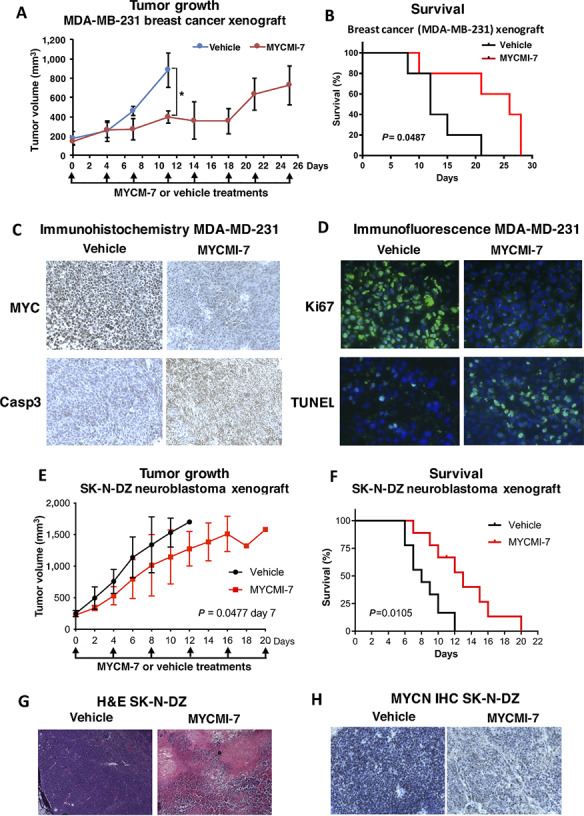
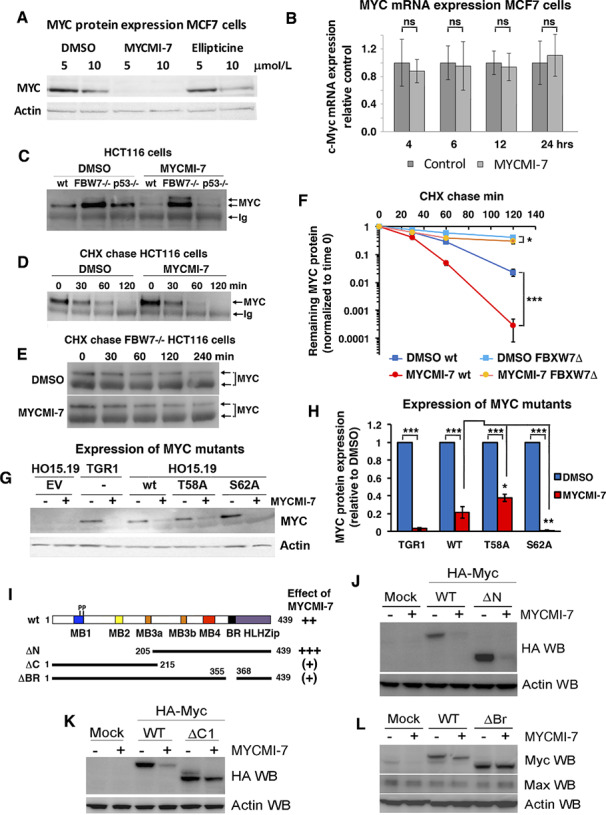
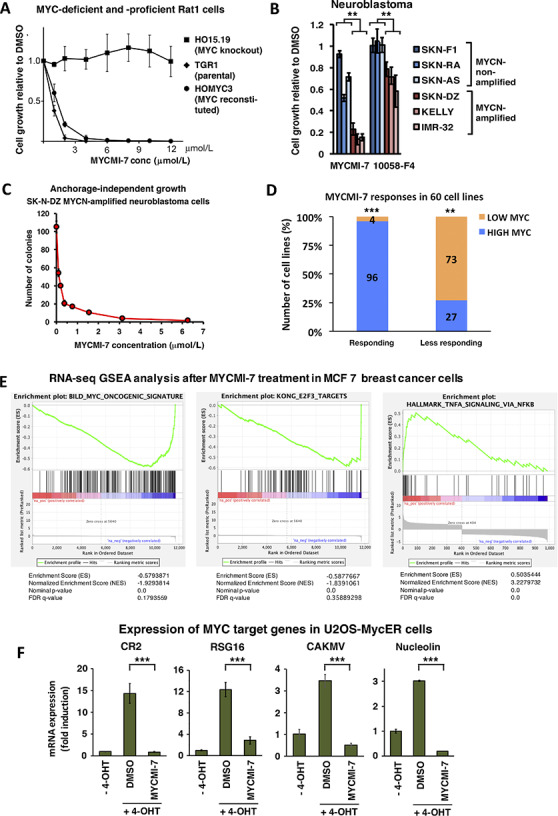
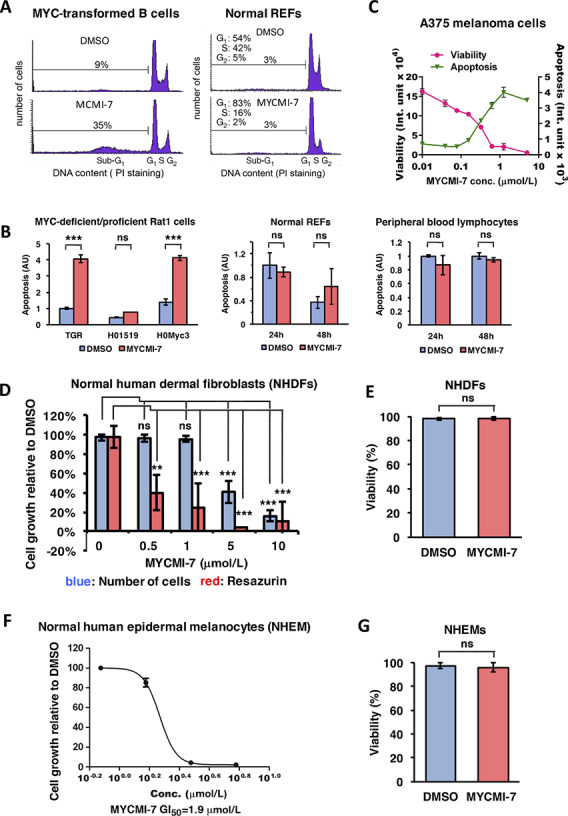
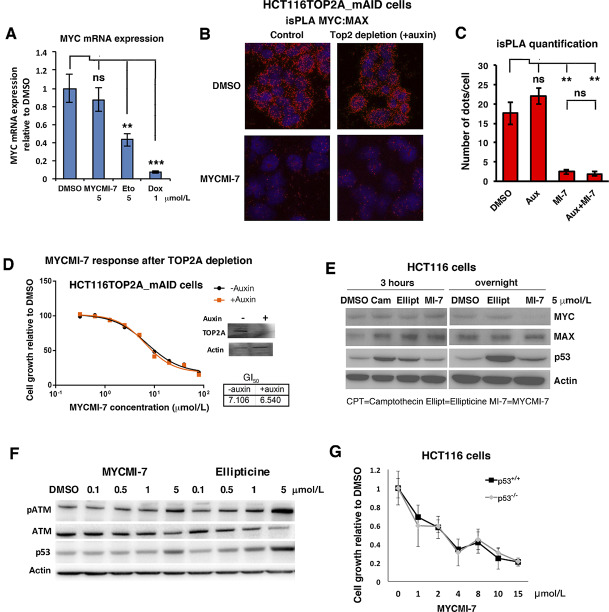
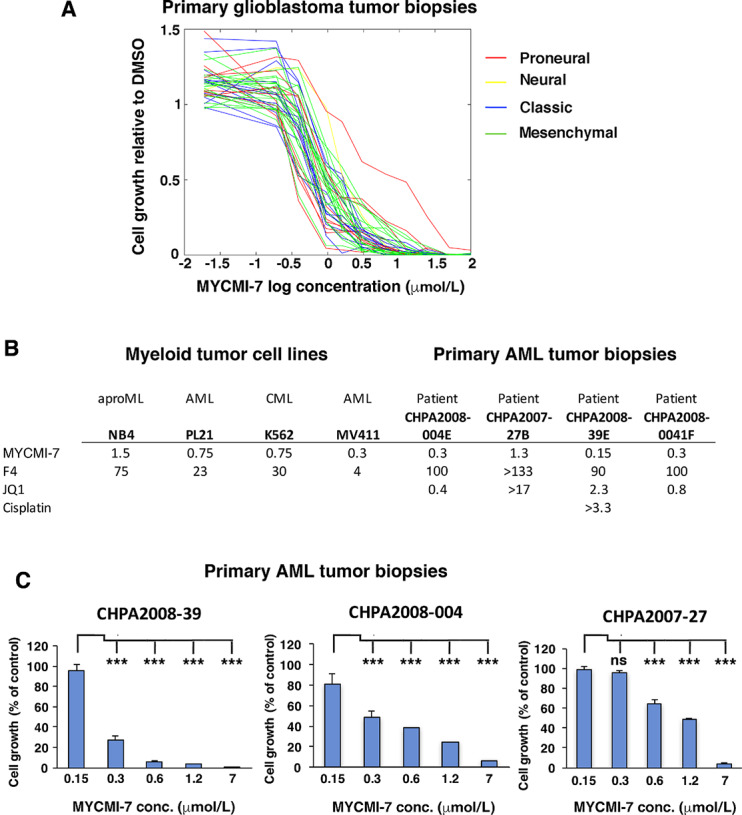
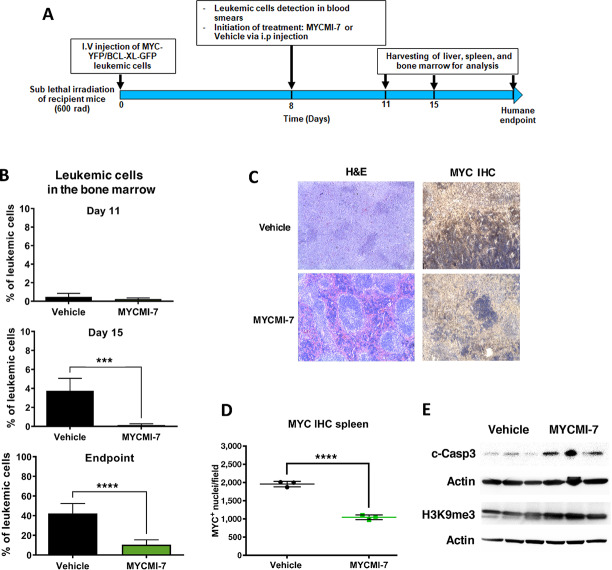
Deregulated expression of family oncogenes occurs frequently in human cancer and is often associated with aggressive disease and poor prognosis. While MYC is a highly warranted target, it has been considered "undruggable," and no specific anti-MYC drugs are available in the clinic. We recently identified molecules named MYCMIs that inhibit the interaction between MYC and its essential partner MAX. Here we show that one of these molecules, MYCMI-7, efficiently and selectively inhibits MYC:MAX and MYCN:MAX interactions in cells, binds directly to recombinant MYC, and reduces MYC-driven transcription. In addition, MYCMI-7 induces degradation of MYC and MYCN proteins. MYCMI-7 potently induces growth arrest/apoptosis in tumor cells in a MYC/MYCN-dependent manner and downregulates the MYC pathway on a global level as determined by RNA sequencing. Sensitivity to MYCMI-7 correlates with MYC expression in a panel of 60 tumor cell lines and MYCMI-7 shows high efficacy toward a collection of patient-derived primary glioblastoma and acute myeloid leukemia (AML) cultures. Importantly, a variety of normal cells become G arrested without signs of apoptosis upon MYCMI-7 treatment. Finally, in mouse tumor models of MYC-driven AML, breast cancer, and MYCN-amplified neuroblastoma, treatment with MYCMI-7 downregulates MYC/MYCN, inhibits tumor growth, and prolongs survival through apoptosis with few side effects. In conclusion, MYCMI-7 is a potent and selective MYC inhibitor that is highly relevant for the development into clinically useful drugs for the treatment of MYC-driven cancer.
Our findings demonstrate that the small-molecule MYCMI-7 binds MYC and inhibits interaction between MYC and MAX, thereby hampering MYC-driven tumor cell growth in culture and while sparing normal cells.
家族癌基因的失调表达在人类癌症中经常发生,通常与侵袭性疾病和预后不良有关。虽然 MYC 是一个非常有希望的靶点,但它一直被认为是“不可成药的”,临床上没有专门的抗 MYC 药物。我们最近发现了一种名为 MYCMI 的分子,它可以抑制 MYC 与其必需伴侣 MAX 之间的相互作用。在这里,我们表明这些分子中的一种,MYCMI-7,能够有效地和选择性地抑制 MYC:MAX 和 MYCN:MAX 相互作用在细胞中,直接与重组 MYC 结合,并降低 MYC 驱动的转录。此外,MYCMI-7 诱导 MYC 和 MYCN 蛋白的降解。MYCMI-7 以 MYC/MYCN 依赖的方式在肿瘤细胞中强烈诱导生长停滞/凋亡,并通过 RNA 测序确定在全局水平下调 MYC 通路。对 MYCMI-7 的敏感性与 60 种肿瘤细胞系中的 MYC 表达相关,并且 MYCMI-7 对患者来源的原发性脑胶质瘤和急性髓系白血病 (AML) 培养物的集合显示出高效性。重要的是,各种正常细胞在 MYCMI-7 处理后会发生 G 期停滞,而没有凋亡的迹象。最后,在 MYC 驱动的 AML、乳腺癌和 MYCN 扩增神经母细胞瘤的小鼠肿瘤模型中,MYCMI-7 的治疗可下调 MYC/MYCN,抑制肿瘤生长,并通过凋亡延长存活时间,副作用很少。总之,MYCMI-7 是一种有效的、选择性的 MYC 抑制剂,对于开发用于治疗 MYC 驱动的癌症的临床有用药物具有重要意义。
我们的研究结果表明,小分子 MYCMI-7 与 MYC 结合并抑制 MYC 与 MAX 之间的相互作用,从而在体外阻止 MYC 驱动的肿瘤细胞生长,同时保留正常细胞。