Department of Surgery and Transplantation, University Hospital Zurich, Zurich, Switzerland.
Department of Immunology, University Hospital Zurich (USZ), Zurich, Switzerland.
Front Immunol. 2023 Feb 15;14:1104371. doi: 10.3389/fimmu.2023.1104371. eCollection 2023.
The type of donation may affect how susceptible a donor kidney is to injury from pre-existing alloimmunity. Many centers are, therefore, reluctant to perform donor specific antibody (DSA) positive transplantations in the setting of donation after circulatory death (DCD). There are, however, no large studies comparing the impact of pre-transplant DSA stratified on donation type in a cohort with a complete virtual cross-match and long-term follow-up of transplant outcome.
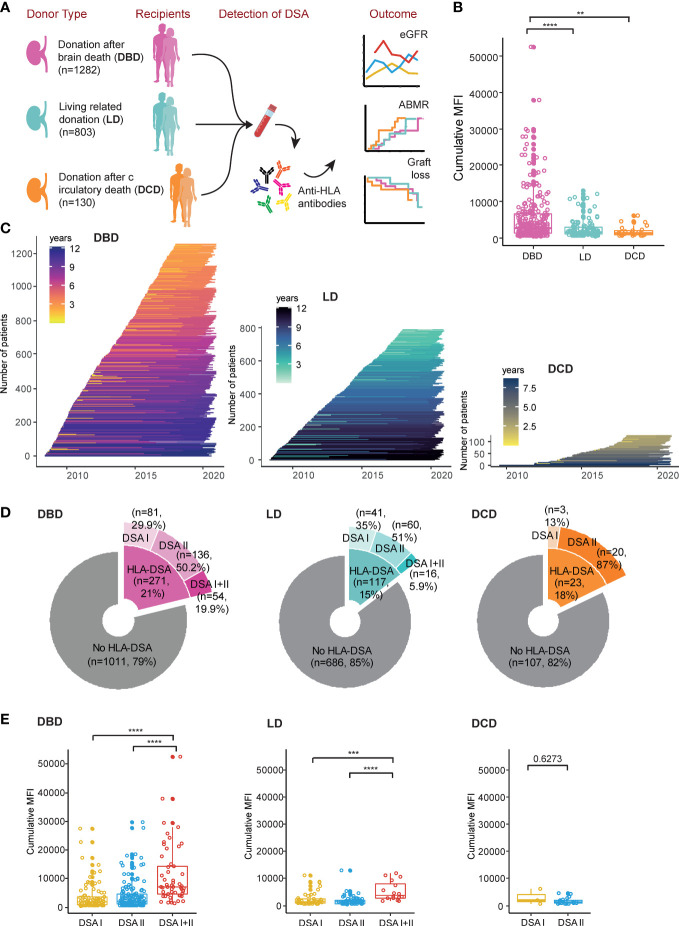
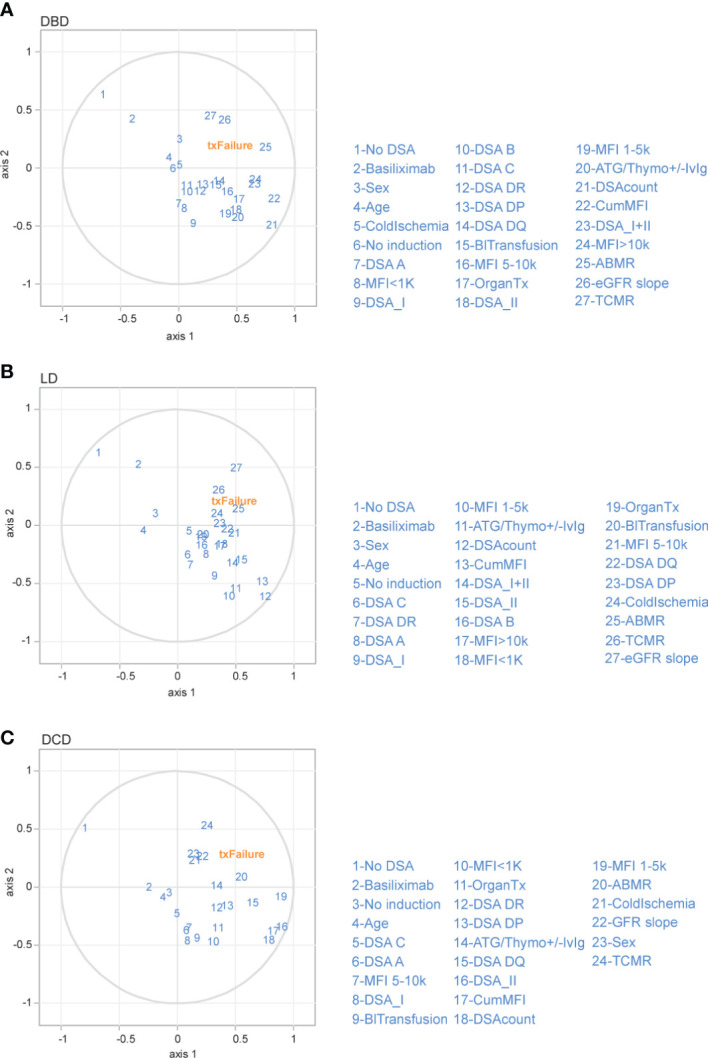
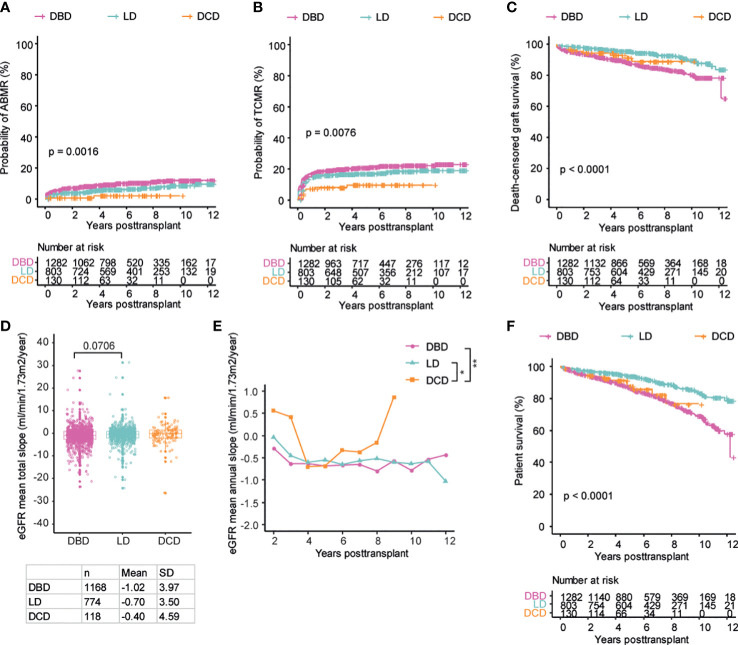
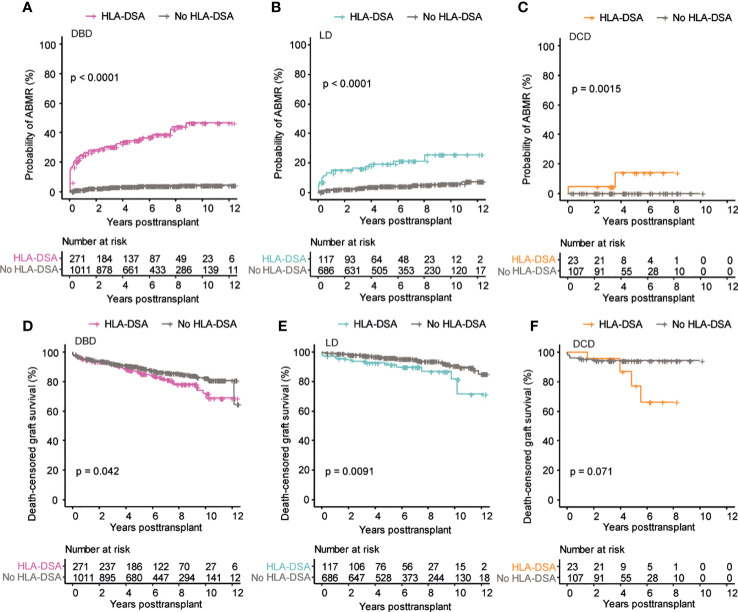
We investigated the effect of pre-transplant DSA on the risk of rejection, graft loss, and the rate of eGFR decline in 1282 donation after brain death (DBD) transplants and compared it to 130 (DCD) and 803 living donor (LD) transplants.
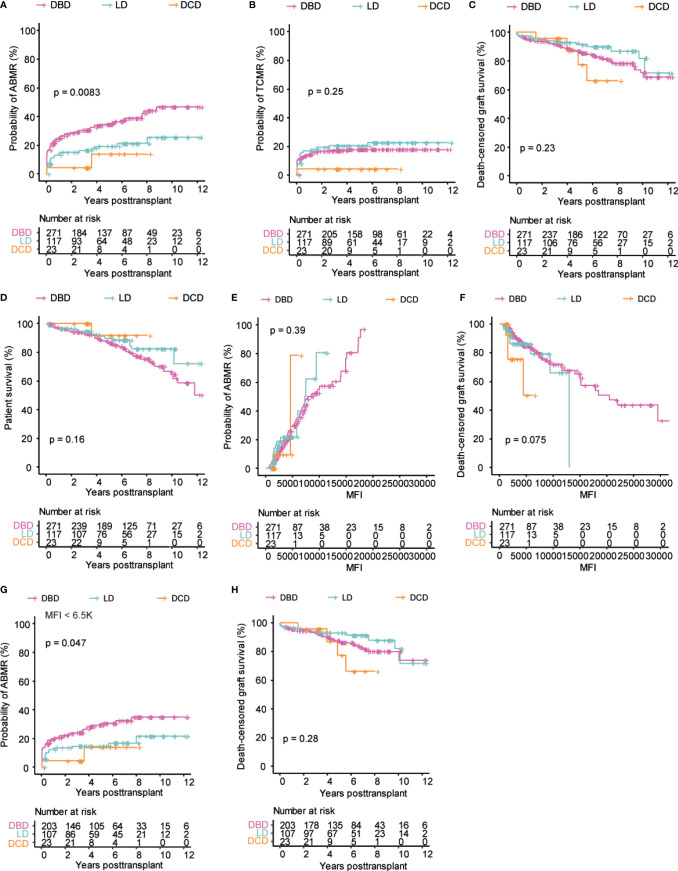
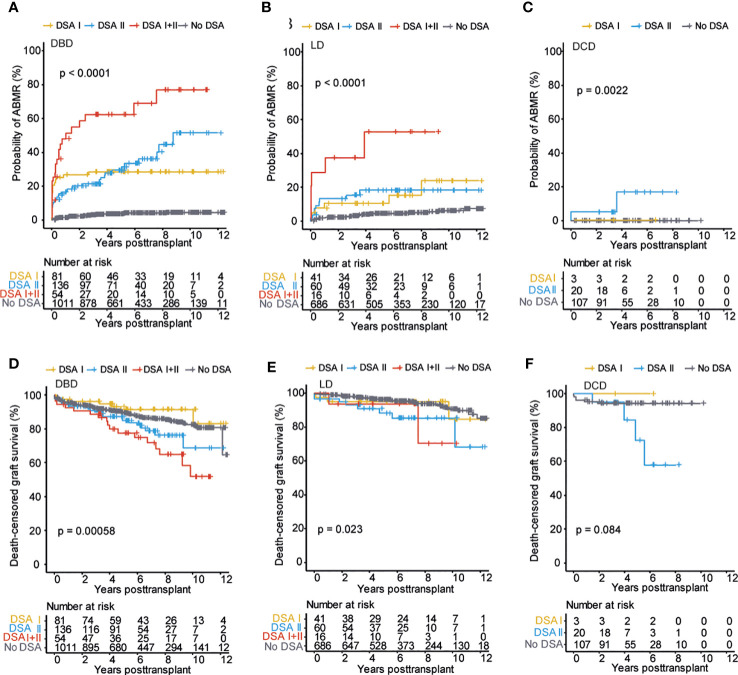
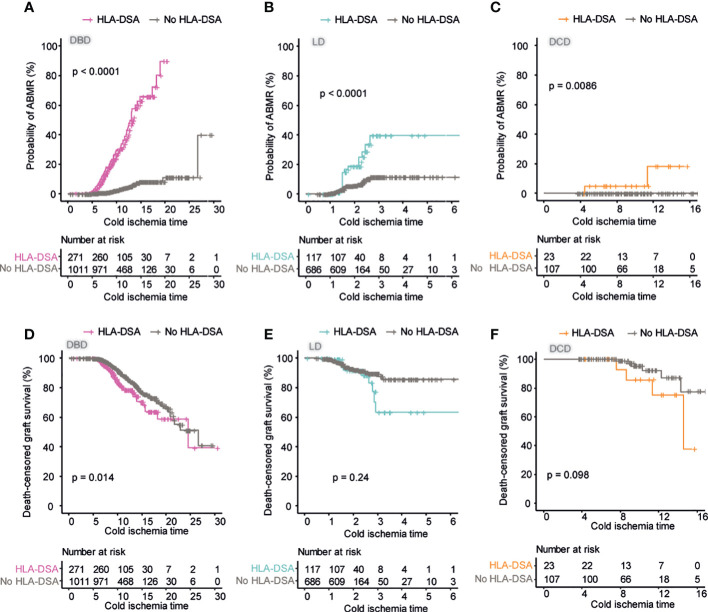
There was a significant worse outcome associated with pre-transplant DSA in all of the studied donation types. DSA directed against Class II HLA antigens as well as a high cumulative mean fluorescent intensity (MFI) of the detected DSA showed the strongest association with worse transplant outcome. We could not detect a significant additive negative effect of DSA in DCD transplantations in our cohort. Conversely, DSA positive DCD transplants appeared to have a slightly better outcome, possibly in part due to the lower mean fluorescent intensity (MFI) of the pre-transplant DSA. Indeed when DCD transplants were compared to DBD transplants with similar MFI (<6.5k), graft survival was not significantly different.
Our results suggest that the negative impact of pre-transplant DSA on graft outcome could be similar between all donation types. This suggests that immunological risk assessment could be performed in a similar way regardless of the type of donor kidney transplantation.
供体器官的捐献类型可能会影响供体肾脏对预先存在的同种异体免疫的易感性。因此,许多中心不愿意在心跳停止后捐献(DCD)的情况下进行供体特异性抗体(DSA)阳性的移植。然而,在一个具有完整虚拟交叉匹配和长期移植结局随访的队列中,没有比较按捐献类型分层的移植前 DSA 对排斥反应、移植物丢失和 eGFR 下降风险影响的大型研究。
我们研究了移植前 DSA 对 1282 例脑死亡后(DBD)移植、130 例(DCD)和 803 例活体供者(LD)移植中排斥反应、移植物丢失和 eGFR 下降风险的影响。
在所研究的所有供体类型中,移植前 DSA 与较差的结局显著相关。针对 II 类 HLA 抗原的 DSA 以及检测到的 DSA 的累积平均荧光强度(MFI)较高与较差的移植结局有最强的关联。在我们的队列中,我们没有检测到 DCD 移植中 DSA 的明显附加负面效应。相反,DSA 阳性的 DCD 移植似乎有稍好的结局,可能部分原因是移植前 DSA 的平均荧光强度(MFI)较低。事实上,当将 DCD 移植与具有相似 MFI(<6.5k)的 DBD 移植进行比较时,移植物存活率没有显著差异。
我们的结果表明,移植前 DSA 对移植物结局的负面影响在所有供体类型之间可能相似。这表明,无论供体肾移植类型如何,免疫风险评估都可以以相似的方式进行。