Zou Cuihua, Su Li, Pan Mika, Chen Liechun, Li Hepeng, Zou Chun, Xie Jieqiong, Huang Xiaohua, Lu Mengru, Zou Donghua
Guangxi Medical University Cancer Hospital, Nanning, Guangxi, China.
Department of Neurology, The Affiliated Hospital of Youjiang Medical University for Nationalities, Baise, China.
Front Aging Neurosci. 2023 Feb 16;15:1079433. doi: 10.3389/fnagi.2023.1079433. eCollection 2023.
Despite tremendous progress in diagnosis and prediction of Alzheimer's disease (AD), the absence of treatments implies the need for further research. In this study, we screened AD biomarkers by comparing expression profiles of AD and control tissue samples and used various models to identify potential biomarkers. We further explored immune cells associated with these biomarkers that are involved in the brain microenvironment.
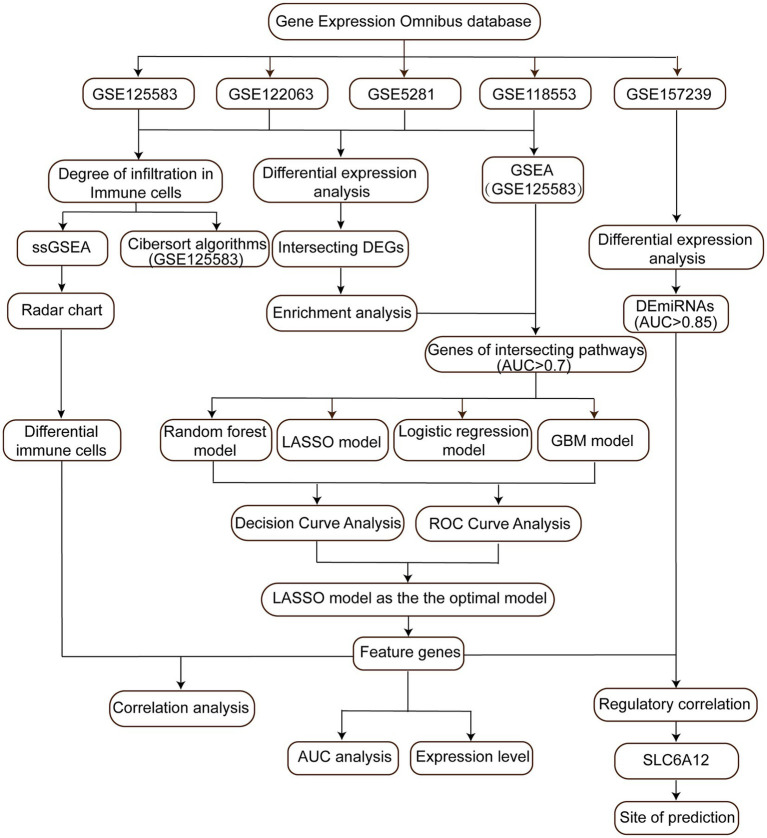
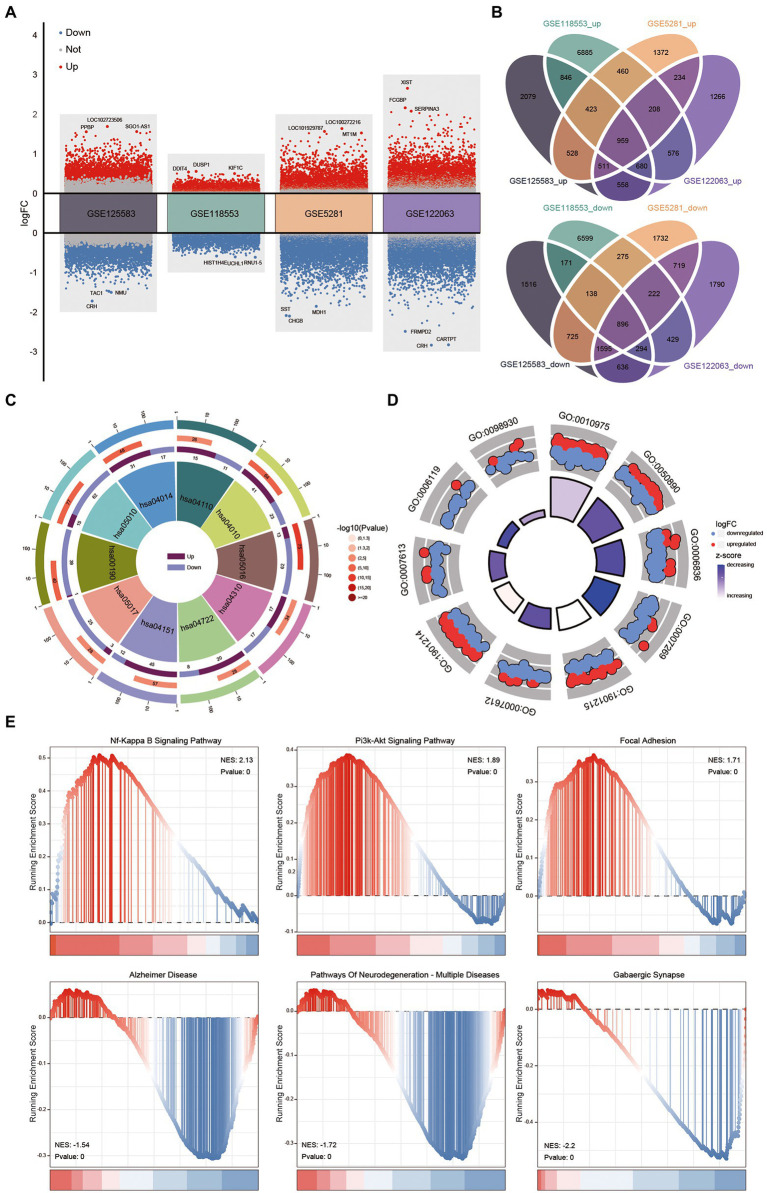
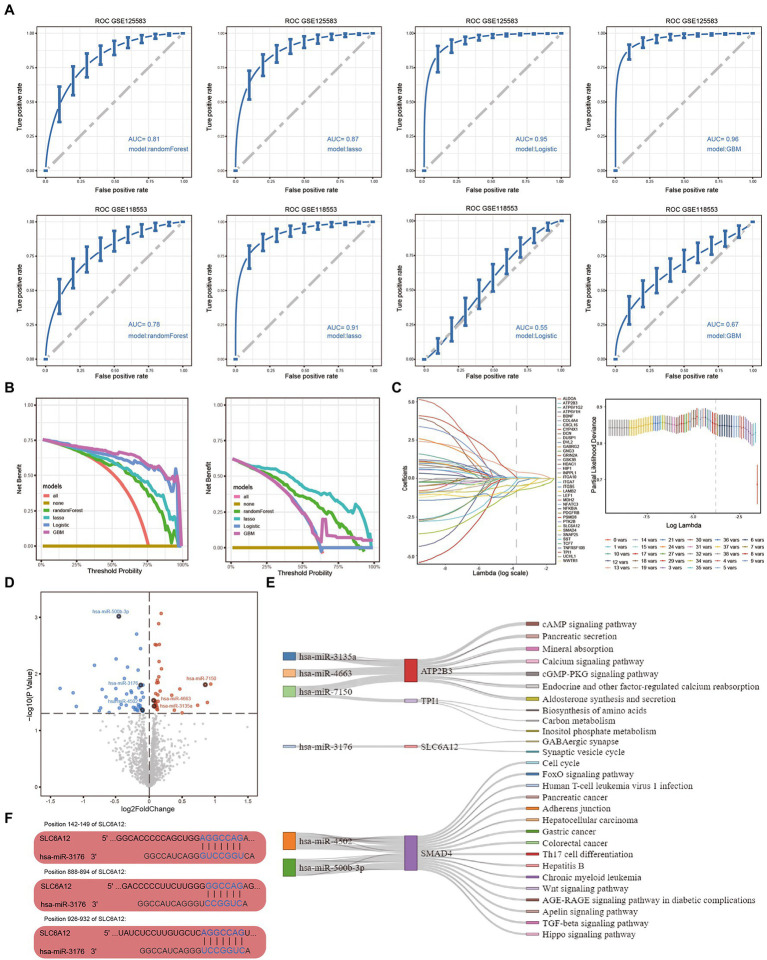
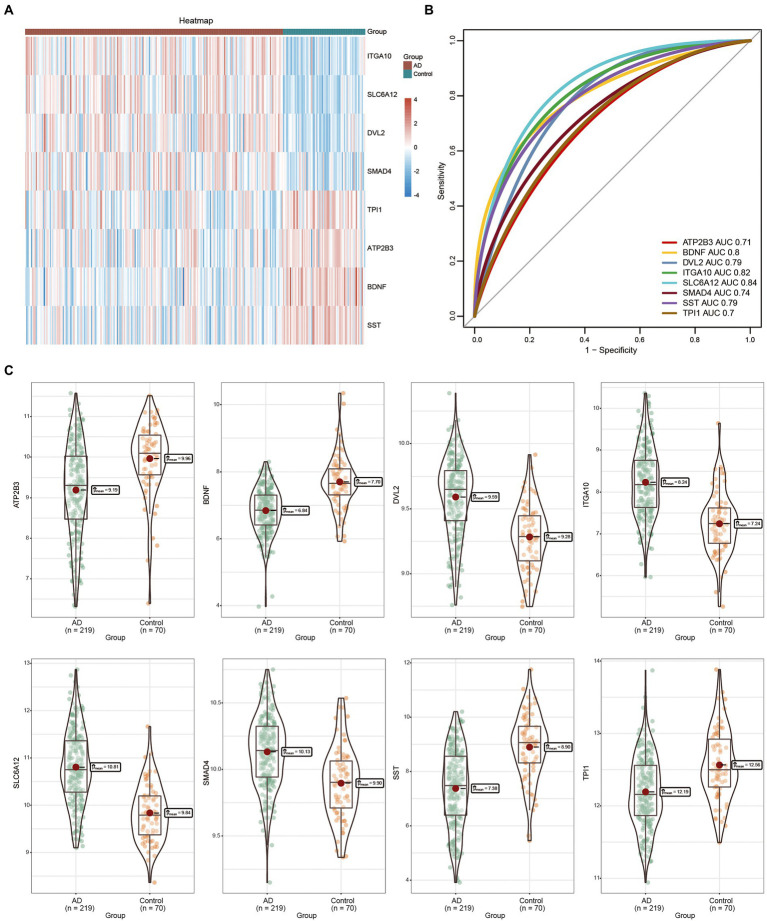
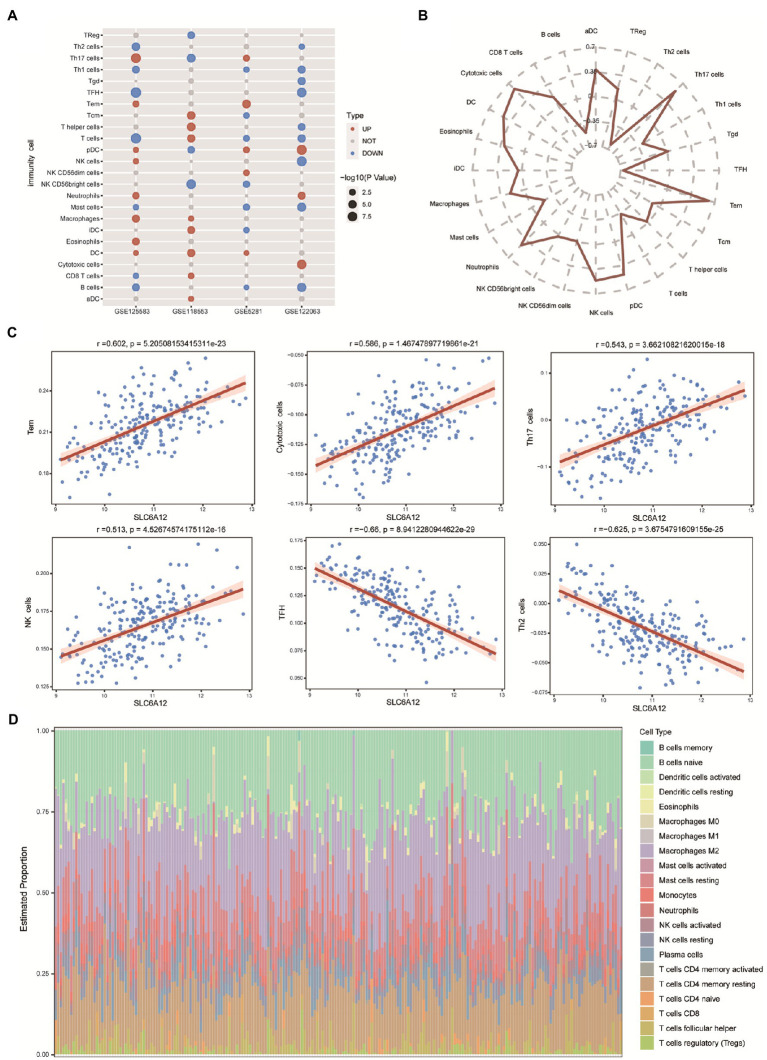
By differential expression analysis, we identified differentially expressed genes (DEGs) of four datasets (GSE125583, GSE118553, GSE5281, GSE122063), and common expression direction of genes of four datasets were considered as intersecting DEGs, which were used to perform enrichment analysis. We then screened the intersecting pathways between the pathways identified by enrichment analysis. DEGs in intersecting pathways that had an area under the curve (AUC) > 0.7 constructed random forest, least absolute shrinkage and selection operator (LASSO), logistic regression, and gradient boosting machine models. Subsequently, using receiver operating characteristic curve (ROC) and decision curve analysis (DCA) to select an optimal diagnostic model, we obtained the feature genes. Feature genes that were regulated by differentially expressed miRNAs (AUC > 0.85) were explored further. Furthermore, using single-sample GSEA to calculate infiltration of immune cells in AD patients.
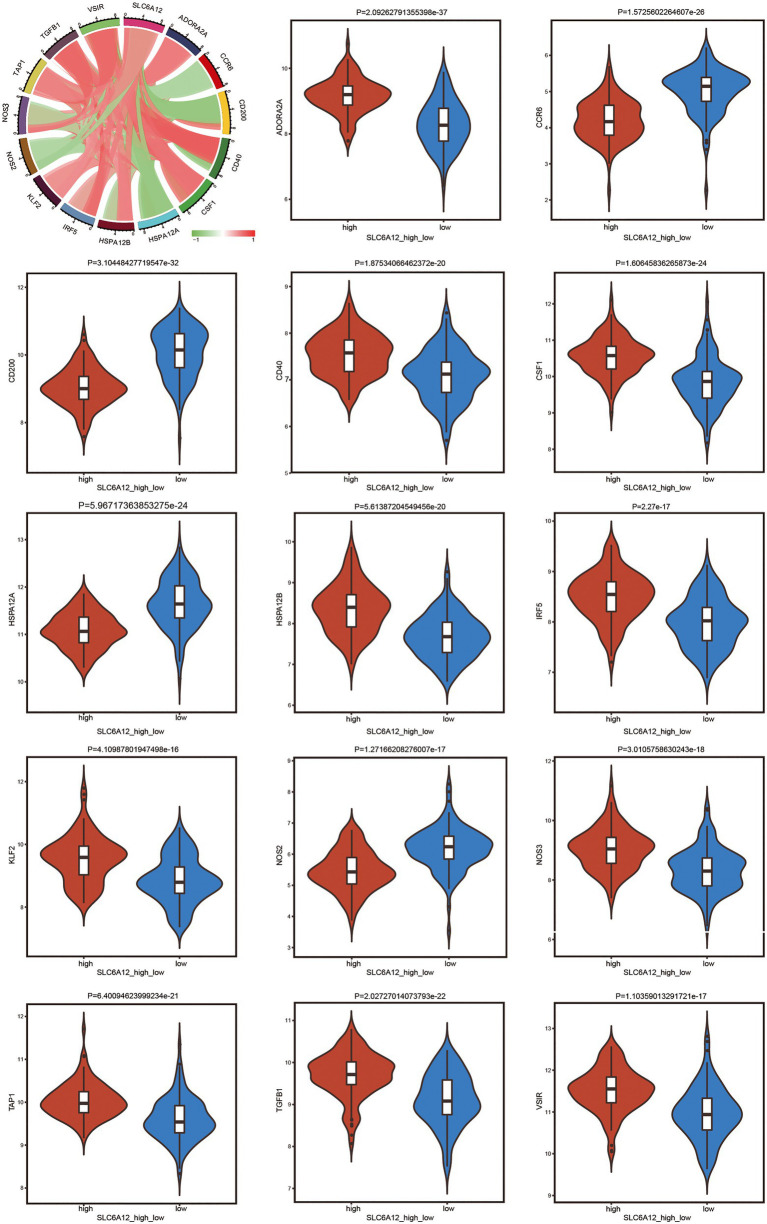
Screened 1855 intersecting DEGs that were involved in RAS and AMPK signaling. The LASSO model performed best among the four models. Thus, it was used as the optimal diagnostic model for ROC and DCA analyses. This obtained eight feature genes, including , and . is regulated by miR-3176. Finally, the results of ssGSEA indicated dendritic cells and plasmacytoid dendritic cells were highly infiltrated in AD patients.
The LASSO model is the optimal diagnostic model for identifying feature genes as potential AD biomarkers, which can supply new strategies for the treatment of patients with AD.
尽管在阿尔茨海默病(AD)的诊断和预测方面取得了巨大进展,但缺乏有效治疗方法意味着仍需进一步研究。在本研究中,我们通过比较AD与对照组织样本的表达谱来筛选AD生物标志物,并使用各种模型来识别潜在的生物标志物。我们进一步探索了与这些参与脑微环境的生物标志物相关的免疫细胞。
通过差异表达分析,我们鉴定了四个数据集(GSE125583、GSE118553、GSE5281、GSE122063)的差异表达基因(DEG),并将四个数据集基因的共同表达方向视为交集DEG,用于进行富集分析。然后,我们筛选了富集分析确定的通路之间的交集通路。在曲线下面积(AUC)>0.7的交集中的DEG构建随机森林、最小绝对收缩和选择算子(LASSO)、逻辑回归和梯度提升机模型。随后,使用受试者工作特征曲线(ROC)和决策曲线分析(DCA)来选择最佳诊断模型,我们获得了特征基因。进一步探索受差异表达miRNA调控(AUC>0.85)的特征基因。此外,使用单样本基因集富集分析(GSEA)来计算AD患者中免疫细胞的浸润情况。
筛选出1855个参与RAS和AMPK信号通路的交集DEG。LASSO模型在四个模型中表现最佳。因此,它被用作ROC和DCA分析的最佳诊断模型。由此获得了八个特征基因,包括[此处原文缺失具体基因名称]。[此处原文缺失具体基因名称]受miR-3176调控。最后,单样本基因集富集分析(ssGSEA)结果表明,树突状细胞和浆细胞样树突状细胞在AD患者中高度浸润。
LASSO模型是识别作为潜在AD生物标志物的特征基因的最佳诊断模型,可为AD患者的治疗提供新策略。