Department of Hematology, Amsterdam UMC, University of Amsterdam, Amsterdam, the Netherlands.
Department of Experimental Immunology, Amsterdam UMC, University of Amsterdam, Amsterdam, the Netherlands.
Cancer Res Commun. 2022 May 9;2(5):330-341. doi: 10.1158/2767-9764.CRC-22-0083. eCollection 2022 May.
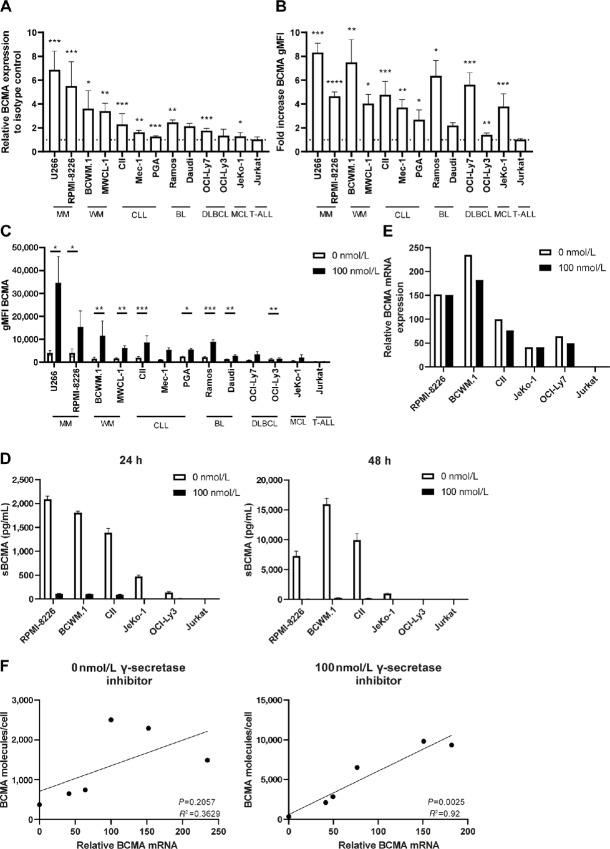
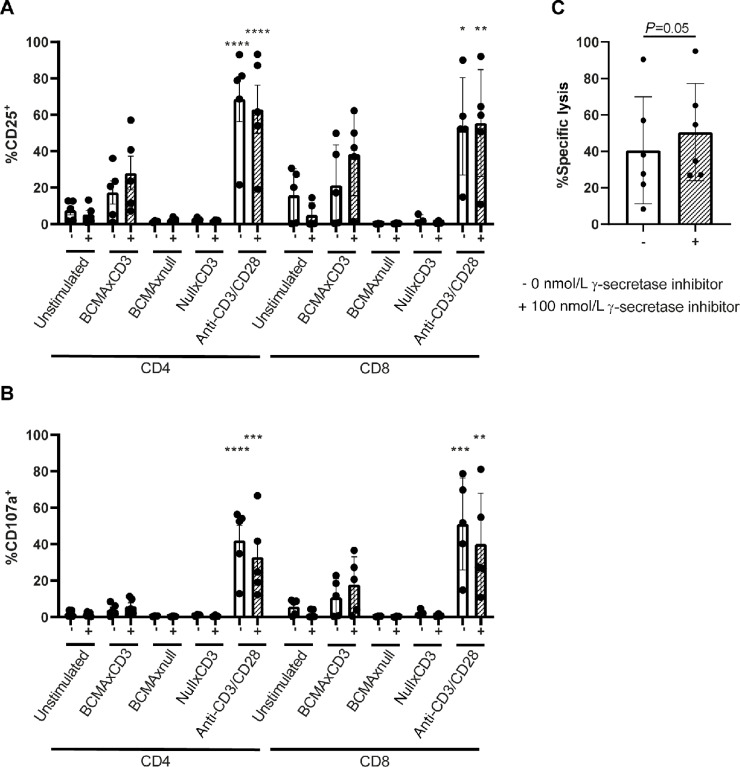
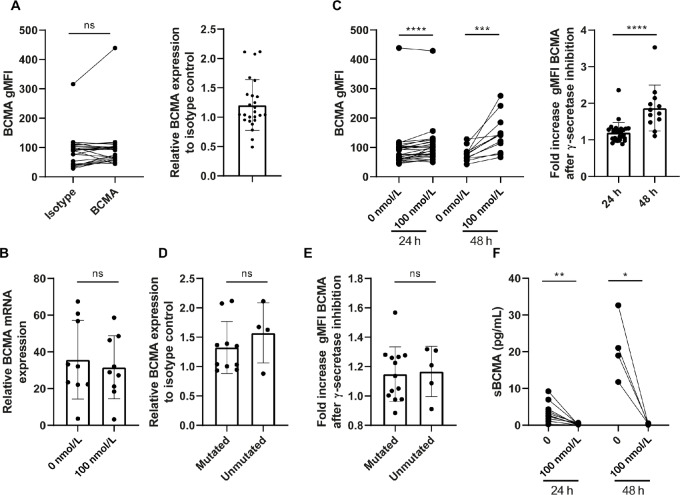
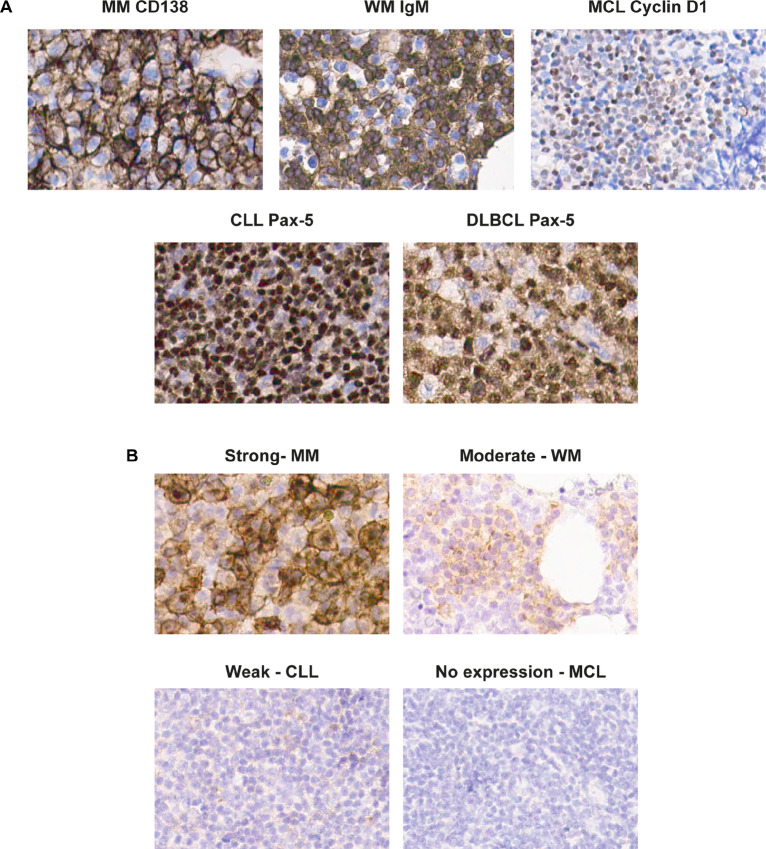
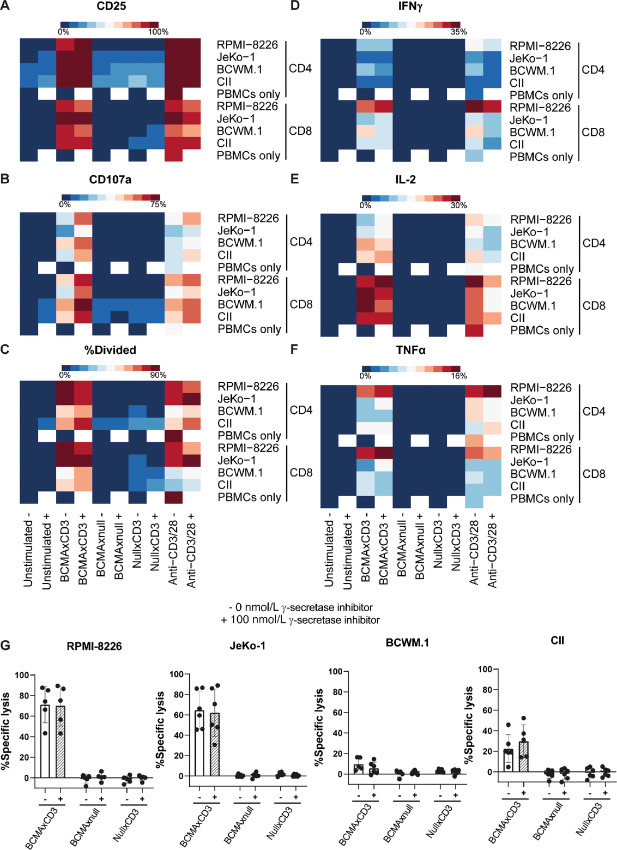
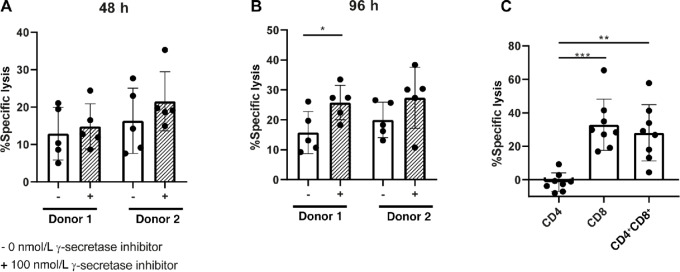
T-cell redirecting bispecific antibodies hold high promise for treatment of B-cell malignancies. B-cell maturation antigen (BCMA) exhibits high expression on normal and malignant mature B cells including plasma cells, which can be enhanced by inhibition of γ-secretase. BCMA is considered a validated target in multiple myeloma but whether mature B-cell lymphomas can be targeted by the BCMAxCD3 T-cell redirector teclistamab is currently unknown. BCMA expression on B-cell non-Hodgkin lymphoma and primary chronic lymphocytic leukemia (CLL) cells was assessed by flow cytometry and/or IHC. To assess teclistamab efficacy, cells were treated with teclistamab in presence of effector cells with/without γ-secretase inhibition. BCMA could be detected on all tested mature B-cell malignancy cell lines, while expression levels varied per tumor type. γ-secretase inhibition universally increased BCMA surface expression. These data were corroborated in primary samples from patients with Waldenstrom's macroglobulinemia, CLL, and diffuse large B-cell lymphoma. Functional studies with the B-cell lymphoma cell lines revealed teclistamab-mediated T-cell activation, proliferation, and cytotoxicity. This was independent of the level of BCMA expression, but generally lower in mature B-cell malignancies compared with multiple myeloma. Despite low BCMA levels, healthy donor T cells and CLL-derived T cells induced lysis of (autologous) CLL cells upon addition of teclistamab. These data show that BCMA is expressed on various B-cell malignancies and that lymphoma cell lines and primary CLL can be targeted using teclistamab. Further studies to understand the determinants of response to teclistamab are required to identify which other diseases might be suitable for teclistamab targeting.
Besides reported BCMA expression on multiple myeloma, we demonstrate BCMA can be detected and enhanced using γ-secretase inhibition on cell lines and primary material of various B-cell malignancies. Furthermore, using CLL we demonstrate that low BCMA-expressing tumors can be targeted efficiently using the BCMAxCD3 DuoBody teclistamab.
T 细胞重定向双特异性抗体在治疗 B 细胞恶性肿瘤方面具有很高的应用前景。B 细胞成熟抗原(BCMA)在正常和恶性成熟 B 细胞(包括浆细胞)上表达水平较高,通过抑制 γ-分泌酶可增强其表达。BCMA 被认为是多发性骨髓瘤的有效靶点,但 BCMAxCD3 T 细胞重定向药物 teclistamab 是否可以靶向成熟 B 细胞淋巴瘤目前尚不清楚。通过流式细胞术和/或免疫组化评估 B 细胞非霍奇金淋巴瘤和原发性慢性淋巴细胞白血病(CLL)细胞上的 BCMA 表达。为了评估 teclistamab 的疗效,将细胞与效应细胞一起或不与 γ-分泌酶抑制剂一起用 teclistamab 处理。所有测试的成熟 B 细胞恶性肿瘤细胞系均可检测到 BCMA,而每种肿瘤类型的表达水平不同。γ-分泌酶抑制普遍增加了 BCMA 的表面表达。这些数据在瓦尔登斯特伦巨球蛋白血症、CLL 和弥漫性大 B 细胞淋巴瘤患者的原代样本中得到了证实。用 B 细胞淋巴瘤细胞系进行的功能研究显示,teclistamab 介导了 T 细胞的激活、增殖和细胞毒性。这与 BCMA 表达水平无关,但与多发性骨髓瘤相比,在成熟 B 细胞恶性肿瘤中通常较低。尽管 BCMA 水平较低,但添加 teclistamab 后,健康供体 T 细胞和 CLL 衍生的 T 细胞可诱导(自体)CLL 细胞溶解。这些数据表明,BCMA 在各种 B 细胞恶性肿瘤中表达,淋巴瘤细胞系和原代 CLL 可以使用 teclistamab 进行靶向治疗。需要进一步研究以了解对 teclistamab 反应的决定因素,以确定哪些其他疾病可能适合 teclistamab 靶向治疗。
除了报道的多发性骨髓瘤上的 BCMA 表达外,我们还证明可以在各种 B 细胞恶性肿瘤的细胞系和原代材料上检测到 BCMA,并可通过 γ-分泌酶抑制增强其表达。此外,我们使用 CLL 证明,使用 BCMAxCD3 DuoBody teclistamab 可以有效靶向低表达 BCMA 的肿瘤。