Temereanca Aura, Ruta Simona
Virology Department, Carol Davila University of Medicine and Pharmacy, Bucharest, Romania.
Viral Emerging Diseases Department, Stefan S. Nicolau Institute of Virology, Bucharest, Romania.
Front Microbiol. 2023 Feb 16;14:1133407. doi: 10.3389/fmicb.2023.1133407. eCollection 2023.
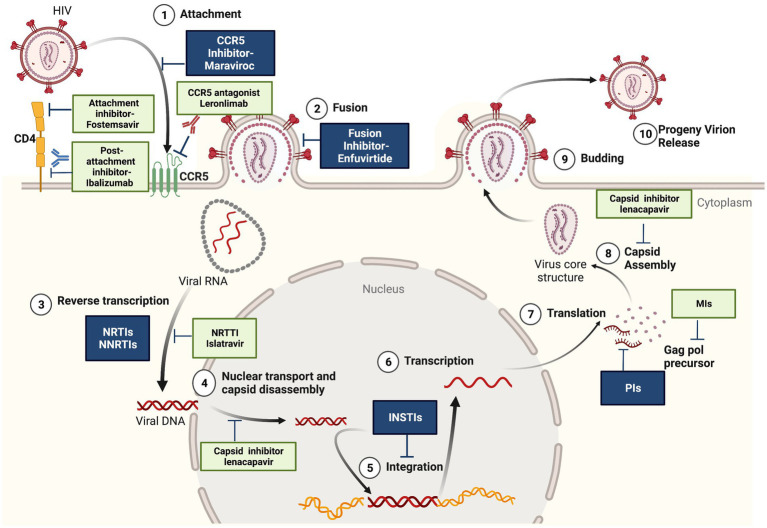
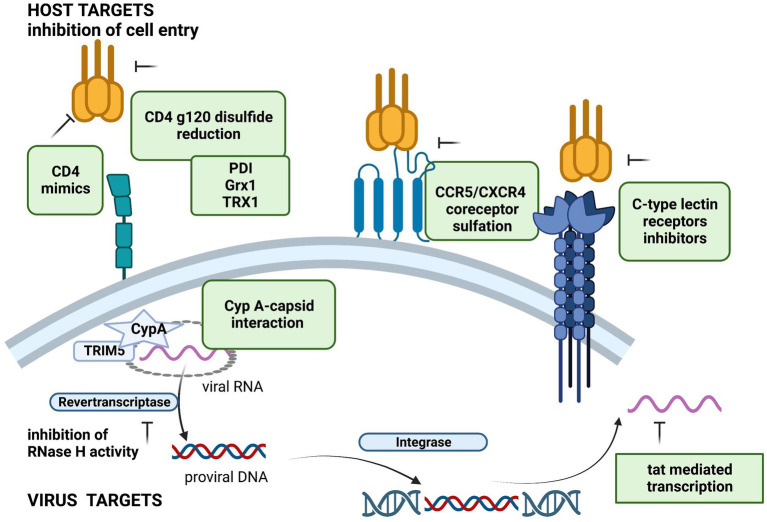
The availability of combined antiretroviral therapy (cART) has revolutionized the course of HIV infection, suppressing HIV viremia, restoring the immune system, and improving the quality of life of HIV infected patients. However, the emergence of drug resistant and multidrug resistant strains remains an important contributor to cART failure, associated with a higher risk of HIV-disease progression and mortality. According to the latest WHO HIV Drug Resistance Report, the prevalence of acquired and transmitted HIV drug resistance in ART naive individuals has exponentially increased in the recent years, being an important obstacle in ending HIV-1 epidemic as a public health threat by 2030. The prevalence of three and four-class resistance is estimated to range from 5 to 10% in Europe and less than 3% in North America. The new drug development strategies are focused on improved safety and resistance profile within the existing antiretroviral classes, discovery of drugs with novel mechanisms of action (e.g., attachment/post-attachment inhibitors, capsid inhibitors, maturation inhibitors, nucleoside reverse transcriptase translocation inhibitors), combination therapies with improved adherence, and treatment simplification with infrequent dosing. This review highlight the current progress in the management of salvage therapy for patients with multidrug-resistant HIV-1 infection, discussing the recently approved and under development antiretroviral agents, as well as the new drug targets that are providing a new avenue for the development of therapeutic interventions in HIV infection.
联合抗逆转录病毒疗法(cART)的出现彻底改变了HIV感染的进程,抑制了HIV病毒血症,恢复了免疫系统,并改善了HIV感染患者的生活质量。然而,耐药和多重耐药毒株的出现仍然是cART治疗失败的一个重要原因,与HIV疾病进展和死亡的更高风险相关。根据世界卫生组织最新的HIV耐药报告,近年来,初治个体中获得性和传播性HIV耐药的流行率呈指数级增长,这是到2030年将HIV-1疫情作为公共卫生威胁终结的一个重要障碍。在欧洲,三类和四类耐药的流行率估计在5%至10%之间,在北美则低于3%。新的药物开发策略集中在改善现有抗逆转录病毒药物类别的安全性和耐药性特征、发现具有新作用机制的药物(如附着/附着后抑制剂、衣壳抑制剂、成熟抑制剂、核苷逆转录酶易位抑制剂)、提高依从性的联合疗法以及减少给药频率的简化治疗。本综述重点介绍了多重耐药HIV-1感染患者挽救治疗管理的当前进展,讨论了最近批准和正在研发的抗逆转录病毒药物,以及为HIV感染治疗干预开发提供新途径的新药物靶点。