Wheeler Joshua J, Domenichiello Anthony F, Jensen Jennifer R, Keyes Gregory S, Maiden Kristen M, Davis John M, Ramsden Christopher E, Mishra Santosh K
Department of Biomedical Sciences, College of Veterinary Medicine, NC State University, Raleigh, North Carolina, USA.
Comparative Medicine Institute, NC State University, Raleigh, North Carolina, USA.
JID Innov. 2022 Dec 26;3(2):100177. doi: 10.1016/j.xjidi.2022.100177. eCollection 2023 Mar.
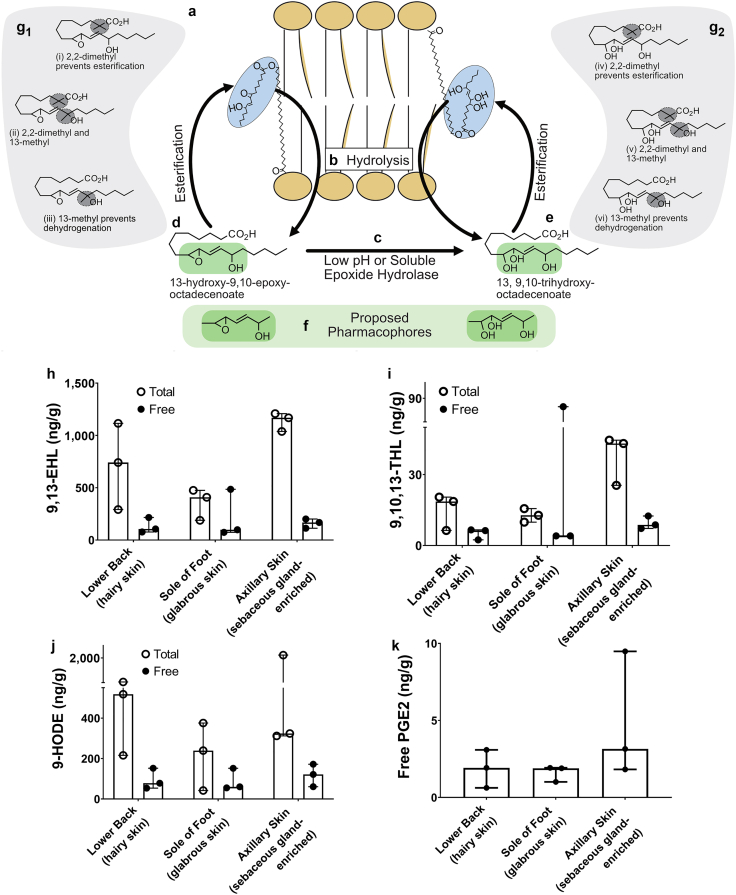
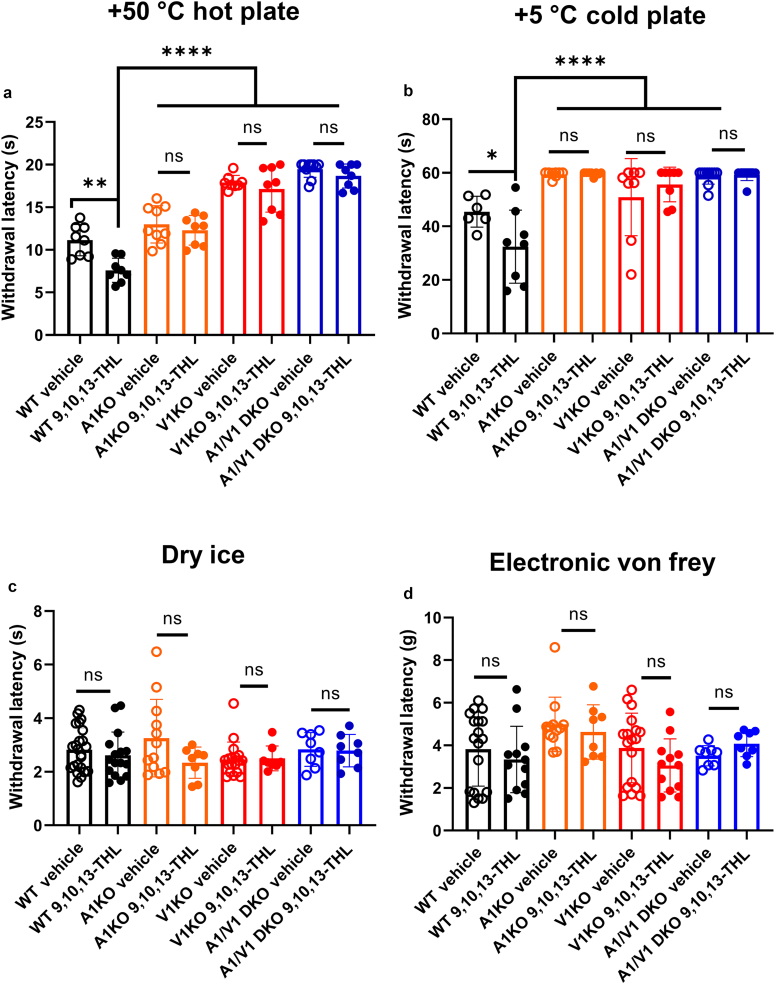
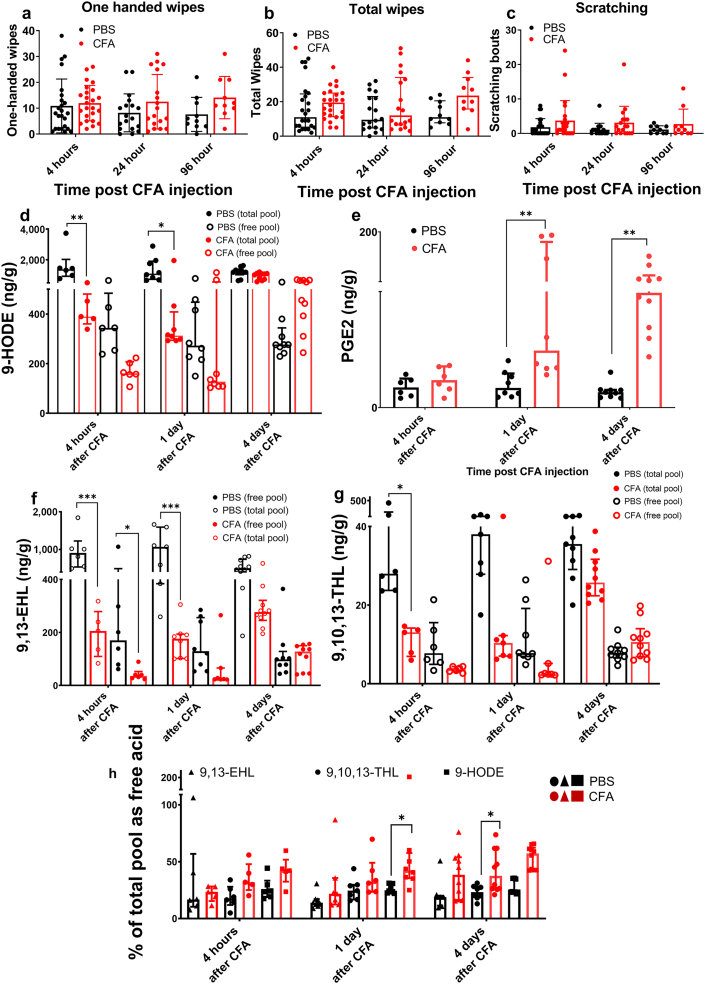
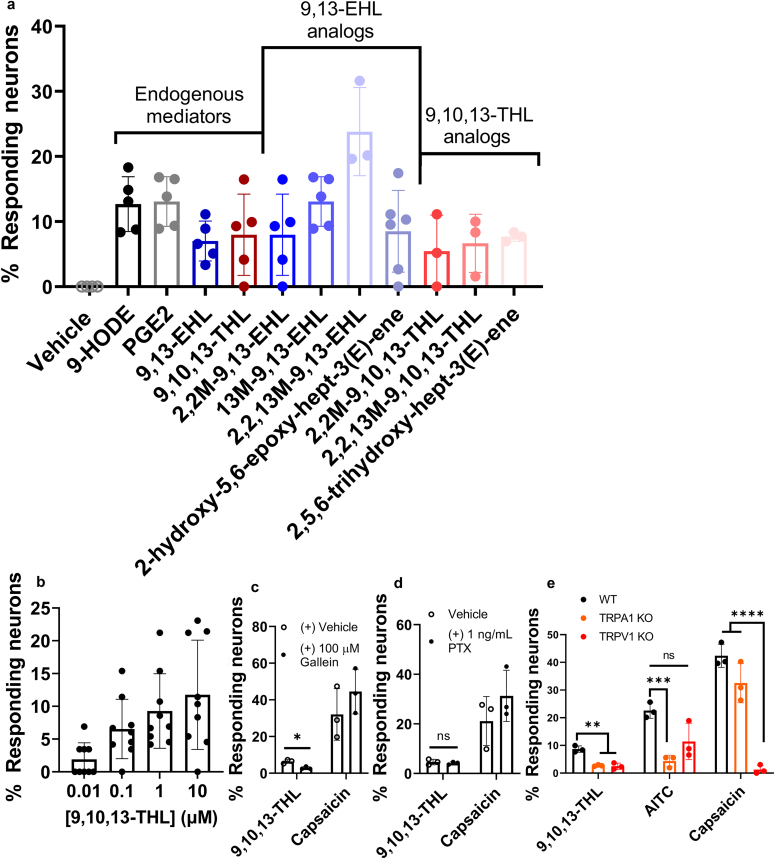
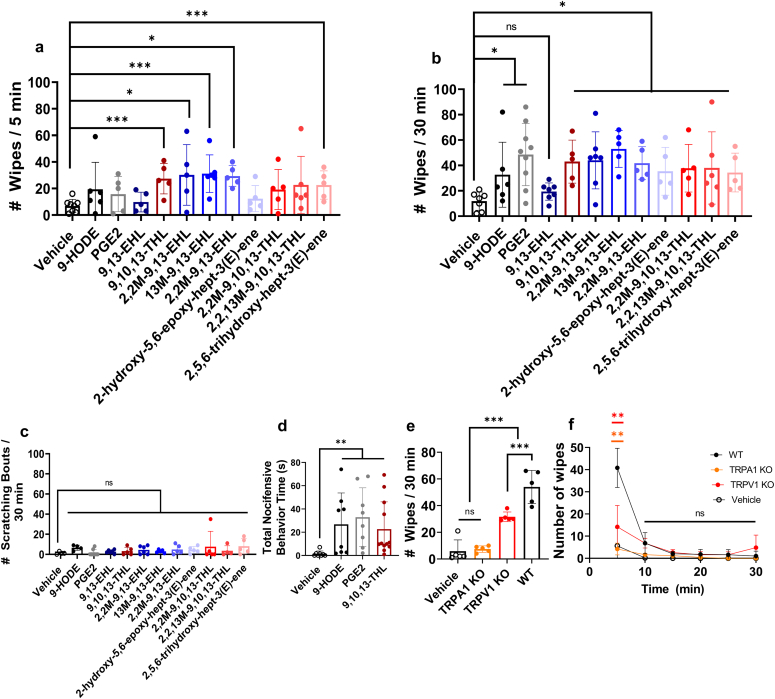
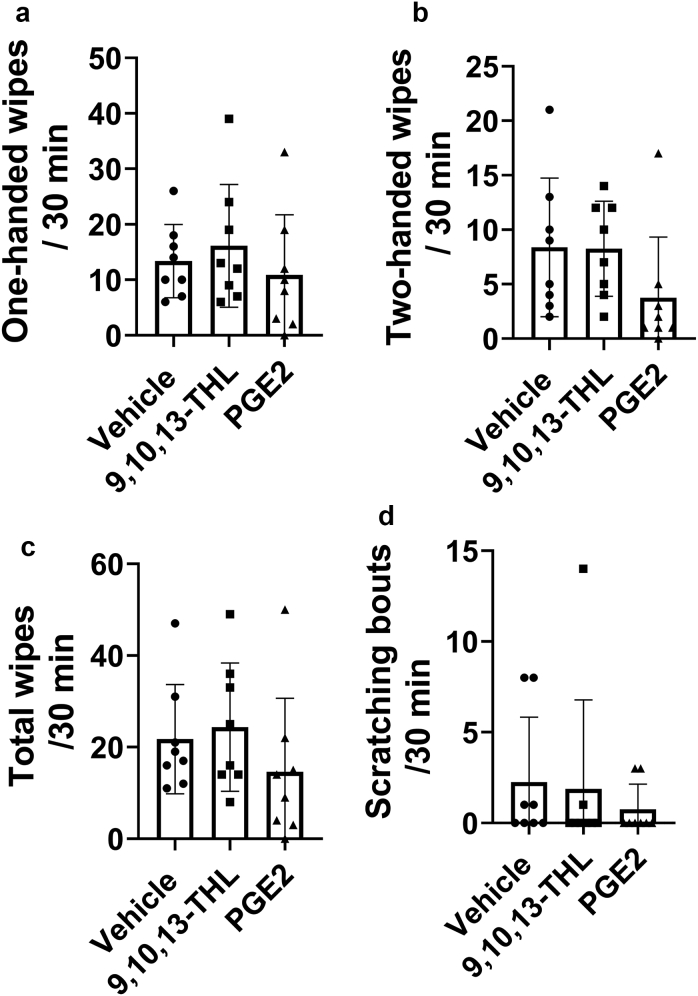
Psoriasis is characterized by intense pruritus, with a subset of individuals with psoriasis experiencing thermal hypersensitivity. However, the pathophysiology of thermal hypersensitivity in psoriasis and other skin conditions remains enigmatic. Linoleic acid is an omega-6 fatty acid that is concentrated in the skin, and oxidation of linoleic acid into metabolites with multiple hydroxyl and epoxide functional groups has been shown to play a role in skin barrier function. Previously, we identified several linoleic acid‒derived mediators that were more concentrated in psoriatic lesions, but the role of these lipids in psoriasis remains unknown. In this study, we report that two such compounds-9,10-epoxy-13-hydroxy-octadecenoate and 9,10,13-trihydroxy-octadecenoate-are present as free fatty acids and induce nociceptive behavior in mice but not in rats. By chemically stabilizing 9,10-epoxy-13-hydroxy-octadecenoate and 9,10,13-trihydroxy-octadecenoate through the addition of methyl groups, we observed pain and hypersensitization in mice. The nociceptive responses suggest an involvement of the TRPA1 channel, whereas hypersensitive responses induced by these mediators may require both TRPA1 and TRPV1 channels. Furthermore, we showed that 9,10,13-trihydroxy-octadecenoate‒induced calcium transients in sensory neurons are mediated through the Gβγ subunit of an unidentified G-protein coupled receptor (GPCR). Overall, mechanistic insights from this study will guide the development of potential therapeutic targets for the treatment of pain and hypersensitivity.
银屑病的特征是剧烈瘙痒,一部分银屑病患者还会出现热超敏反应。然而,银屑病及其他皮肤疾病中热超敏反应的病理生理学仍不清楚。亚油酸是一种ω-6脂肪酸,集中在皮肤中,亚油酸氧化为具有多个羟基和环氧官能团的代谢产物已被证明在皮肤屏障功能中起作用。此前,我们鉴定出几种在银屑病皮损中更富集的亚油酸衍生介质,但这些脂质在银屑病中的作用仍不清楚。在本研究中,我们报告称,两种此类化合物——9,10-环氧-13-羟基-十八碳烯酸和9,10,13-三羟基-十八碳烯酸——以游离脂肪酸形式存在,并在小鼠而非大鼠中诱导伤害性感受行为。通过添加甲基对9,10-环氧-13-羟基-十八碳烯酸和9,10,13-三羟基-十八碳烯酸进行化学稳定,我们在小鼠中观察到疼痛和超敏反应。伤害性感受反应提示TRPA1通道参与其中,而这些介质诱导的超敏反应可能需要TRPA1和TRPV1通道。此外,我们表明9,10,13-三羟基-十八碳烯酸在感觉神经元中诱导的钙瞬变是通过一种未鉴定的G蛋白偶联受体(GPCR)的Gβγ亚基介导的。总体而言,本研究的机制性见解将指导开发治疗疼痛和超敏反应的潜在治疗靶点。