Vamva Eirini, Ozog Stosh, Leaman Daniel P, Yu-Hong Cheng Rene, Irons Nicholas J, Ott Andee, Stoffers Claire, Khan Iram, Goebrecht Geraldine K E, Gardner Matthew R, Farzan Michael, Rawlings David J, Zwick Michael B, James Richard G, Torbett Bruce E
Center for Immunity and Immunotherapies, Seattle Children's Research Institute, Seattle, WA, USA.
Department of Immunology and Microbiology, The Scripps Research Institute, La Jolla, CA, USA.
Mol Ther Methods Clin Dev. 2023 Feb 11;28:366-384. doi: 10.1016/j.omtm.2023.02.004. eCollection 2023 Mar 9.
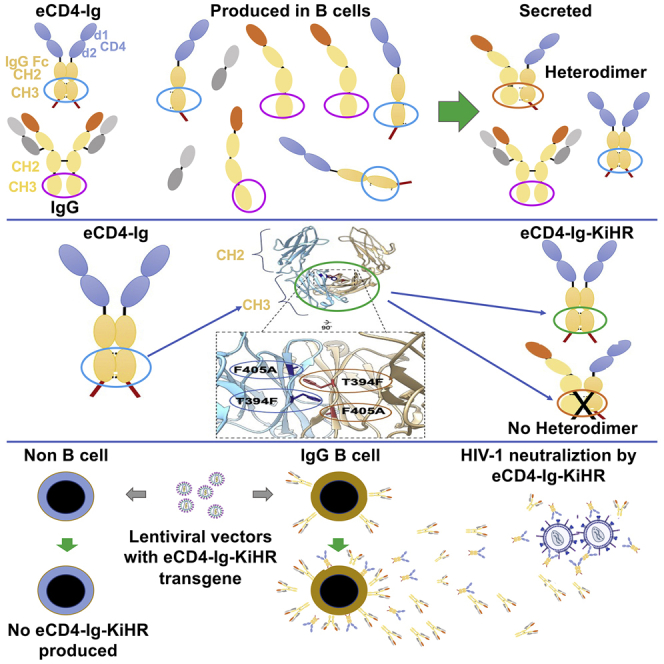
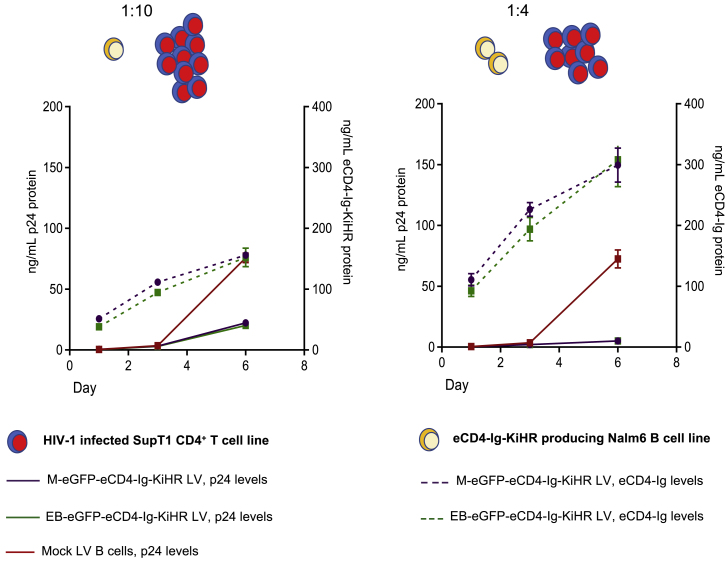
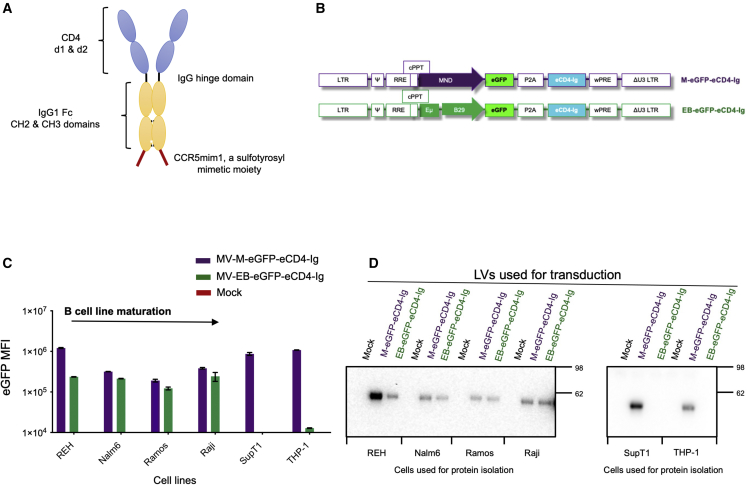
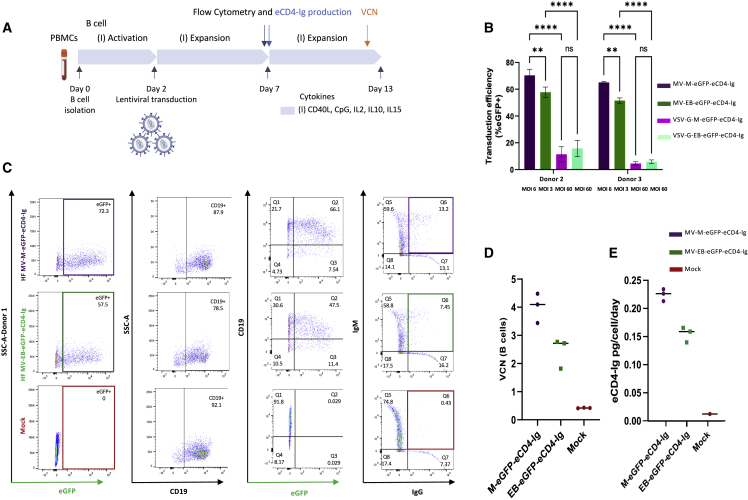
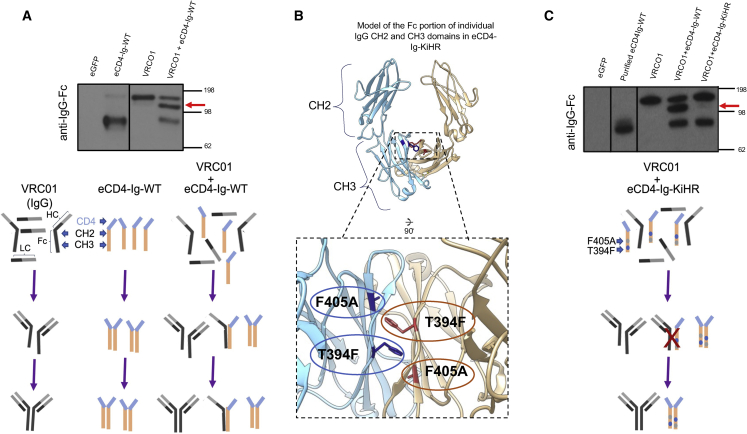
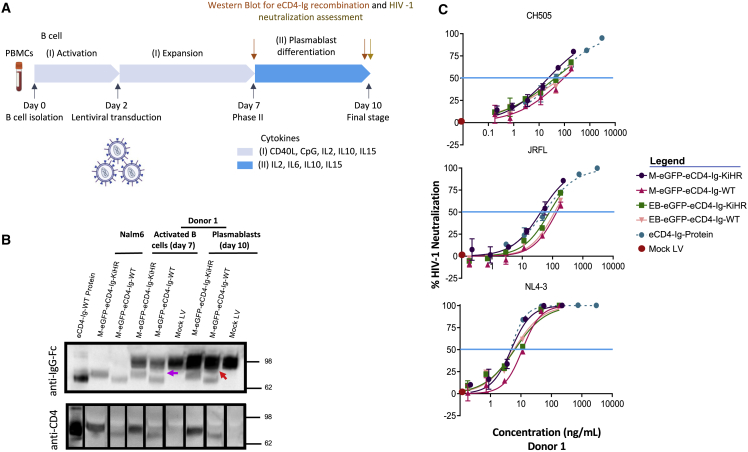
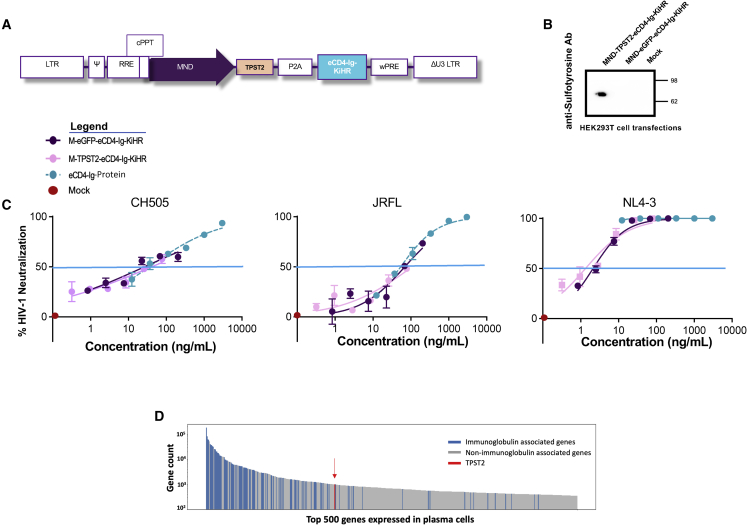
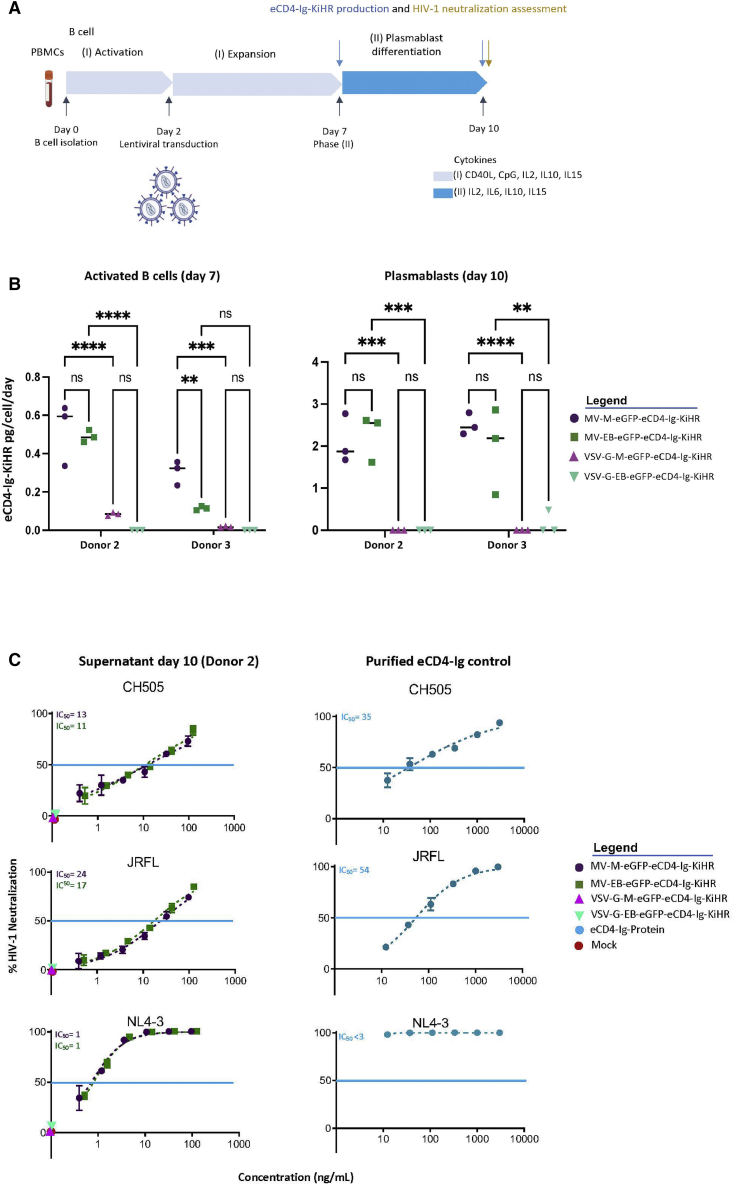
Barriers to effective gene therapy for many diseases include the number of modified target cells required to achieve therapeutic outcomes and host immune responses to expressed therapeutic proteins. As long-lived cells specialized for protein secretion, antibody-secreting B cells are an attractive target for foreign protein expression in blood and tissue. To neutralize HIV-1, we developed a lentiviral vector (LV) gene therapy platform for delivery of the anti-HIV-1 immunoadhesin, eCD4-Ig, to B cells. The EμB29 enhancer/promoter in the LV limited gene expression in non-B cell lineages. By engineering a knob-in-hole-reversed (KiHR) modification in the CH3-Fc eCD4-Ig domain, we reduced interactions between eCD4-Ig and endogenous B cell immunoglobulin G proteins, which improved HIV-1 neutralization potency. Unlike previous approaches in non-lymphoid cells, eCD4-Ig-KiHR produced in B cells promoted HIV-1 neutralizing protection without requiring exogenous TPST2, a tyrosine sulfation enzyme required for eCD4-Ig-KiHR function. This finding indicated that B cell machinery is well suited to produce therapeutic proteins. Lastly, to overcome the inefficient transduction efficiency associated with VSV-G LV delivery to primary B cells, an optimized measles pseudotyped LV packaging methodology achieved up to 75% transduction efficiency. Overall, our findings support the utility of B cell gene therapy platforms for therapeutic protein delivery.
对许多疾病而言,有效的基因治疗面临诸多障碍,包括实现治疗效果所需的修饰靶细胞数量以及宿主对表达的治疗性蛋白质的免疫反应。作为专门用于蛋白质分泌的长寿细胞,分泌抗体的B细胞是血液和组织中外源蛋白质表达的一个有吸引力的靶点。为了中和HIV-1,我们开发了一种慢病毒载体(LV)基因治疗平台,用于将抗HIV-1免疫黏附分子eCD4-Ig递送至B细胞。LV中的EμB29增强子/启动子限制了非B细胞谱系中的基因表达。通过在CH3-Fc eCD4-Ig结构域中设计一种旋钮入孔反向(KiHR)修饰,我们减少了eCD4-Ig与内源性B细胞免疫球蛋白G蛋白之间的相互作用,从而提高了HIV-1中和效力。与之前在非淋巴细胞中的方法不同,在B细胞中产生的eCD4-Ig-KiHR促进了HIV-1中和保护,而无需外源性TPST2(一种eCD4-Ig-KiHR功能所需的酪氨酸硫酸化酶)。这一发现表明B细胞机制非常适合产生治疗性蛋白质。最后,为了克服与VSV-G LV递送至原代B细胞相关的转导效率低下问题,一种优化的麻疹假型LV包装方法实现了高达75%的转导效率。总体而言,我们的研究结果支持B细胞基因治疗平台用于治疗性蛋白质递送的实用性。