• 文献检索
  • 文档翻译
  • 深度研究
  • 学术资讯
  • Suppr Zotero 插件Zotero 插件
  • 邀请有礼
  • 套餐&价格
  • 历史记录
应用&插件
Suppr Zotero 插件Zotero 插件浏览器插件Mac 客户端Windows 客户端微信小程序
定价
高级版会员购买积分包购买API积分包
服务
文献检索文档翻译深度研究API 文档MCP 服务
关于我们
关于 Suppr公司介绍联系我们用户协议隐私条款
关注我们

Suppr 超能文献

核心技术专利:CN118964589B侵权必究
粤ICP备2023148730 号-1Suppr @ 2026

文献检索

告别复杂PubMed语法,用中文像聊天一样搜索,搜遍4000万医学文献。AI智能推荐,让科研检索更轻松。

立即免费搜索

文件翻译

保留排版,准确专业,支持PDF/Word/PPT等文件格式,支持 12+语言互译。

免费翻译文档

深度研究

AI帮你快速写综述,25分钟生成高质量综述,智能提取关键信息,辅助科研写作。

立即免费体验

儿童指向性言语中的齐普夫分布。

Zipfian Distributions in Child-Directed Speech.

作者信息

Lavi-Rotbain Ori, Arnon Inbal

机构信息

The Edmond and Lilly Safra Center for Brain Sciences, Hebrew University, Jerusalem, Israel.

Department of Psychology, Hebrew University, Jerusalem, Israel.

出版信息

Open Mind (Camb). 2023 Jan 24;7:1-30. doi: 10.1162/opmi_a_00070. eCollection 2023.

DOI:10.1162/opmi_a_00070
PMID:36891353
原文链接:https://pmc.ncbi.nlm.nih.gov/articles/PMC9987348/
Abstract

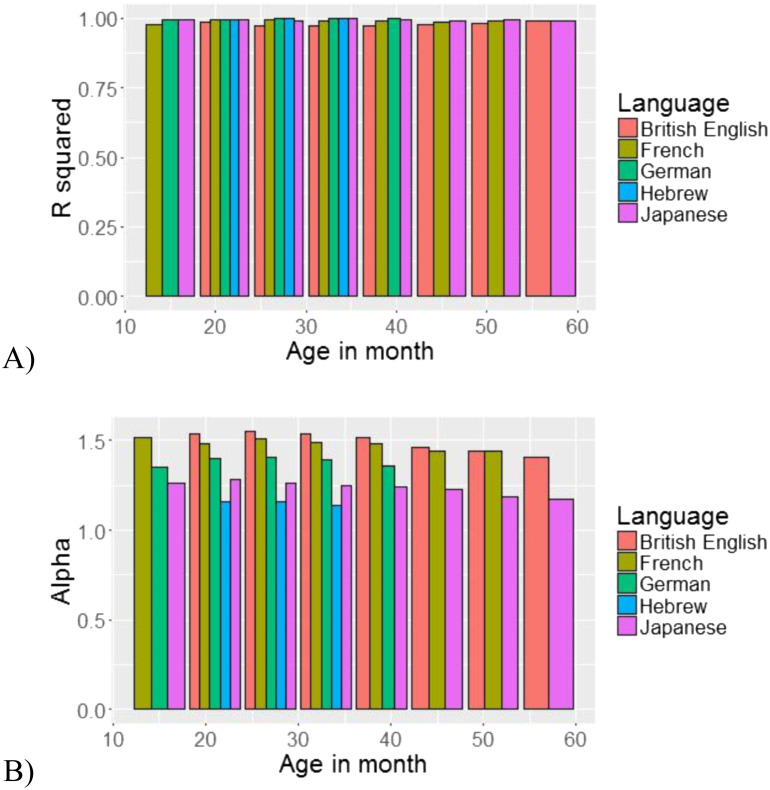
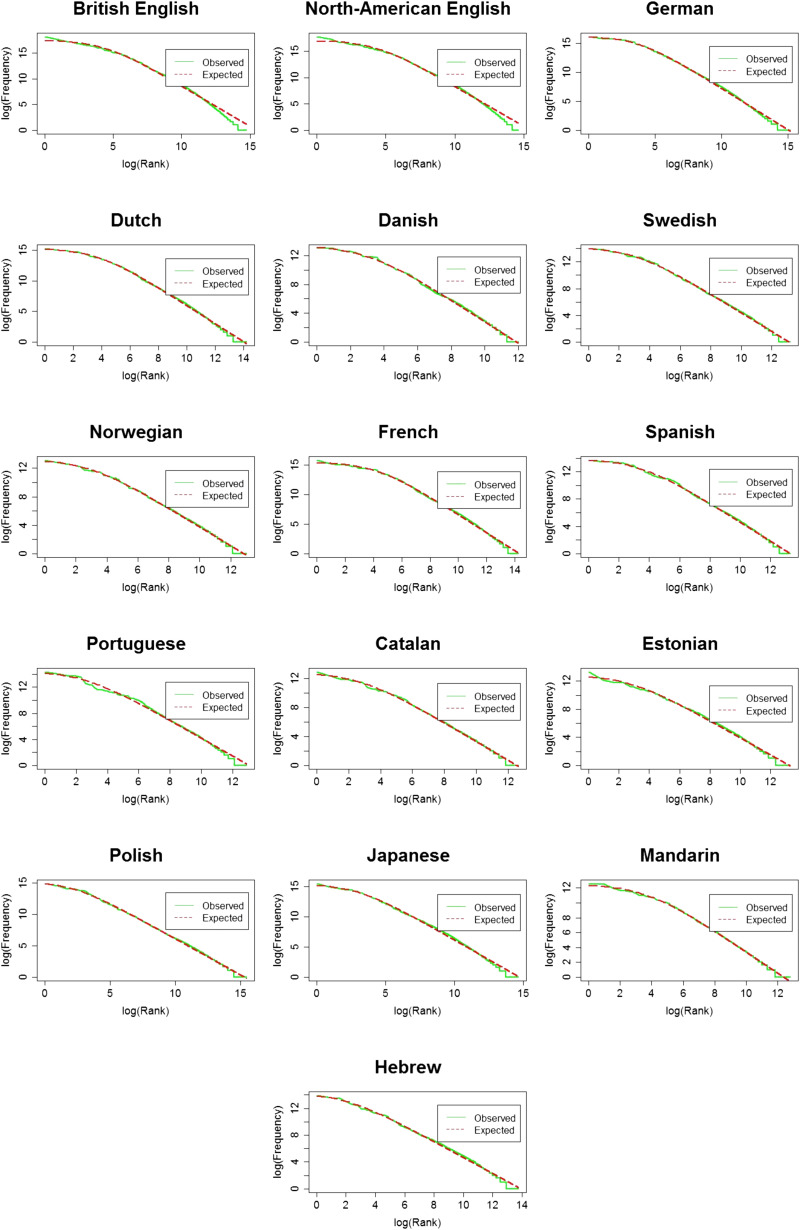
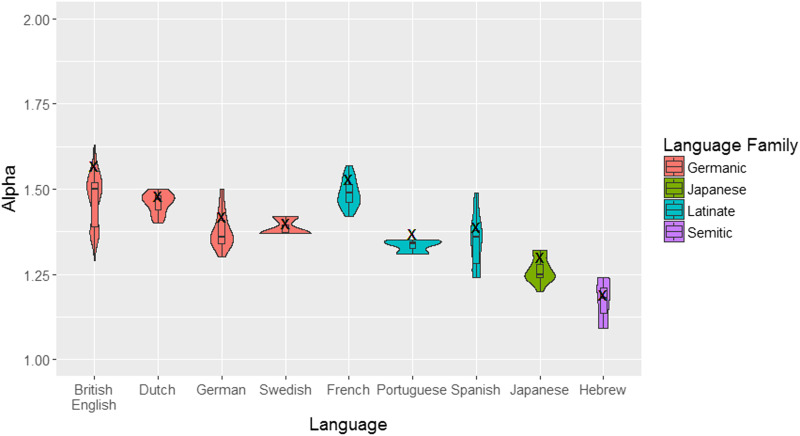
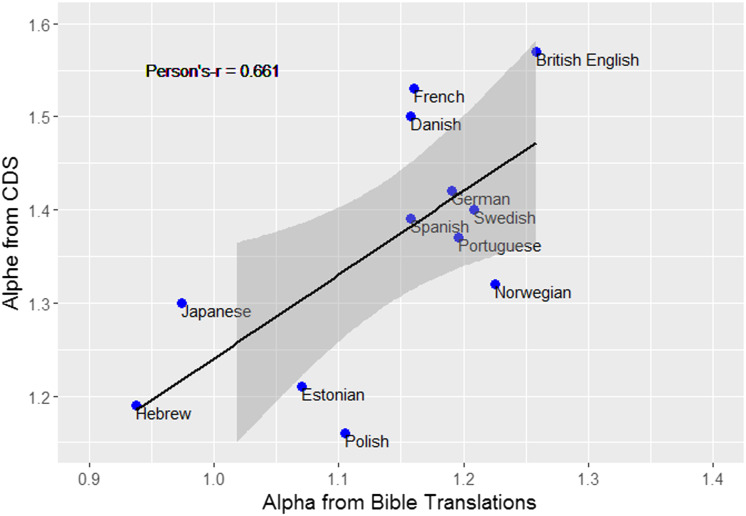
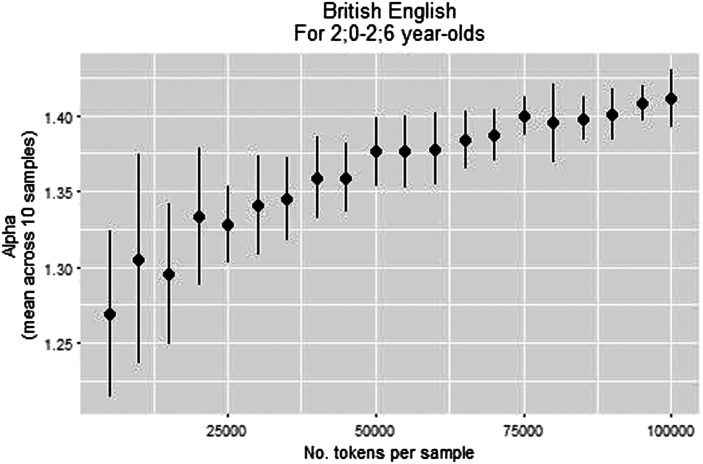
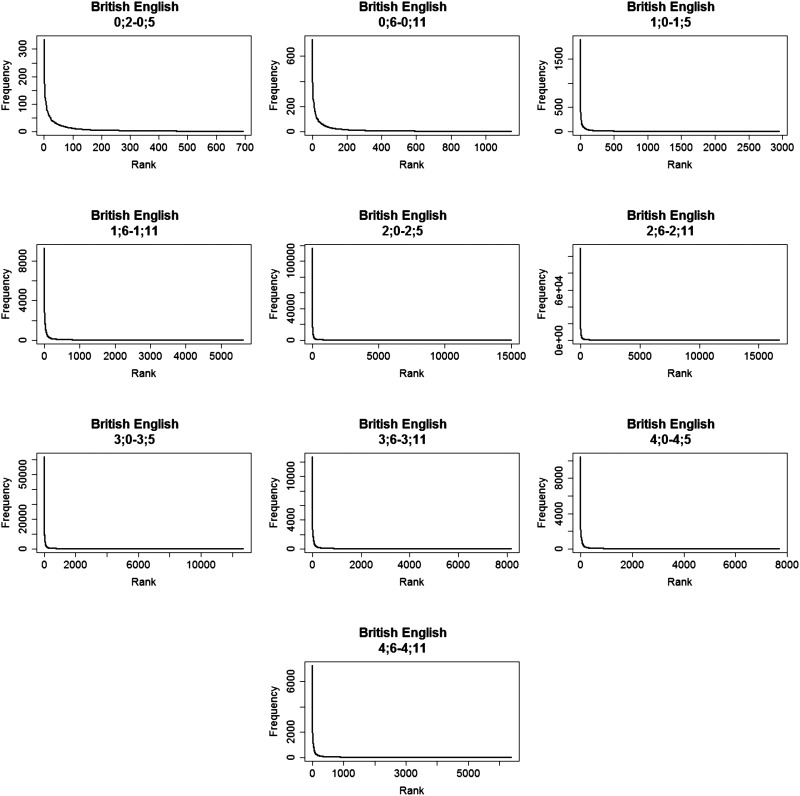
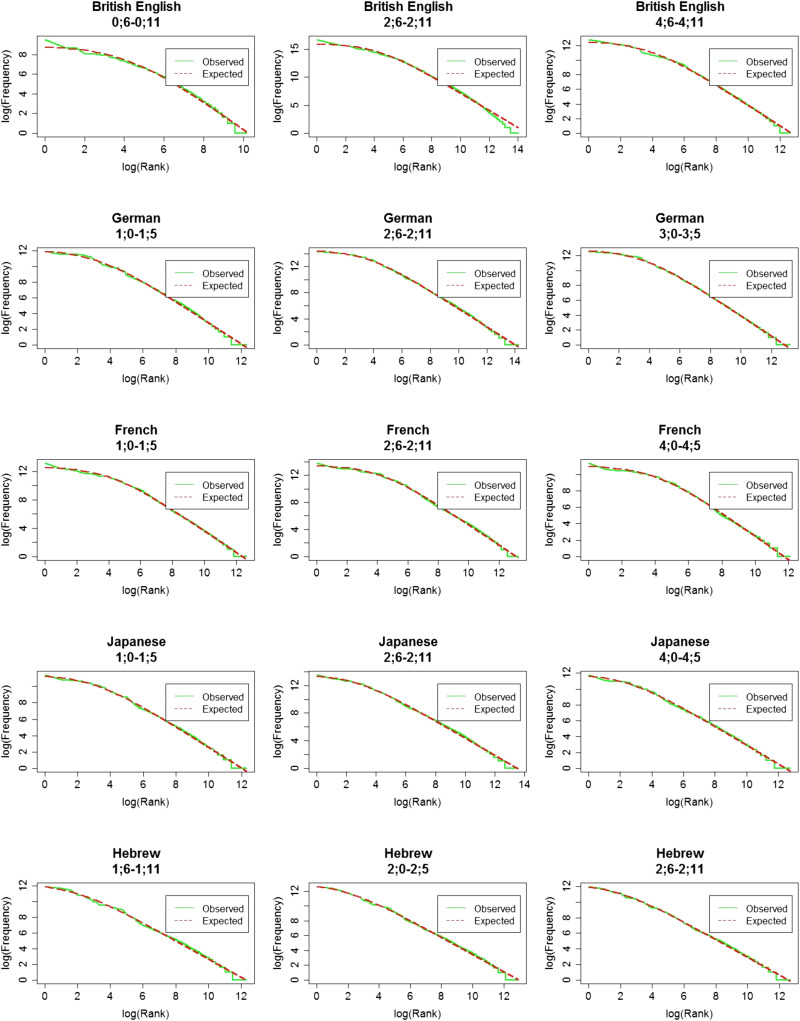
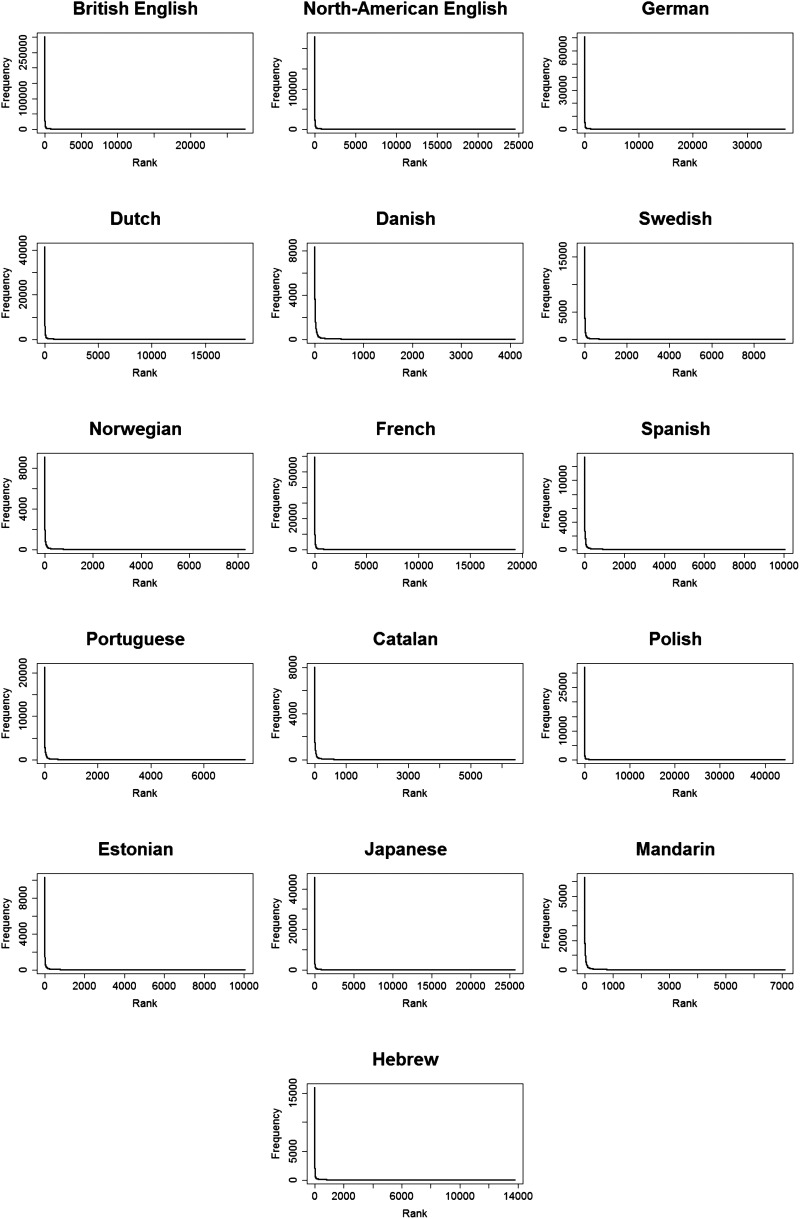
Across languages, word frequency and rank follow a power law relation, forming a distribution known as the Zipfian distribution. There is growing experimental evidence that this well-studied phenomenon may be beneficial for language learning. However, most investigations of word distributions in natural language have focused on adult-to-adult speech: Zipf's law has not been thoroughly evaluated in child-directed speech (CDS) across languages. If Zipfian distributions facilitate learning, they should also be found in CDS. At the same time, several unique properties of CDS may result in a less skewed distribution. Here, we examine the frequency distribution of words in CDS in three studies. We first show that CDS is Zipfian across 15 languages from seven language families. We then show that CDS is Zipfian from early on (six-months) and across development for five languages with sufficient longitudinal data. Finally, we show that the distribution holds across different parts of speech: Nouns, verbs, adjectives and prepositions follow a Zipfian distribution. Together, the results show that the input children hear is skewed in a particular way from early on, providing necessary (but not sufficient) support for the postulated learning advantage of such skew. They highlight the need to study skewed learning environments experimentally.

摘要

在各种语言中,词频和词序遵循幂律关系,形成一种称为齐普夫分布的分布。越来越多的实验证据表明,这种经过充分研究的现象可能对语言学习有益。然而,大多数对自然语言中词分布的研究都集中在成人对成人的言语上:齐普夫定律在跨语言的儿童导向言语(CDS)中尚未得到充分评估。如果齐普夫分布有助于学习,那么在儿童导向言语中也应该能发现它们。同时,儿童导向言语的几个独特属性可能会导致分布的偏斜度较小。在这里,我们通过三项研究考察了儿童导向言语中词的频率分布。我们首先表明,来自七个语系的15种语言的儿童导向言语是齐普夫分布的。然后我们表明,对于有足够纵向数据的五种语言,儿童导向言语从早期(六个月)开始并在整个发展过程中都是齐普夫分布的。最后,我们表明这种分布在不同词性中都成立:名词、动词、形容词和介词都遵循齐普夫分布。总之,结果表明儿童听到的输入从早期就以一种特定的方式存在偏斜,为这种偏斜所假定的学习优势提供了必要(但不充分)的支持。它们突出了通过实验研究偏斜学习环境的必要性。
https://cdn.ncbi.nlm.nih.gov/pmc/blobs/313b/9987348/56e5f3b0d11e/opmi-07-1-g008.jpg
https://cdn.ncbi.nlm.nih.gov/pmc/blobs/313b/9987348/c4d6b4ecc5a1/opmi-07-1-g001.jpg
https://cdn.ncbi.nlm.nih.gov/pmc/blobs/313b/9987348/ceeb73f9779d/opmi-07-1-g002.jpg
https://cdn.ncbi.nlm.nih.gov/pmc/blobs/313b/9987348/f1b7c0b0588b/opmi-07-1-g003.jpg
https://cdn.ncbi.nlm.nih.gov/pmc/blobs/313b/9987348/8b78d55f5dd4/opmi-07-1-g004.jpg
https://cdn.ncbi.nlm.nih.gov/pmc/blobs/313b/9987348/f0b3961d6bd3/opmi-07-1-g005.jpg
https://cdn.ncbi.nlm.nih.gov/pmc/blobs/313b/9987348/adffbc3e08ce/opmi-07-1-g006.jpg
https://cdn.ncbi.nlm.nih.gov/pmc/blobs/313b/9987348/42e15c377895/opmi-07-1-g007.jpg
https://cdn.ncbi.nlm.nih.gov/pmc/blobs/313b/9987348/56e5f3b0d11e/opmi-07-1-g008.jpg
https://cdn.ncbi.nlm.nih.gov/pmc/blobs/313b/9987348/c4d6b4ecc5a1/opmi-07-1-g001.jpg
https://cdn.ncbi.nlm.nih.gov/pmc/blobs/313b/9987348/ceeb73f9779d/opmi-07-1-g002.jpg
https://cdn.ncbi.nlm.nih.gov/pmc/blobs/313b/9987348/f1b7c0b0588b/opmi-07-1-g003.jpg
https://cdn.ncbi.nlm.nih.gov/pmc/blobs/313b/9987348/8b78d55f5dd4/opmi-07-1-g004.jpg
https://cdn.ncbi.nlm.nih.gov/pmc/blobs/313b/9987348/f0b3961d6bd3/opmi-07-1-g005.jpg
https://cdn.ncbi.nlm.nih.gov/pmc/blobs/313b/9987348/adffbc3e08ce/opmi-07-1-g006.jpg
https://cdn.ncbi.nlm.nih.gov/pmc/blobs/313b/9987348/42e15c377895/opmi-07-1-g007.jpg
https://cdn.ncbi.nlm.nih.gov/pmc/blobs/313b/9987348/56e5f3b0d11e/opmi-07-1-g008.jpg

相似文献

1
Zipfian Distributions in Child-Directed Speech.儿童指向性言语中的齐普夫分布。
Open Mind (Camb). 2023 Jan 24;7:1-30. doi: 10.1162/opmi_a_00070. eCollection 2023.
2
The learnability consequences of Zipfian distributions in language.语言中齐夫分布的可学性后果。
Cognition. 2022 Jun;223:105038. doi: 10.1016/j.cognition.2022.105038. Epub 2022 Feb 2.
3
Zipfian distributions facilitate children's learning of novel word-referent mappings.Zipf 分布有助于儿童学习新的单词-指称映射。
Cognition. 2024 Dec;253:105932. doi: 10.1016/j.cognition.2024.105932. Epub 2024 Aug 31.
4
Visual statistical learning is facilitated in Zipfian distributions.视觉统计学习在 Zipf 分布中得到促进。
Cognition. 2021 Jan;206:104492. doi: 10.1016/j.cognition.2020.104492. Epub 2020 Nov 3.
5
Zipfian frequency distributions facilitate word segmentation in context.Zipf 频率分布有助于上下文分词。
Cognition. 2013 Jun;127(3):439-53. doi: 10.1016/j.cognition.2013.02.002. Epub 2013 Apr 2.
6
Zipf's laws of meaning in Catalan.加泰罗尼亚语中的齐普夫定律的意义。
PLoS One. 2021 Dec 16;16(12):e0260849. doi: 10.1371/journal.pone.0260849. eCollection 2021.
7
Word Segmentation Cues in German Child-Directed Speech: A Corpus Analysis.德语儿童导向言语中的词分割线索:语料库分析。
Lang Speech. 2022 Mar;65(1):3-27. doi: 10.1177/0023830920979016. Epub 2021 Jan 30.
8
Cross-situational learning in a Zipfian environment.在 Zipf 环境下的跨情境学习。
Cognition. 2019 Aug;189:11-22. doi: 10.1016/j.cognition.2019.03.005. Epub 2019 Mar 20.
9
Unzipping Zipf's law.解开齐普夫定律
PLoS One. 2017 Aug 9;12(8):e0181987. doi: 10.1371/journal.pone.0181987. eCollection 2017.
10
Content words in Hebrew child-directed speech.希伯来语儿童导向性言语中的实词。
Infant Behav Dev. 2015 Aug;40:231-41. doi: 10.1016/j.infbeh.2015.06.012. Epub 2015 Jul 17.

引用本文的文献

1
Early Production of Imperceptible Words by Infants and Toddlers Born Deaf or Blind.失聪或失明婴幼儿早期产生难以察觉的言语
Open Mind (Camb). 2025 Apr 2;9:475-500. doi: 10.1162/opmi_a_00197. eCollection 2025.

本文引用的文献

1
The learnability consequences of Zipfian distributions in language.语言中齐夫分布的可学性后果。
Cognition. 2022 Jun;223:105038. doi: 10.1016/j.cognition.2022.105038. Epub 2022 Feb 2.
2
Linguistic laws in biology.生物学中的语言规律。
Trends Ecol Evol. 2022 Jan;37(1):53-66. doi: 10.1016/j.tree.2021.08.012. Epub 2021 Sep 28.
3
Visual statistical learning is facilitated in Zipfian distributions.视觉统计学习在 Zipf 分布中得到促进。
Cognition. 2021 Jan;206:104492. doi: 10.1016/j.cognition.2020.104492. Epub 2020 Nov 3.
4
Different languages, similar encoding efficiency: Comparable information rates across the human communicative niche.不同语言,相似的编码效率:人类交际范围内相当的信息率。
Sci Adv. 2019 Sep 4;5(9):eaaw2594. doi: 10.1126/sciadv.aaw2594. eCollection 2019 Sep.
5
How Efficiency Shapes Human Language.效率如何塑造人类语言。
Trends Cogn Sci. 2019 May;23(5):389-407. doi: 10.1016/j.tics.2019.02.003. Epub 2019 Apr 18.
6
Cross-situational learning in a Zipfian environment.在 Zipf 环境下的跨情境学习。
Cognition. 2019 Aug;189:11-22. doi: 10.1016/j.cognition.2019.03.005. Epub 2019 Mar 20.
7
The effect of Zipfian frequency variations on category formation in adult artificial language learning.齐普夫频率变化对成人人工语言学习中类别形成的影响。
Lang Learn Dev. 2017;13(4):357-374. doi: 10.1080/15475441.2016.1263571. Epub 2017 Aug 2.
8
SES effects on the use of variation sets in child-directed speech.社会经济地位对儿童导向言语中变体集使用的影响。
J Child Lang. 2018 Nov;45(6):1423-1438. doi: 10.1017/S0305000918000223. Epub 2018 Jul 5.
9
Quantity and Diversity: Simulating Early Word Learning Environments.数量与多样性:模拟早期词汇学习环境。
Cogn Sci. 2018 May;42 Suppl 2(Suppl 2):375-412. doi: 10.1111/cogs.12592. Epub 2018 Feb 7.
10
Unzipping Zipf's law.解开齐普夫定律
PLoS One. 2017 Aug 9;12(8):e0181987. doi: 10.1371/journal.pone.0181987. eCollection 2017.