Princess Margaret Cancer Centre, Toronto, Canada.
Department of Medicine, University of Toronto, Toronto, Canada.
PLoS One. 2023 Mar 9;18(3):e0282753. doi: 10.1371/journal.pone.0282753. eCollection 2023.
Chronic graft-versus-host disease (cGVHD) is a serious immune-mediated complication after allogeneic haematopoietic stem cell transplantation (HSCT), but in patients with malignancy, cGVHD development is associated with superior survival. Lack of reliable biomarkers and clinical underreporting means there is insufficient understanding of cGVHD clinical outcomes and balance between cGVHD treatment and maintaining beneficial graft-versus-tumour effects.
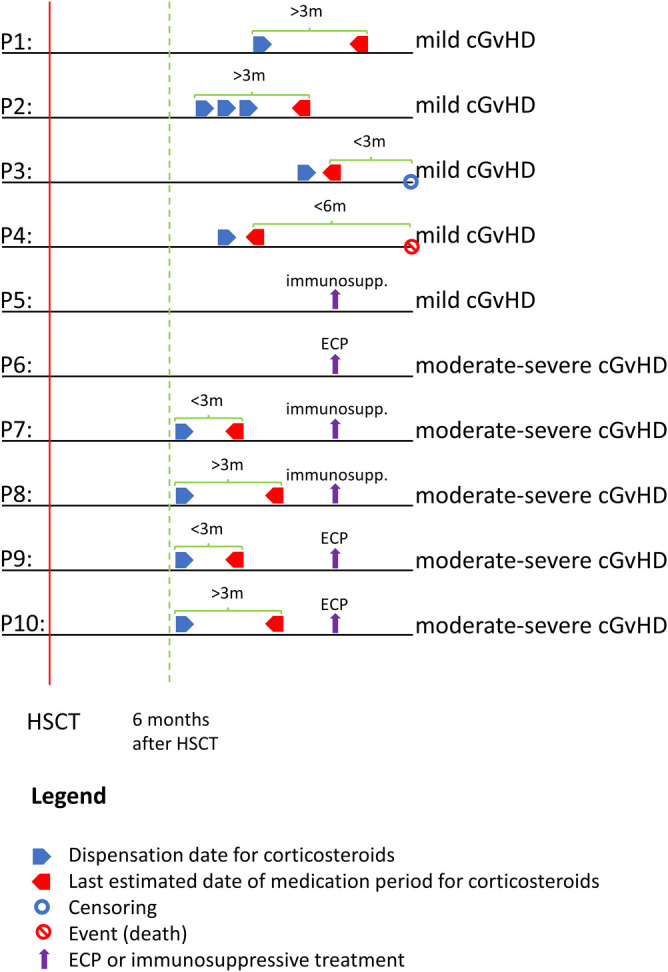
We performed a Swedish population-wide registry study following patients who underwent allogeneic HSCT 2006-2015. cGVHD status was retrospectively classified using a real-world method based on the timing and extent of systemic immunosuppressive treatment.
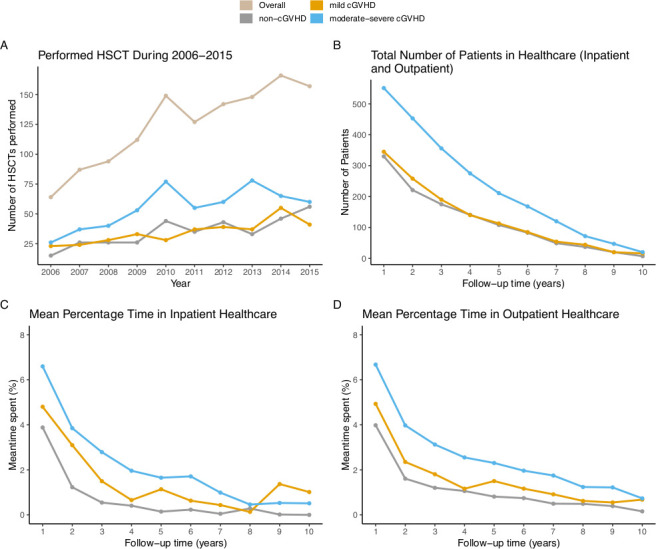
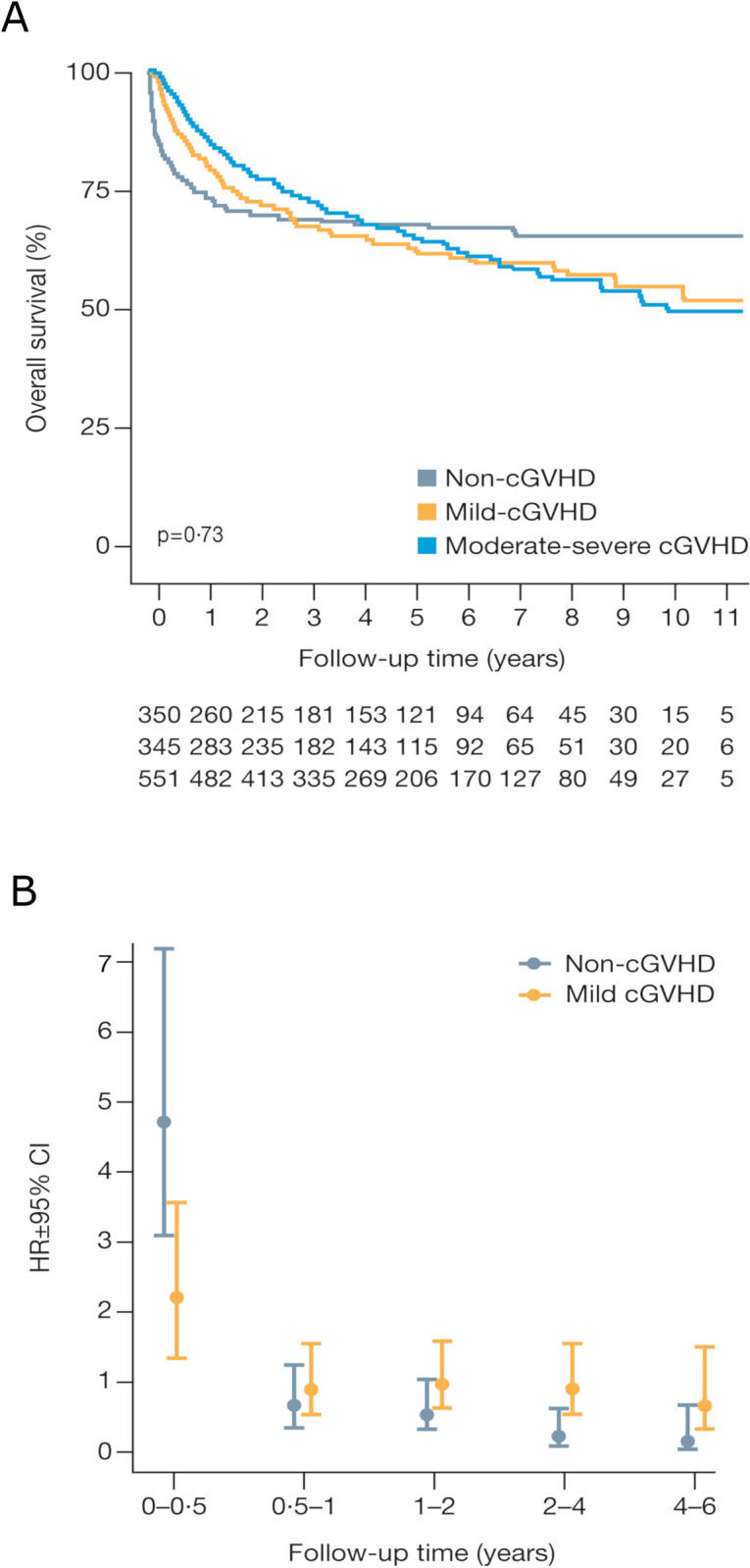
cGVHD incidence among patients surviving ≥6 months post-HSCT (n = 1246) was 71.9%, significantly higher than previously reported. 5-year overall survival in patients surviving ≥6 months post-HSCT was 67.7%, 63.3%, and 65.3%, in non-, mild, and moderate-severe cGVHD, respectively. Non-cGVHD patients had a mortality risk almost five-fold higher compared to moderate-severe cGVHD patients 12-months post-HSCT. Moderate-severe cGVHD patients had greater healthcare utilization compared with mild and non cGVHD patients.
cGVHD incidence was high among HSCT survivors. Non-cGVHD patients had higher mortality during the first 6 months of follow-up; however, moderate-severe cGVHD patients had more comorbidities and healthcare utilization. This study highlights the urgent need for new treatments and real-time methods to monitor effective immunosuppression after HSCT.
慢性移植物抗宿主病(cGVHD)是异基因造血干细胞移植(HSCT)后的一种严重的免疫介导的并发症,但在恶性肿瘤患者中,cGVHD 的发展与生存获益相关。缺乏可靠的生物标志物和临床报告不足意味着对 cGVHD 临床结局和 cGVHD 治疗与维持有益的移植物抗肿瘤效应之间平衡的理解还不够充分。
我们对 2006 年至 2015 年间接受异基因 HSCT 的患者进行了一项瑞典全国范围的登记研究。使用基于系统免疫抑制治疗时机和程度的真实世界方法,回顾性地对 cGVHD 状态进行分类。
在 HSCT 后存活≥6 个月的患者中(n=1246),cGVHD 的发生率为 71.9%,明显高于既往报道。在 HSCT 后存活≥6 个月的患者中,5 年总生存率分别为非 cGVHD、轻度 cGVHD 和中重度 cGVHD 患者的 67.7%、63.3%和 65.3%。与中重度 cGVHD 患者相比,HSCT 后 12 个月非 cGVHD 患者的死亡风险几乎高 5 倍。与轻度和非 cGVHD 患者相比,中重度 cGVHD 患者的医疗保健利用率更高。
HSCT 幸存者中 cGVHD 的发生率较高。非 cGVHD 患者在随访的前 6 个月死亡率较高;然而,中重度 cGVHD 患者有更多的合并症和医疗保健利用率。本研究强调了迫切需要新的治疗方法和实时方法来监测 HSCT 后的有效免疫抑制。