Department of Human Genetics, Leiden University Medical Center, 2333 ZC Leiden, The Netherlands.
Center for Genomic Integrity, Institute for Basic Science, 44919 Ulsan, Republic of Korea.
Proc Natl Acad Sci U S A. 2023 Mar 14;120(11):e2208860120. doi: 10.1073/pnas.2208860120. Epub 2023 Mar 9.
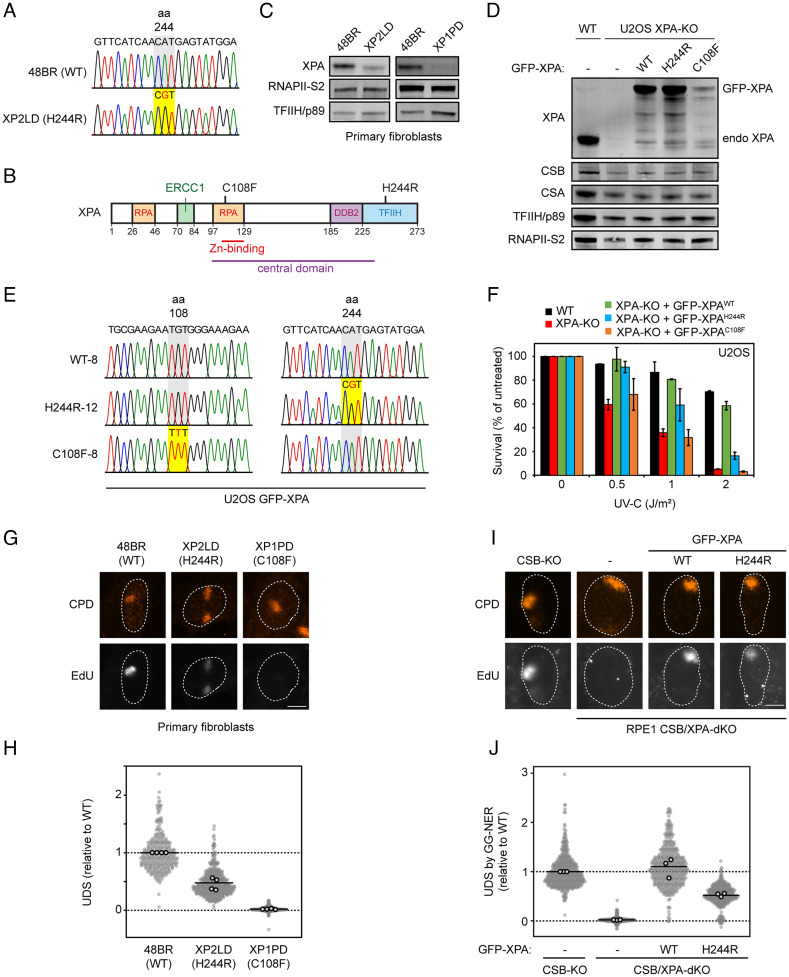
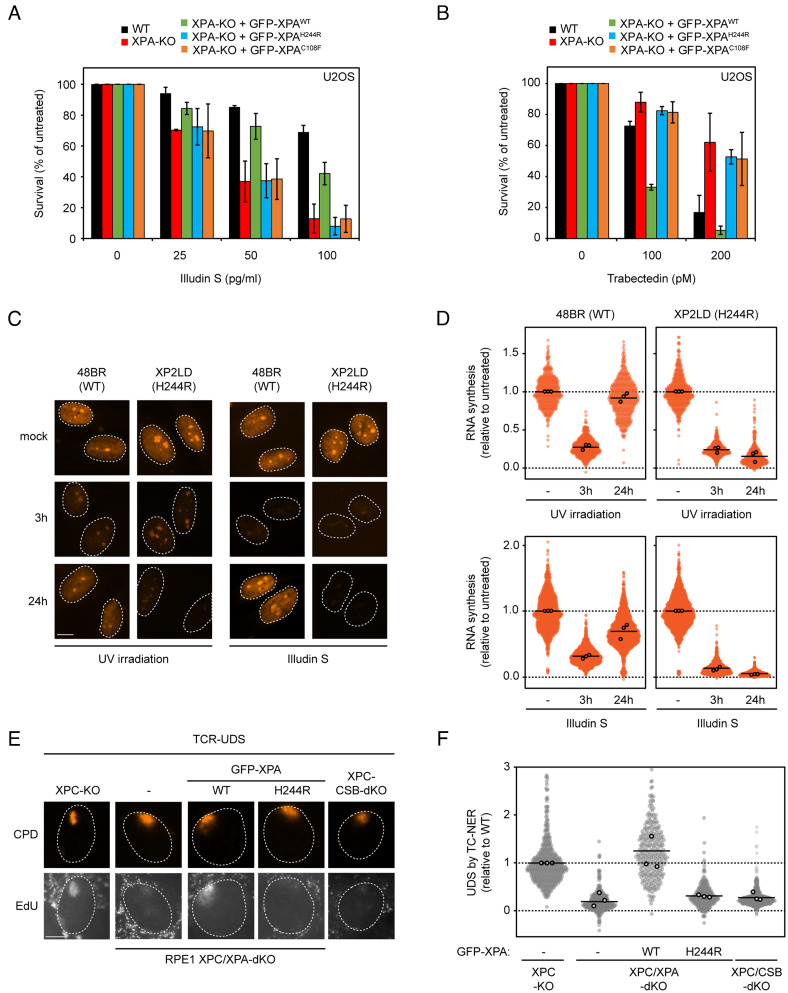
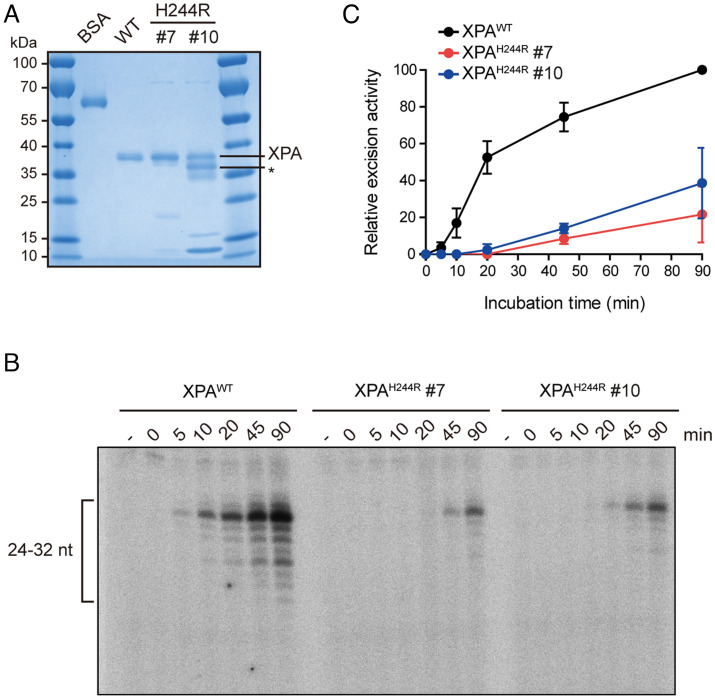
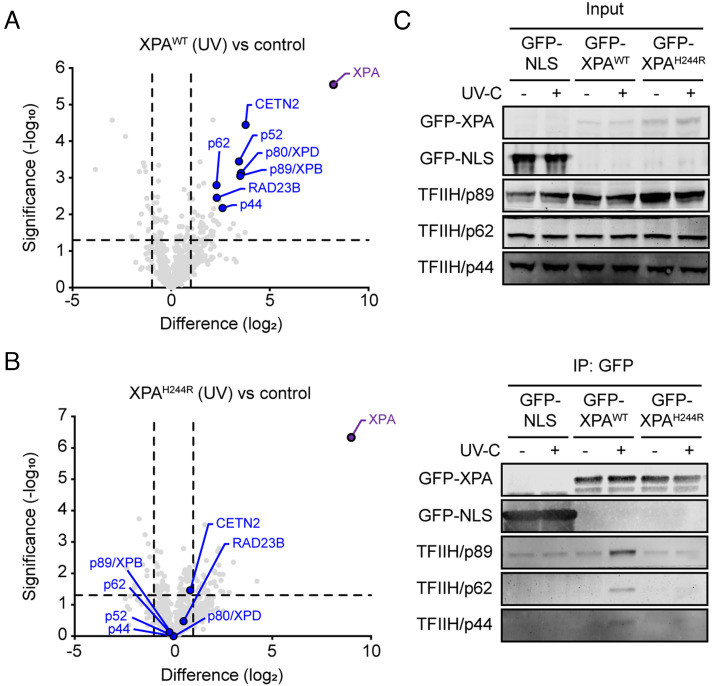
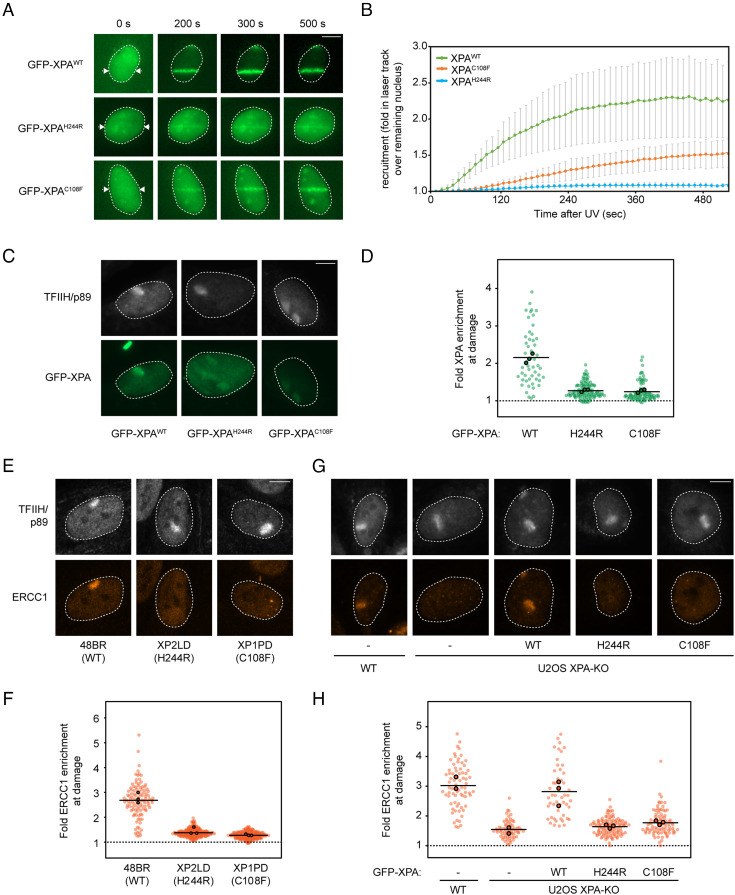
XPA is a central scaffold protein that coordinates the assembly of repair complexes in the global genome (GG-NER) and transcription-coupled nucleotide excision repair (TC-NER) subpathways. Inactivating mutations in XPA cause xeroderma pigmentosum (XP), which is characterized by extreme UV sensitivity and a highly elevated skin cancer risk. Here, we describe two Dutch siblings in their late forties carrying a homozygous H244R substitution in the C-terminus of XPA. They present with mild cutaneous manifestations of XP without skin cancer but suffer from marked neurological features, including cerebellar ataxia. We show that the mutant XPA protein has a severely weakened interaction with the transcription factor IIH (TFIIH) complex leading to an impaired association of the mutant XPA and the downstream endonuclease ERCC1-XPF with NER complexes. Despite these defects, the patient-derived fibroblasts and reconstituted knockout cells carrying the XPA-H244R substitution show intermediate UV sensitivity and considerable levels of residual GG-NER (~50%), in line with the intrinsic properties and activities of the purified protein. By contrast, XPA-H244R cells are exquisitely sensitive to transcription-blocking DNA damage, show no detectable recovery of transcription after UV irradiation, and display a severe deficiency in TC-NER-associated unscheduled DNA synthesis. Our characterization of a new case of XPA deficiency that interferes with TFIIH binding and primarily affects the transcription-coupled subpathway of nucleotide excision repair, provides an explanation of the dominant neurological features in these patients, and reveals a specific role for the C-terminus of XPA in TC-NER.
XPA 是一种核心支架蛋白,可协调全局基因组(GG-NER)和转录偶联核苷酸切除修复(TC-NER)亚途径中修复复合物的组装。XPA 中的失活突变会导致着色性干皮病(XP),其特征是对紫外线极度敏感和皮肤癌风险极高。在这里,我们描述了一对四十多岁的荷兰同胞,他们在 XPA 的 C 末端携带纯合的 H244R 取代。他们表现出 XP 的轻度皮肤表现,没有皮肤癌,但患有明显的神经特征,包括小脑共济失调。我们表明,突变的 XPA 蛋白与转录因子 IIH(TFIIH)复合物的相互作用严重减弱,导致突变的 XPA 和下游内切酶 ERCC1-XPF 与 NER 复合物的关联受损。尽管存在这些缺陷,但携带 XPA-H244R 取代的患者来源成纤维细胞和重建的敲除细胞显示出中等强度的 UV 敏感性和相当水平的残余 GG-NER(~50%),与纯化蛋白的固有特性和活性一致。相比之下,XPA-H244R 细胞对转录阻断的 DNA 损伤极其敏感,在 UV 照射后几乎无法检测到转录的恢复,并且在 TC-NER 相关的非计划 DNA 合成中存在严重缺陷。我们对 XPA 缺陷的新病例进行了表征,该缺陷干扰了 TFIIH 结合,主要影响核苷酸切除修复的转录偶联亚途径,为这些患者的显性神经特征提供了解释,并揭示了 XPA 在 TC-NER 中的 C 末端的特定作用。