Zhang Qi, Wang Changli, Li Ruijia, Liu Jingjing, Wang Jiyu, Wang Tianyi, Wang Bing
College of Life Science and Health, Northeastern University, Shenyang, Liaoning, China.
Front Oncol. 2023 Feb 21;13:1056903. doi: 10.3389/fonc.2023.1056903. eCollection 2023.
B-cell receptor-associated protein 31 (BAP31) has been recognized as a tumor-associated protein and has largely been shown to promote metastasis in a variety of cancers. Cancer metastasis arises through multistep pathways, and the induction of angiogenesis is shown to be a rate-limiting step in the process of tumor metastasis.
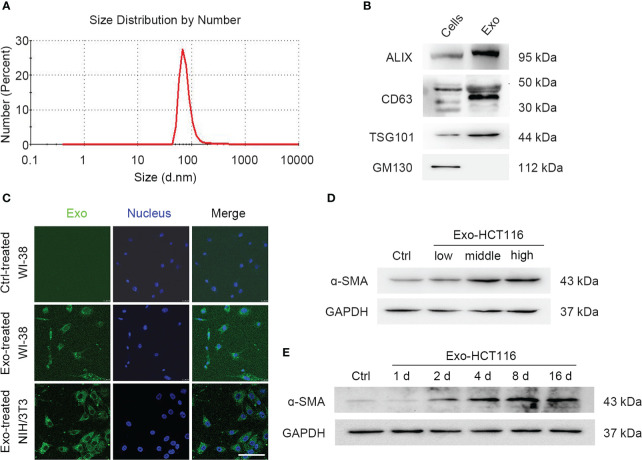
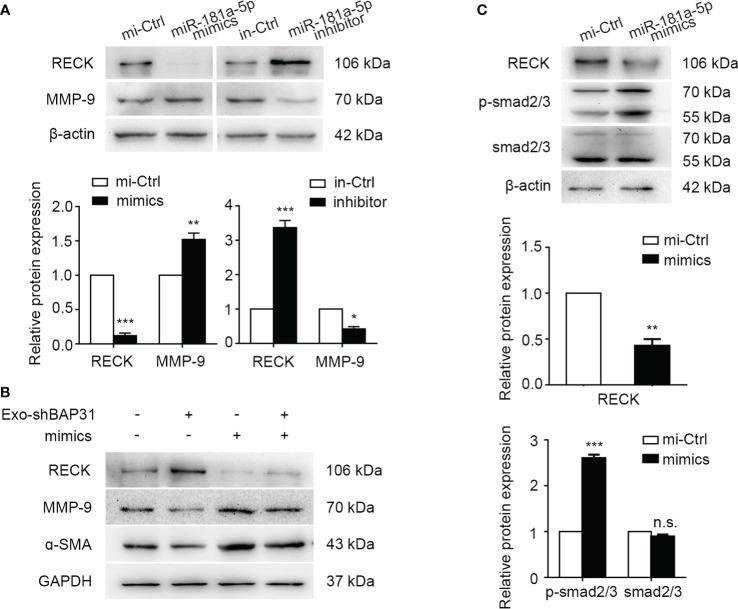
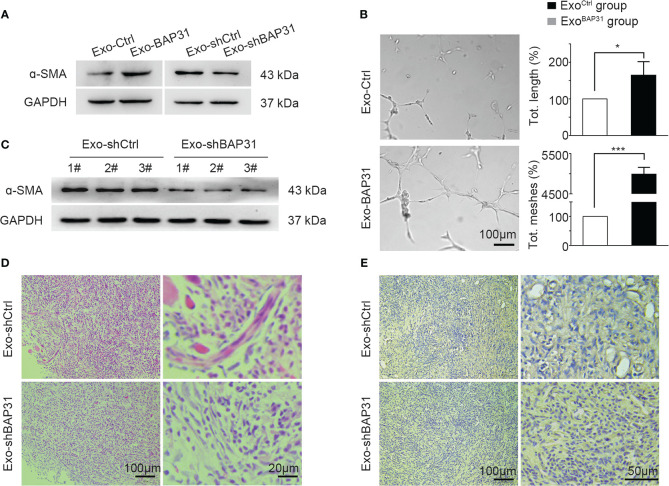
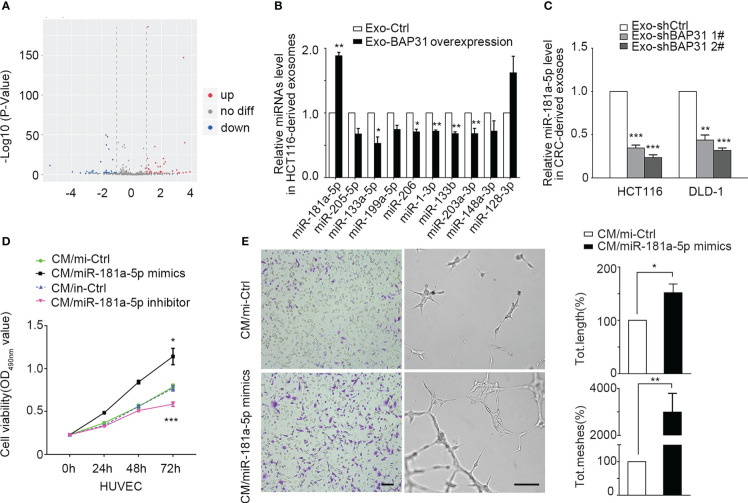
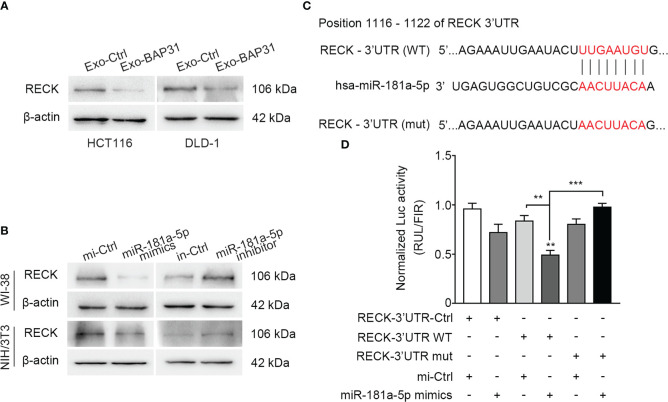
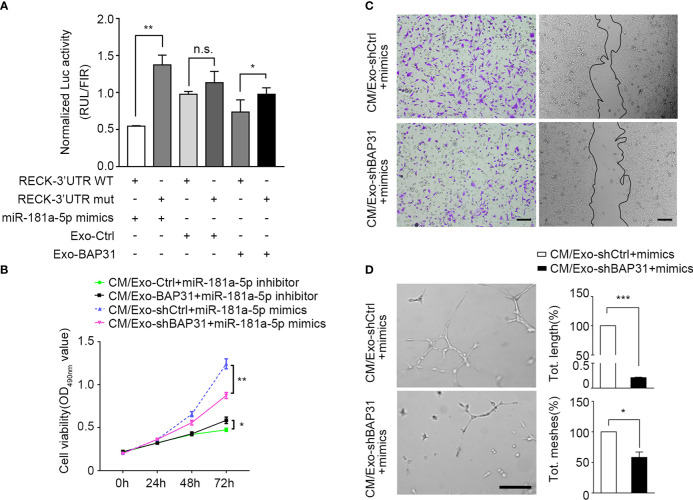
This study explored the effect of BAP31 on colorectal cancer (CRC) angiogenesis by regulating the tumor microenvironment. First, exosomes from BAP31-regulated CRCs affected the transition of normal fibroblasts to proangiogenic cancer-associated fibroblasts (CAFs) in vivo and in vitro. Next, microRNA sequencing was performed to analyze the microRNA expression profile of exosomes secreted from BAP31- overexpressing CRCs. The results indicated that the expression of BAP31 in CRCs significantly altered the levels of exosomal microRNAs, such as miR-181a- 5p. Meanwhile, an in vitro tube formation assay showed that fibroblasts with high levels of miR-181a-5p significantly promoted endothelial cell angiogenesis. Critically, we first identified that miR-181a-5p directly targeted the 3'-untranslated region (3'UTR) of reversion-inducing cysteine-rich protein with kazal motifs (RECK) using the dual-luciferase activity assay, which drove fibroblast transformation into proangiogenic CAFs by upregulating matrix metalloproteinase-9 (MMP-9) and phosphorylation of mothers against decapentaplegic homolog 2/Mothers against decapentaplegic homolog 3 (Smad2/3).
Exosomes from BAP31-overexpressing/BAP31-knockdown CRCs are found to manipulate the transition of fibroblasts into proangiogenic CAFs by the miR-181a-5p/RECK axis.
B细胞受体相关蛋白31(BAP31)已被公认为一种肿瘤相关蛋白,并且在很大程度上已显示其可促进多种癌症的转移。癌症转移通过多步骤途径发生,并且血管生成的诱导被证明是肿瘤转移过程中的限速步骤。
本研究通过调节肿瘤微环境来探究BAP31对结直肠癌(CRC)血管生成的影响。首先,来自BAP31调节的结直肠癌的外泌体在体内和体外影响正常成纤维细胞向促血管生成的癌症相关成纤维细胞(CAF)的转变。接下来,进行了微小RNA测序以分析从过表达BAP31的结直肠癌分泌的外泌体的微小RNA表达谱。结果表明,结直肠癌中BAP31的表达显著改变了外泌体微小RNA的水平,如miR-181a-5p。同时,体外管形成试验表明,具有高水平miR-181a-5p的成纤维细胞显著促进内皮细胞血管生成。至关重要的是,我们首先使用双荧光素酶活性测定法确定miR-181a-5p直接靶向具有kazal基序的富含半胱氨酸的逆转诱导蛋白(RECK)的3'-非翻译区(3'UTR),其通过上调基质金属蛋白酶-9(MMP-9)和抑制母亲对十二烷基麻痹同源物2/母亲对十二烷基麻痹同源物3(Smad2/3)的磷酸化来驱动成纤维细胞转变为促血管生成的CAF。
发现来自过表达BAP31/敲低BAP31的结直肠癌的外泌体通过miR-181a-5p/RECK轴操纵成纤维细胞向促血管生成的CAF的转变。