Department of Pediatric Dentistry, Guanghua School of Stomatology, Hospital of Stomatology, Sun Yat-sen University, Guangzhou, Guangdong 510055, China; Guangdong Province Key Laboratory of Stomatology, Guangzhou, Guangdong 510080, China.
Guangdong Province Key Laboratory of Stomatology, Guangzhou, Guangdong 510080, China; Department of Operative Dentistry and Endodontics, Guanghua School of Stomatology, Hospital of Stomatology, Sun Yat-sen University, Guangzhou, Guangdong 510055, China.
EBioMedicine. 2018 Oct;36:209-220. doi: 10.1016/j.ebiom.2018.09.006. Epub 2018 Sep 20.
Cancer-associated fibroblasts (CAFs) play an important role in regulating tumor progression by transferring exosomes to neighboring cells. Our aim was to clarify the role of microRNA encapsulated in the exosomes derived from CAFs in oral squamous cell carcinoma (OSCC).
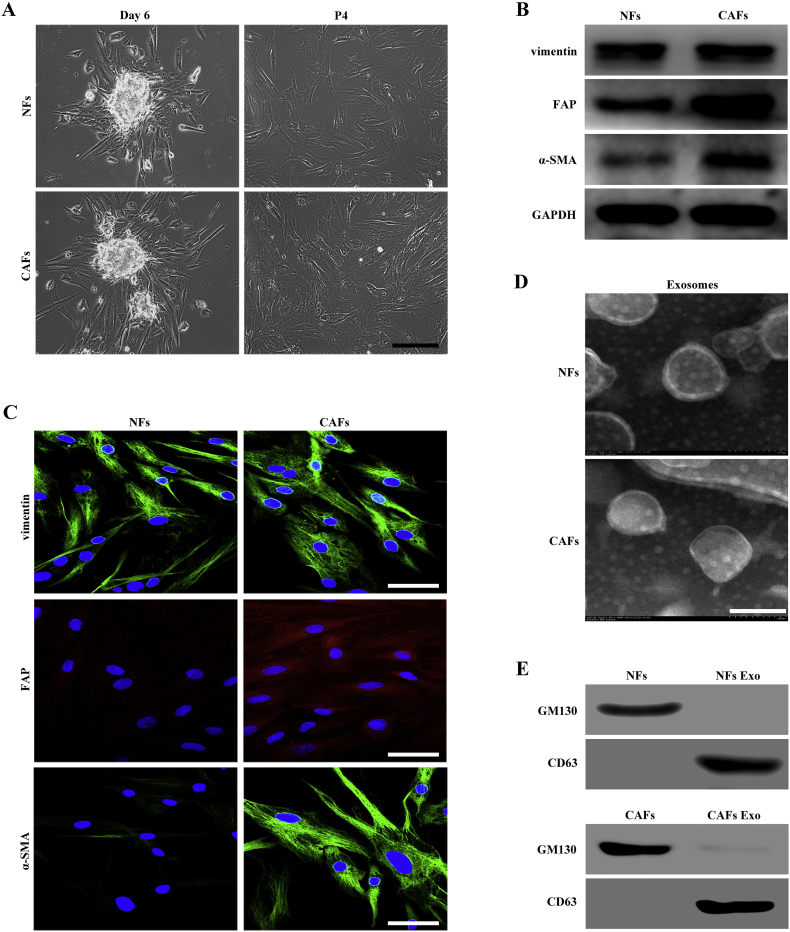
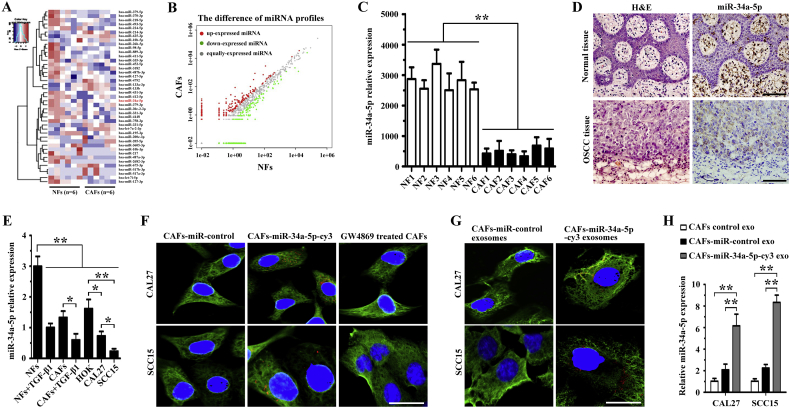
We examined the microRNA expression profiles of exosomes derived from CAFs and donor-matched normal fibroblasts (NFs) from patients with OSCC. We used confocal microscopy to examine the transportation of exosomal miR-34a-5p between CAFs and OSCC cells. Next, luciferase reporter and its mutant plasmids were used to confirm direct target gene of miR-34a-5p. Phenotypic assays and in vivo tumor growth experiments were used to investigate the functional significance of exosomal miR-34a-5p.
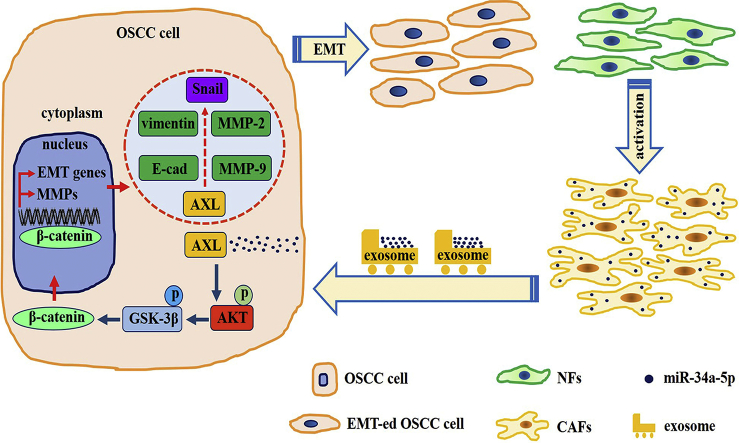
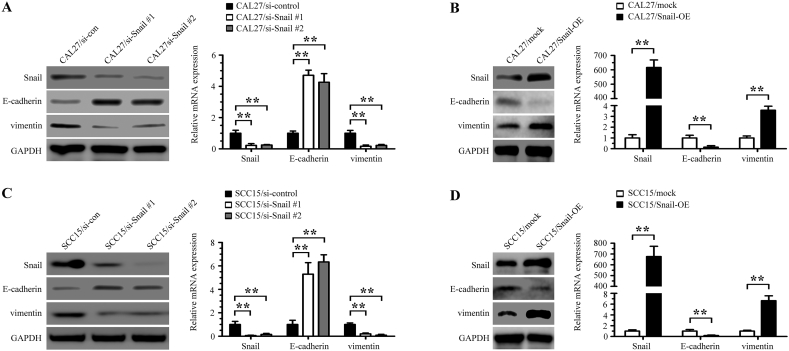
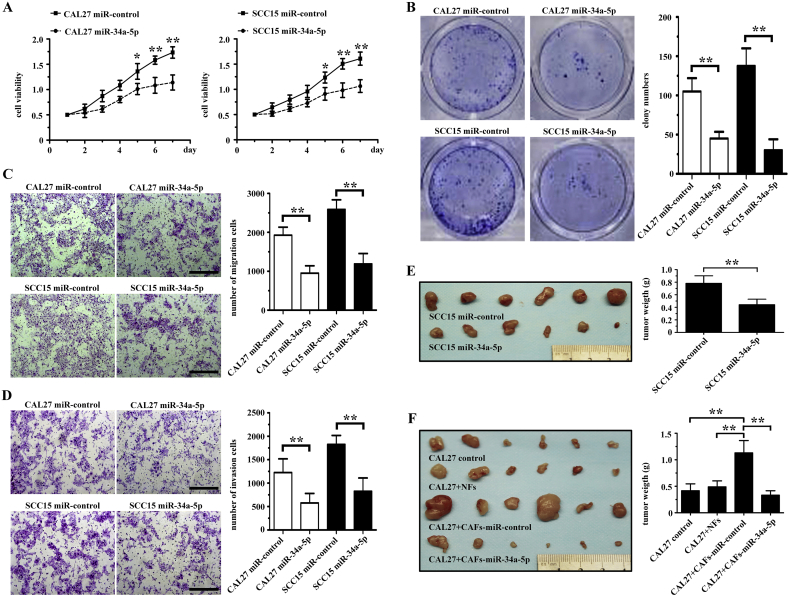
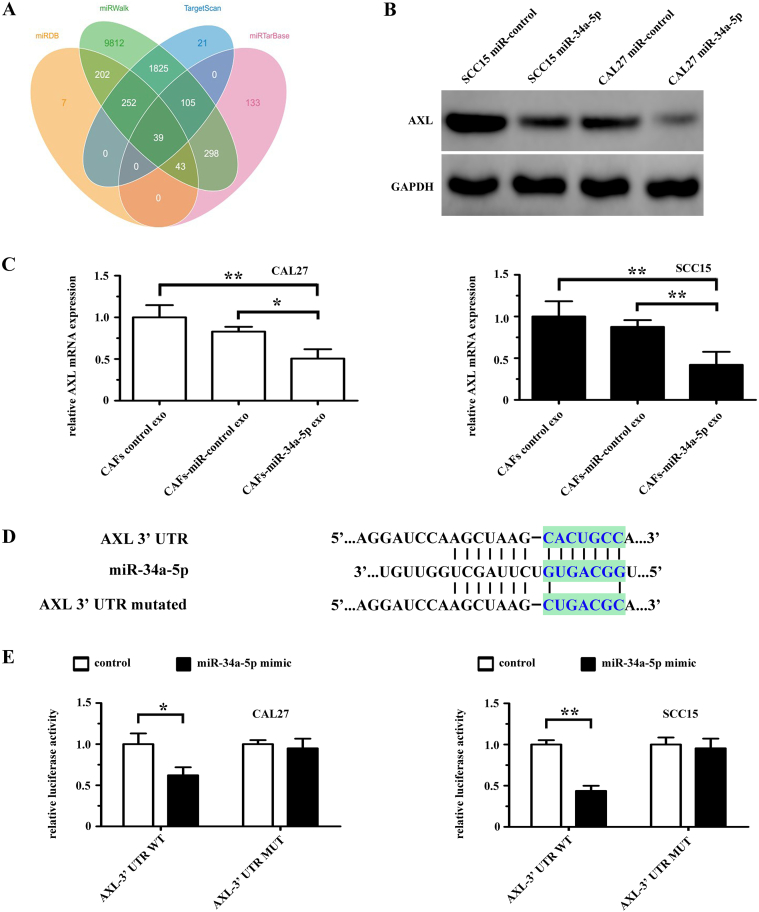
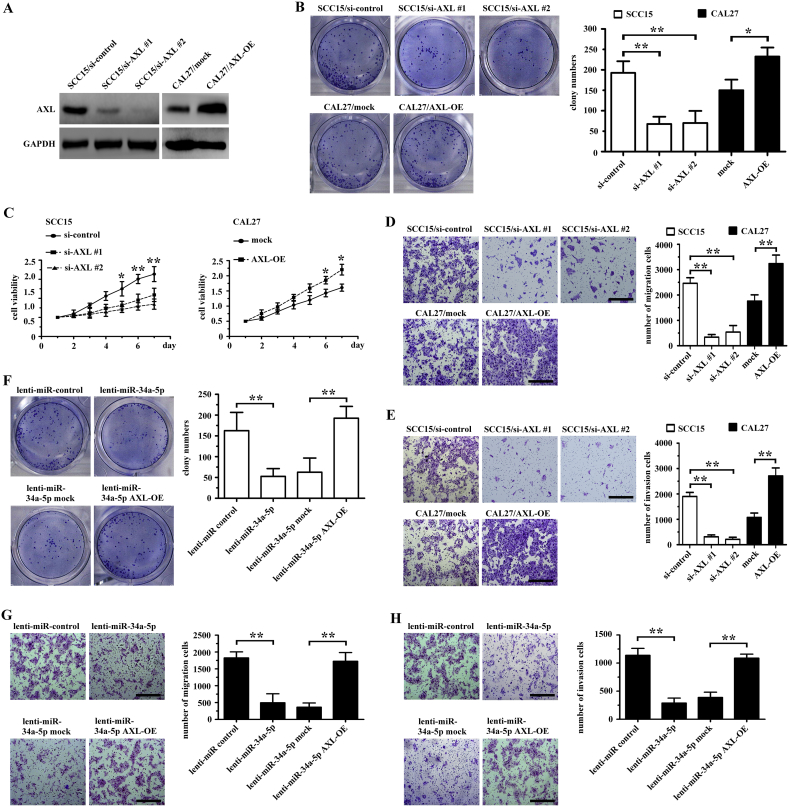
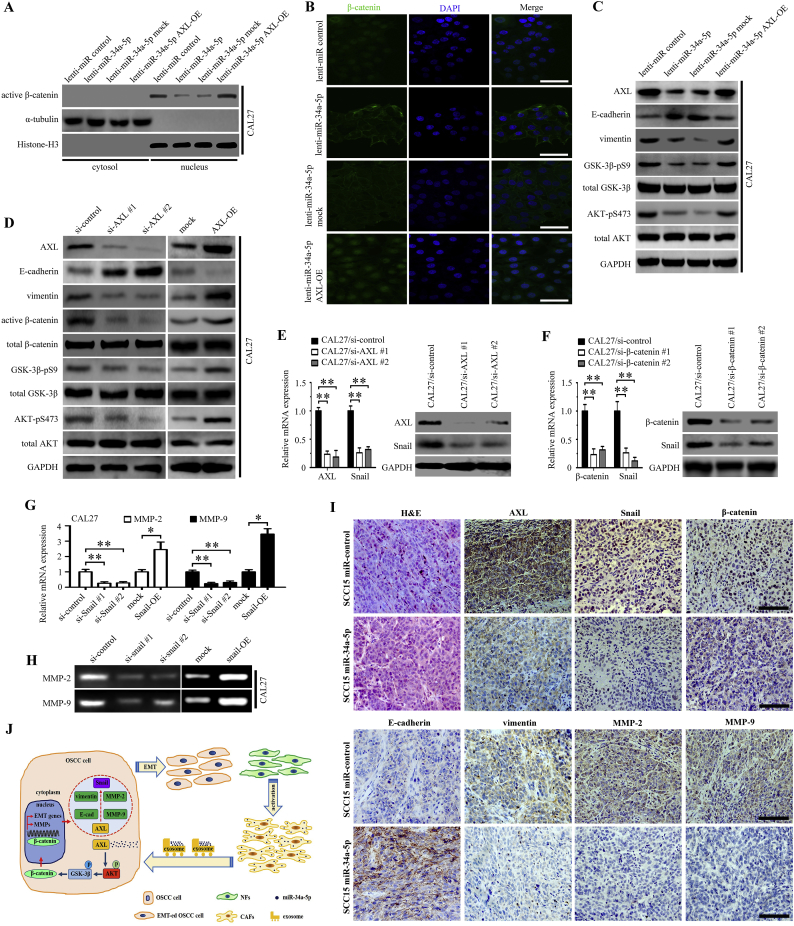
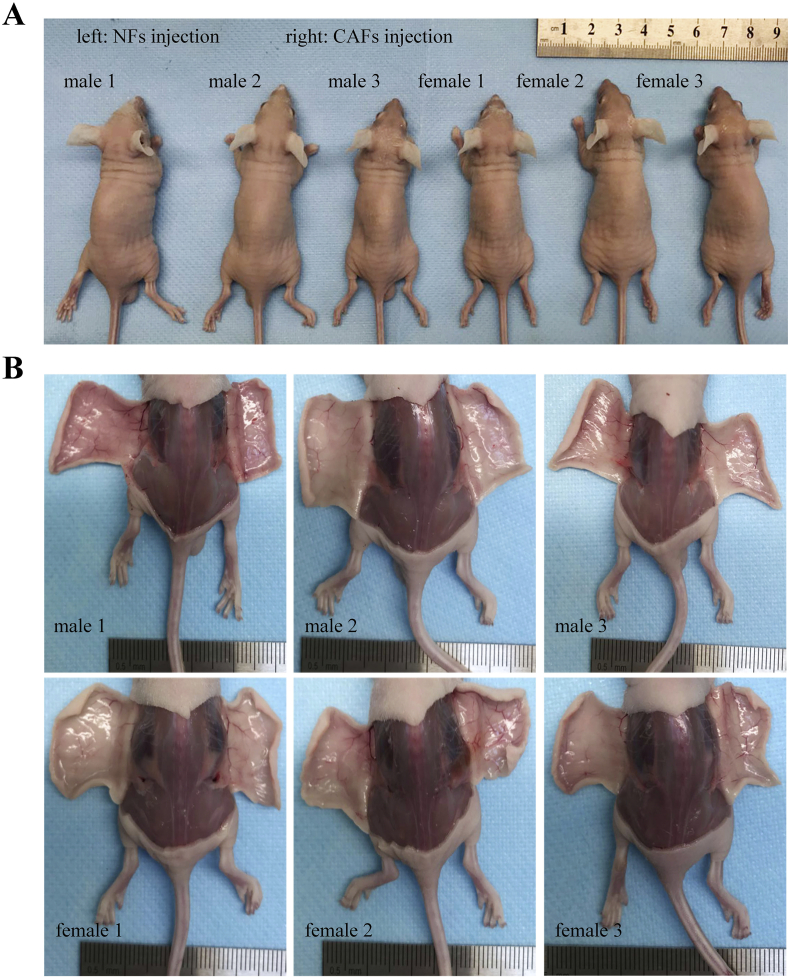
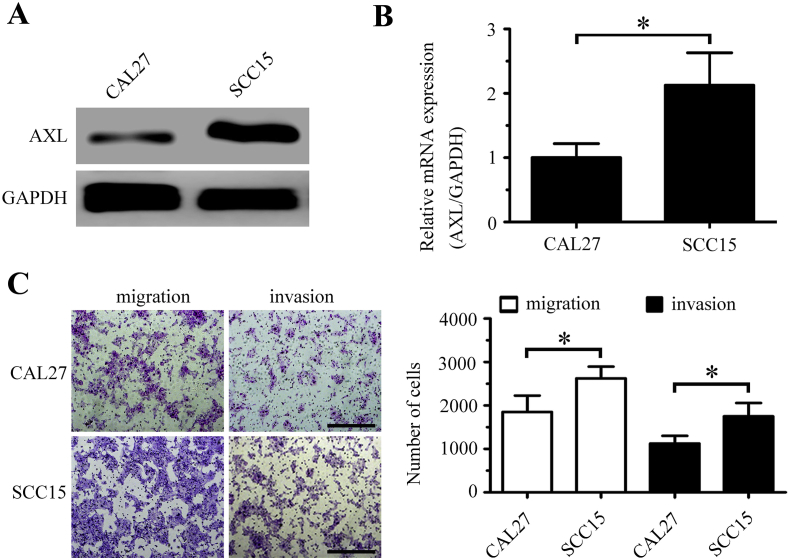
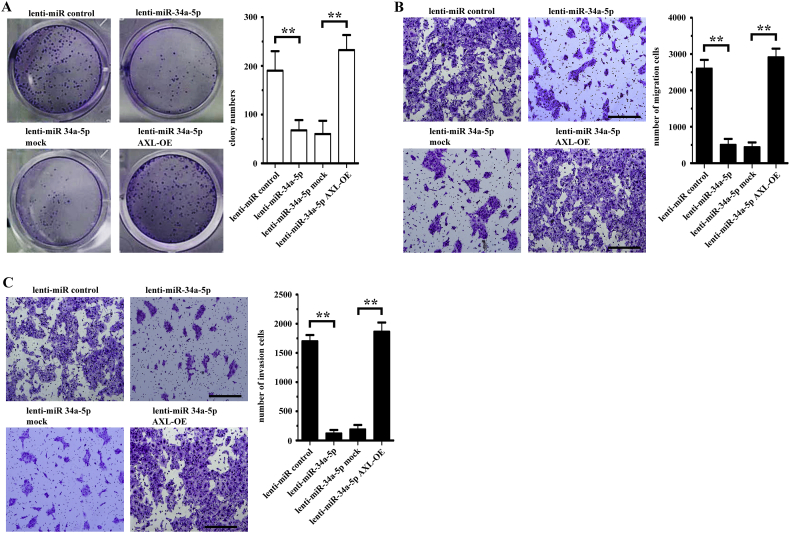
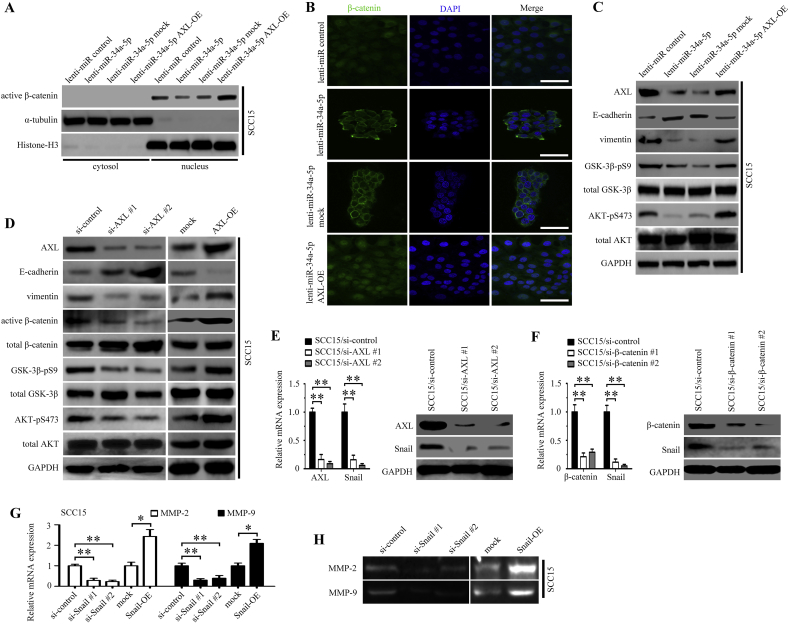
We found that the expression of miR-34a-5p in CAF-derived exosomes was significantly reduced, and fibroblasts could transfer exosomal miR-34a-5p to OSCC cells. In xenograft experiments, miR-34a-5p overexpression in CAFs could inhibit the tumorigenesis of OSCC cells. We further revealed that miR-34a-5p binds to its direct downstream target AXL to suppress OSCC cell proliferation and metastasis. Stable ectopic expression of AXL in OSCC cells overexpressing miR-34a-5p restored proliferation and motility abolished by the miRNA. The miR-34a-5p/AXL axis promoted OSCC progression via the AKT/GSK-3β/β-catenin signaling pathway, which could induce the epithelial-mesenchymal transition (EMT) to promote cancer cells metastasis. The miR-34a-5p/AXL axis enhanced nuclear translocation of β-catenin and then induced transcriptional upregulation of SNAIL, which in turn activated both MMP-2 and MMP-9.
The miR-34a-5p/AXL axis confers aggressiveness in oral cancer cells through the AKT/GSK-3β/β-catenin/Snail signaling cascade and might represent a therapeutic target for OSCC. FUND: National Natural Science Foundation of China.
癌症相关成纤维细胞(CAFs)通过将外泌体转移到邻近细胞来调节肿瘤进展,发挥着重要作用。我们的目的是阐明源自口腔鳞状细胞癌(OSCC)患者的 CAF 衍生的外泌体中包裹的 microRNA 在其中的作用。
我们检查了源自 CAF 和供体匹配的正常成纤维细胞(NFs)的 OSCC 患者的外泌体中的 microRNA 表达谱。我们使用共聚焦显微镜检查 CAF 和 OSCC 细胞之间外泌体 miR-34a-5p 的运输。接下来,使用荧光素酶报告及其突变质粒来确认 miR-34a-5p 的直接靶基因。表型测定和体内肿瘤生长实验用于研究外泌体 miR-34a-5p 的功能意义。
我们发现 CAF 衍生的外泌体中 miR-34a-5p 的表达明显降低,并且成纤维细胞可以将外泌体 miR-34a-5p 转移到 OSCC 细胞。在异种移植实验中,CAFs 中 miR-34a-5p 的过表达可以抑制 OSCC 细胞的肿瘤发生。我们进一步揭示了 miR-34a-5p 与其直接下游靶标 AXL 结合,抑制 OSCC 细胞的增殖和转移。在过表达 miR-34a-5p 的 OSCC 细胞中稳定异位表达 AXL,可恢复由 miRNA 引起的增殖和运动能力丧失。miR-34a-5p/AXL 轴通过 AKT/GSK-3β/β-catenin 信号通路促进 OSCC 进展,可诱导上皮-间充质转化(EMT)促进癌细胞转移。miR-34a-5p/AXL 轴增强β-catenin 的核易位,然后诱导 SNAIL 的转录上调,进而激活 MMP-2 和 MMP-9。
miR-34a-5p/AXL 轴通过 AKT/GSK-3β/β-catenin/Snail 信号级联赋予口腔癌细胞侵袭性,可能成为 OSCC 的治疗靶点。
国家自然科学基金。