Fleshner Michelle, Fox Steve, Robertson Thomas, Fujita Ayako Wendy, Bhamidipati Divya, Bui Thuy
Division of Hospital Medicine, University of Colorado Anschutz Medical Center CO, Aurora.
Cleveland Clinic, Respiratory Institute Cleveland, OH.
POCUS J. 2022 Apr 21;7(1):144-153. doi: 10.24908/pocus.v7i1.15620. eCollection 2022.
Point-of-care Ultrasound (POCUS) is particularly useful in low-middle income countries (LMICs) where advanced imaging modalities and diagnostics are often unavailable. However, its use among Internal Medicine (IM) practitioners is limited and without standard curricula. This study describes POCUS scans performed by U.S. IM residents rotating in LMICs to provide recommendations for curriculum development.
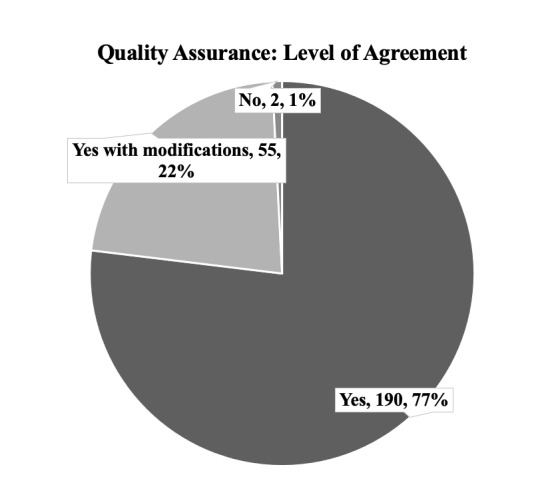
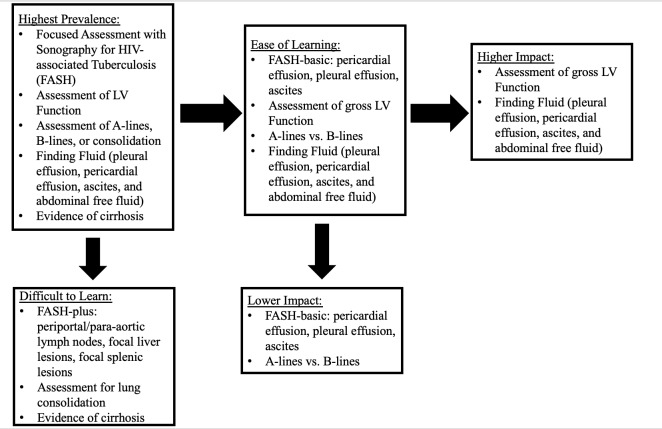
IM residents within a global health track performed clinically-indicated POCUS scans at two sites. They logged their interpretations and whether or not the scan changed diagnosis or management. Scans were quality-assured by POCUS experts in the US to validate results. Using the criteria of prevalence, ease of learning, and impact, a framework was developed for a POCUS curriculum for IM practitioners within LMICs.
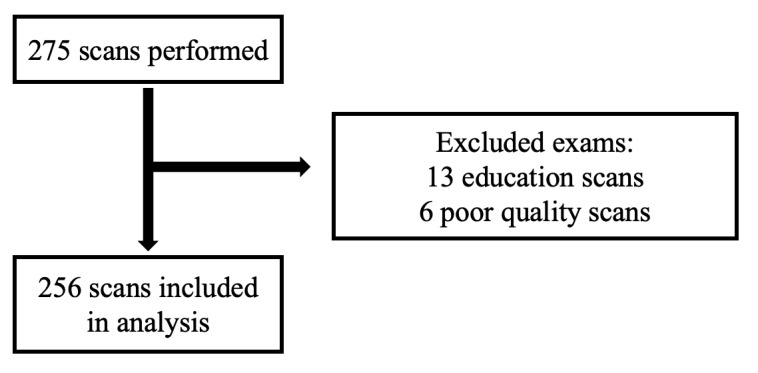
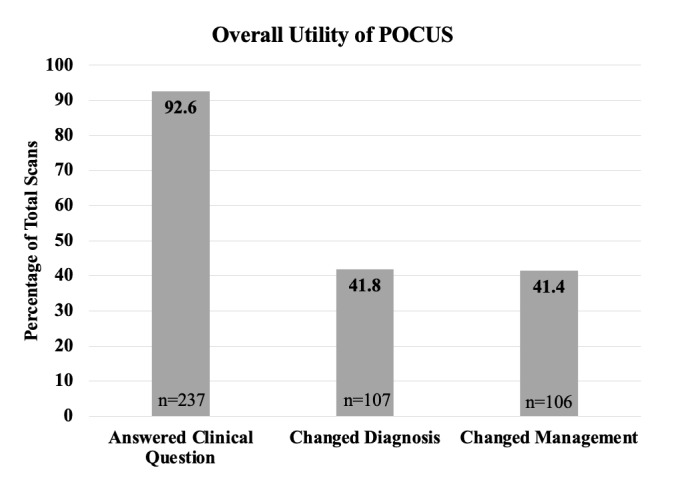
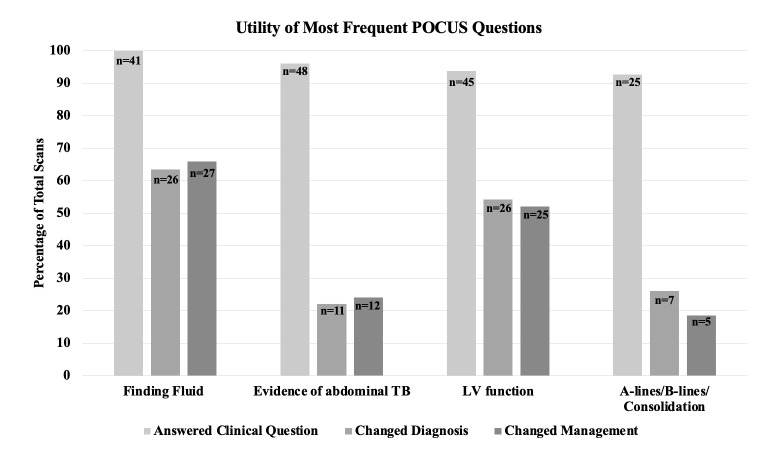
A total of 256 studies were included in analysis. 237 (92.5%) answered the clinical question, 107 (41.8%) changed the diagnosis, and 106 (41.4%) changed management. The most frequently used applications were the Focused Assessment for Sonography for HIV associated TB (FASH) exam, finding fluid (pericardial effusion, pleural effusion, ascites), qualitative assessment of left ventricular function, and assessment for A-lines/B-lines/consolidation. The following scans met ease of learning criteria: FASH-basic, assessment of LV function, A-lines vs. B-lines, and finding fluid. Finding fluid and assessment of LV function changed diagnosis and management most frequently, greater than 50% of the time for each category.
DISCUSSION/CONCLUSION: We recommend the following applications as highest yield for inclusion in a POCUS curriculum for IM practitioners within LMICs: finding fluid (pericardial effusion, pleural effusion, ascites) and assessment of gross LV function.
即时超声检查(POCUS)在中低收入国家(LMICs)特别有用,因为这些国家往往无法获得先进的成像方式和诊断方法。然而,其在内科(IM)从业者中的使用有限,且缺乏标准课程。本研究描述了在美国内科住院医师在中低收入国家轮转期间进行的POCUS扫描,以提供课程开发建议。
全球健康项目中的内科住院医师在两个地点进行了临床指征的POCUS扫描。他们记录了自己的解读以及扫描是否改变了诊断或治疗方案。扫描结果由美国的POCUS专家进行质量保证以验证结果。根据患病率、学习难易程度和影响等标准,为中低收入国家的内科从业者制定了一个POCUS课程框架。
共有256项研究纳入分析。237项(92.5%)回答了临床问题,107项(41.8%)改变了诊断,106项(41.4%)改变了治疗方案。最常用的应用是针对HIV相关结核病的超声重点评估(FASH)检查、发现液体(心包积液、胸腔积液、腹水)、左心室功能的定性评估以及A线/B线/实变的评估。以下扫描符合学习难易程度标准:FASH基础、左心室功能评估、A线与B线以及发现液体。发现液体和左心室功能评估最常改变诊断和治疗方案,每类情况超过50%的时间。
讨论/结论:我们建议将以下应用作为中低收入国家内科从业者POCUS课程中收益最高的内容纳入:发现液体(心包积液、胸腔积液、腹水)和左心室总体功能评估。