Department of Neurology, Osaka University Graduate School of Medicine, Suita 565-0871, Osaka, Japan.
Department of Neurotherapeutics, Osaka University Graduate School of Medicine, Suita 565-0871, Osaka, Japan.
Cells. 2023 Feb 27;12(5):753. doi: 10.3390/cells12050753.
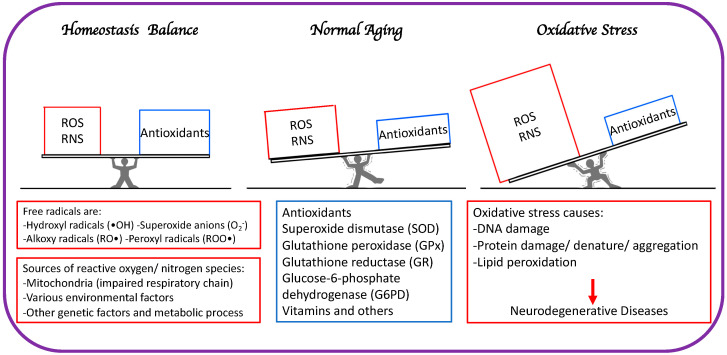
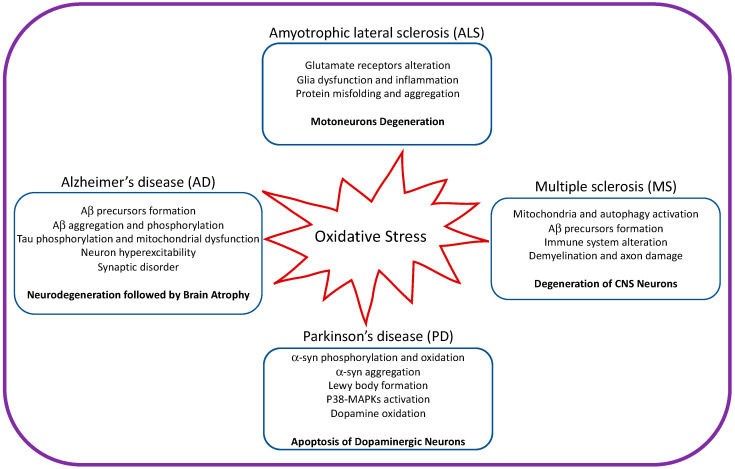
The world population is aging rapidly, and increasing lifespan exacerbates the burden of age-related health issues. On the other hand, premature aging has begun to be a problem, with increasing numbers of younger people suffering aging-related symptoms. Advanced aging is caused by a combination of factors: lifestyle, diet, external and internal factors, as well as oxidative stress (OS). Although OS is the most researched aging factor, it is also the least understood. OS is important not only in relation to aging but also due to its strong impact on neurodegenerative diseases such as amyotrophic lateral sclerosis (ALS), frontotemporal dementia (FTD), Alzheimer's disease (AD), and Parkinson's disease (PD). In this review, we will discuss the aging process in relation to OS, the function of OS in neurodegenerative disorders, and prospective therapeutics capable of relieving neurodegenerative symptoms associated with the pro-oxidative condition.
世界人口老龄化迅速加剧,预期寿命的延长使与年龄相关的健康问题的负担更加严重。另一方面,早衰开始成为一个问题,越来越多的年轻人出现与衰老相关的症状。衰老的加速是由多种因素共同作用的结果:生活方式、饮食、内外因素以及氧化应激(OS)。尽管 OS 是研究最多的衰老因素,但它也是最不被理解的因素。OS 不仅与衰老有关,而且对肌萎缩侧索硬化症(ALS)、额颞叶痴呆(FTD)、阿尔茨海默病(AD)和帕金森病(PD)等神经退行性疾病也有很大的影响。在这篇综述中,我们将讨论 OS 与衰老过程的关系、OS 在神经退行性疾病中的作用,以及能够缓解与促氧化状态相关的神经退行性症状的潜在治疗方法。