Institute of Oral Biology, Center of Dental Medicine, University of Zurich, 8032 Zurich, Switzerland.
Centre de Recherche en Paléontologie-Paris (CR2P), UMR CNRS 7207, CP38, Muséum National d'Histoire Naturelle, Sorbonne Université, 75005 Paris, France.
Cells. 2023 Feb 27;12(5):761. doi: 10.3390/cells12050761.
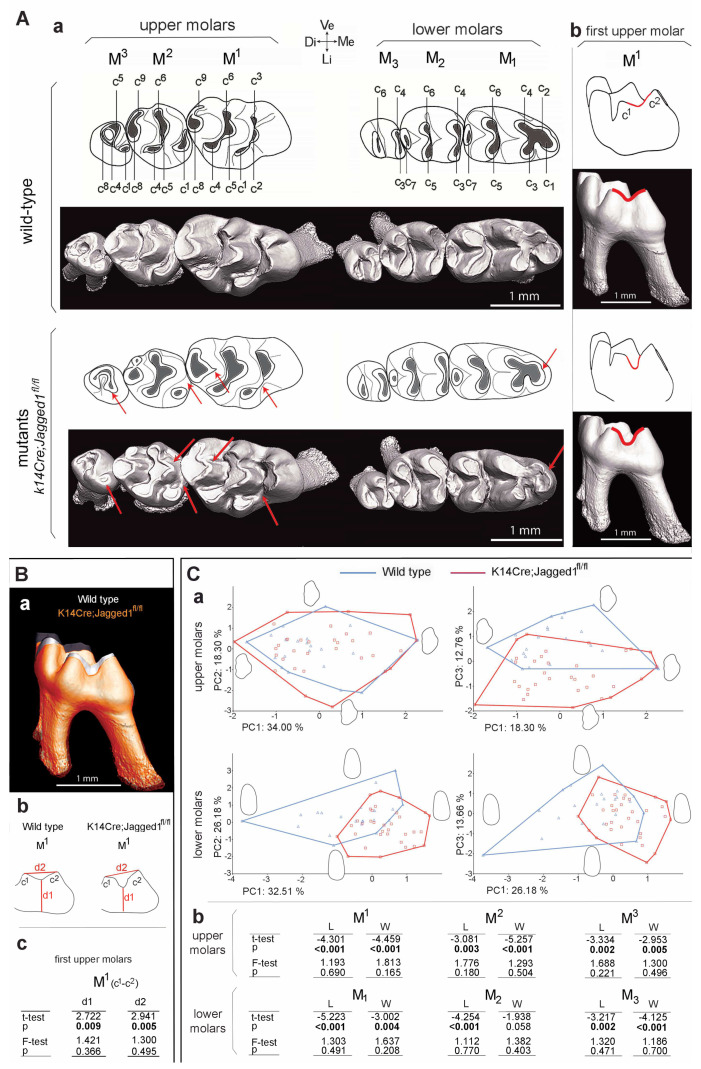
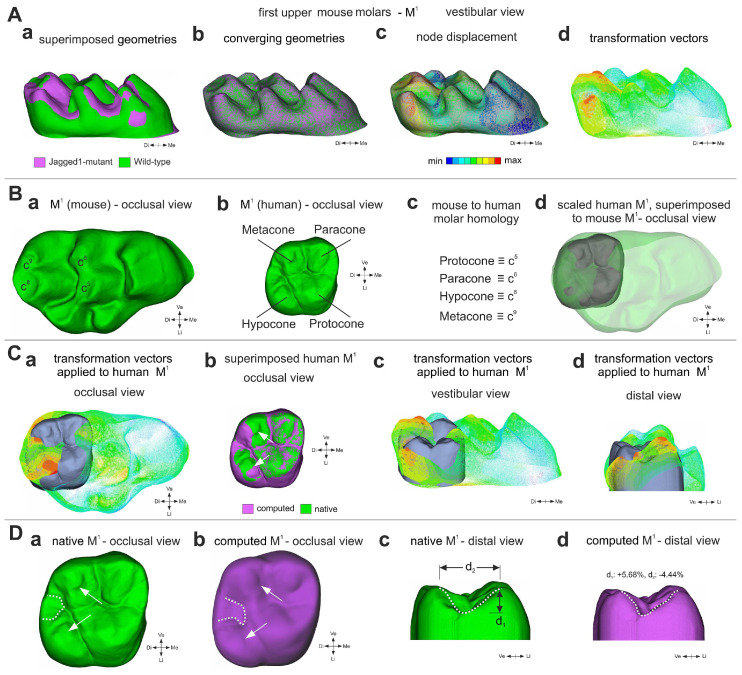
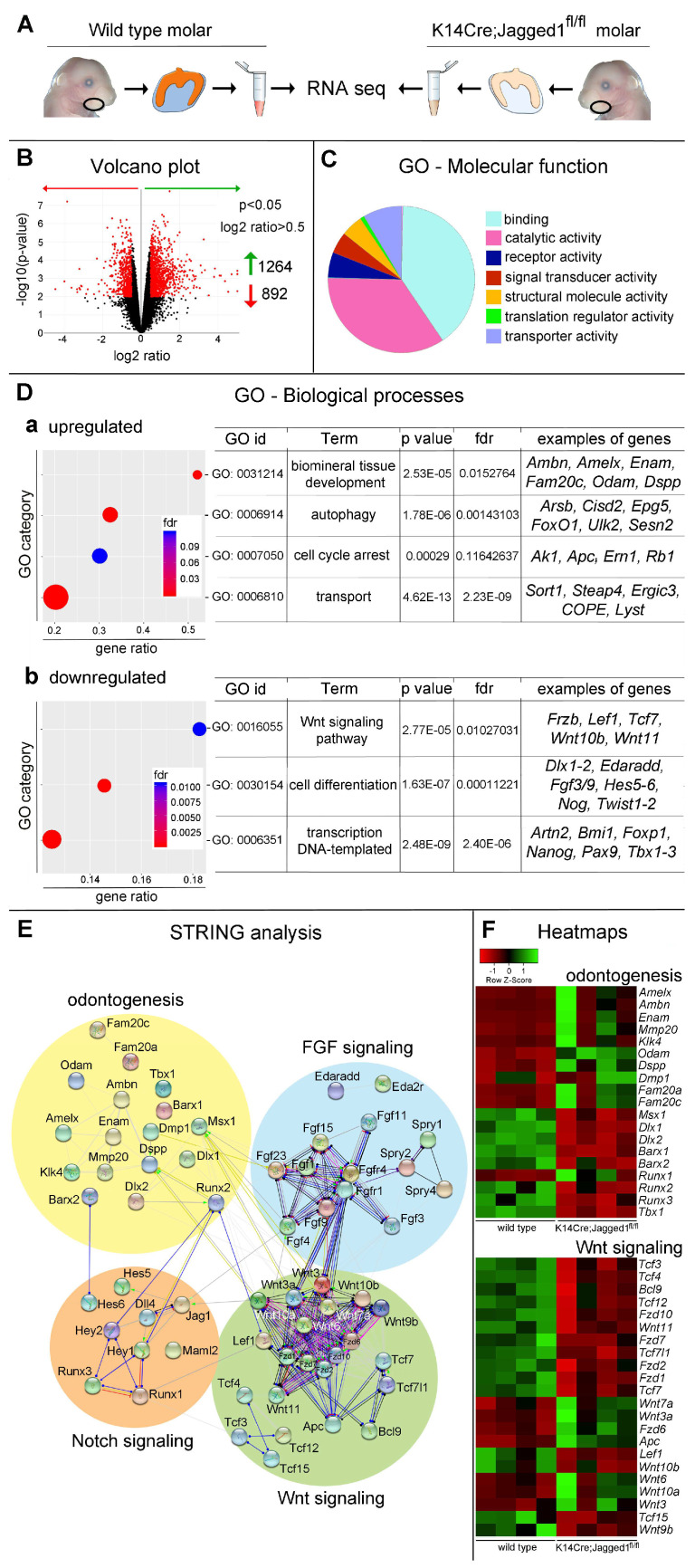
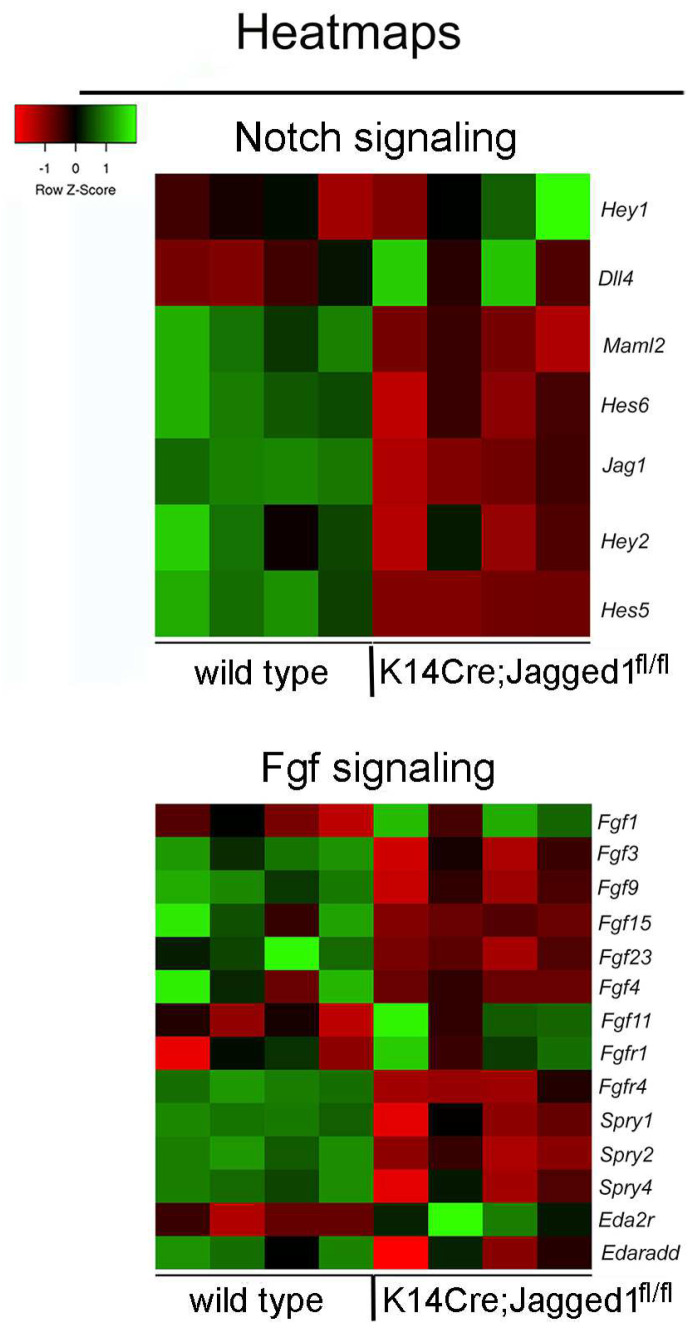
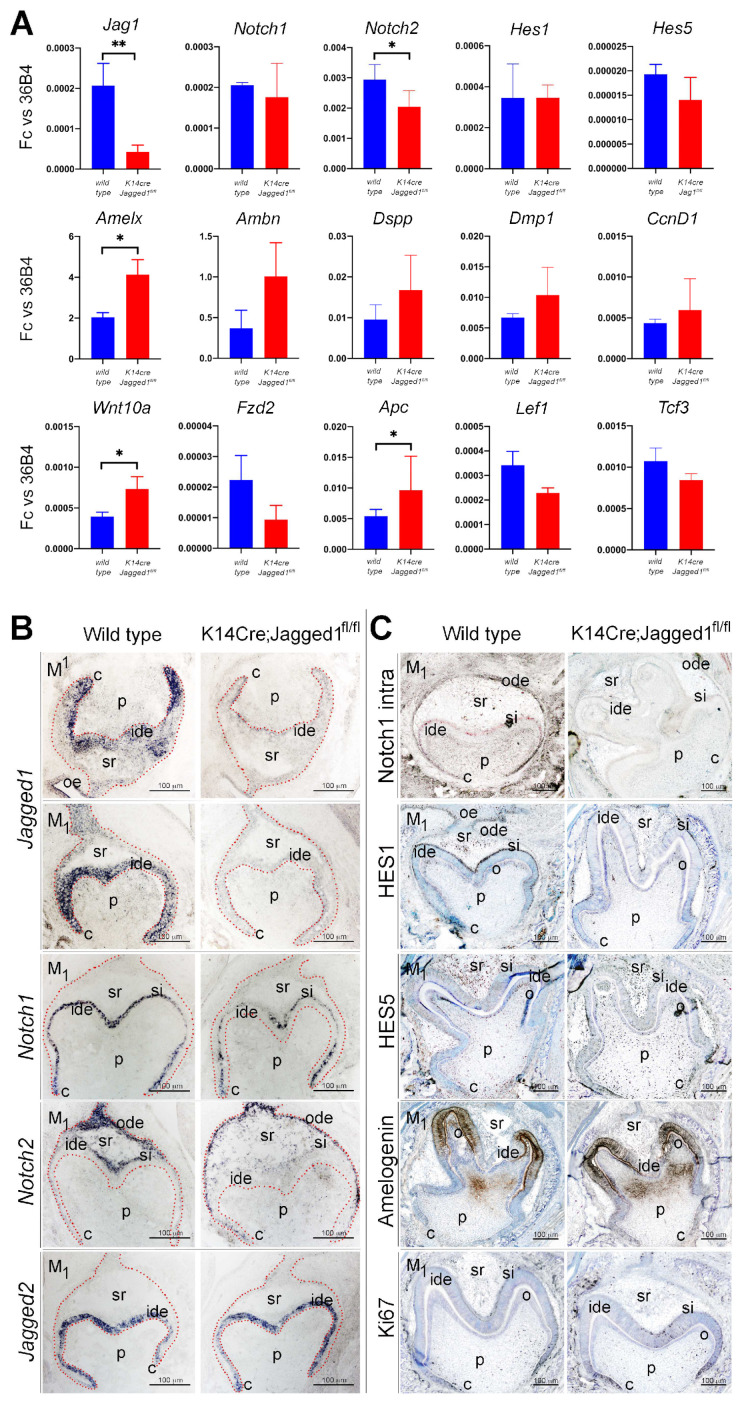
Evolutionary changes in vertebrates are linked to genetic alterations that often affect tooth crown shape, which is a criterion of speciation events. The Notch pathway is highly conserved between species and controls morphogenetic processes in most developing organs, including teeth. Epithelial loss of the Notch-ligand Jagged1 in developing mouse molars affects the location, size and interconnections of their cusps that lead to minor tooth crown shape modifications convergent to those observed along Muridae evolution. RNA sequencing analysis revealed that these alterations are due to the modulation of more than 2000 genes and that Notch signaling is a hub for significant morphogenetic networks, such as Wnts and Fibroblast Growth Factors. The modeling of these tooth crown changes in mutant mice, via a three-dimensional metamorphosis approach, allowed prediction of how Jagged1-associated mutations in humans could affect the morphology of their teeth. These results shed new light on Notch/Jagged1-mediated signaling as one of the crucial components for dental variations in evolution.
脊椎动物的进化变化与遗传改变有关,这些改变通常会影响牙齿冠的形状,而牙齿冠的形状是物种形成事件的标准之一。Notch 通路在物种间高度保守,控制着大多数发育器官(包括牙齿)的形态发生过程。在发育中的小鼠磨牙中,Notch 配体 Jagged1 的上皮细胞丢失会影响其牙尖的位置、大小和连接,从而导致与 Muridae 进化过程中观察到的相似的轻微牙齿冠形状改变。RNA 测序分析表明,这些改变是由于 2000 多个基因的调节,并且 Notch 信号是重要形态发生网络(如 Wnts 和成纤维细胞生长因子)的枢纽。通过三维变形方法对突变小鼠的这些牙齿冠变化进行建模,预测了人类 Jagged1 相关突变如何影响其牙齿的形态。这些结果揭示了 Notch/Jagged1 介导的信号转导作为进化过程中牙齿变异的关键因素之一。