Amref Health Africa in Ethiopia, Addis Ababa bole subcity, Woreda, Addis Ababa P.O. Box 20855, Ethiopia.
School of Nursing and Midwifery, Western Sydney University, Sydney, NSW 2751, Australia.
Nutrients. 2023 Feb 21;15(5):1081. doi: 10.3390/nu15051081.
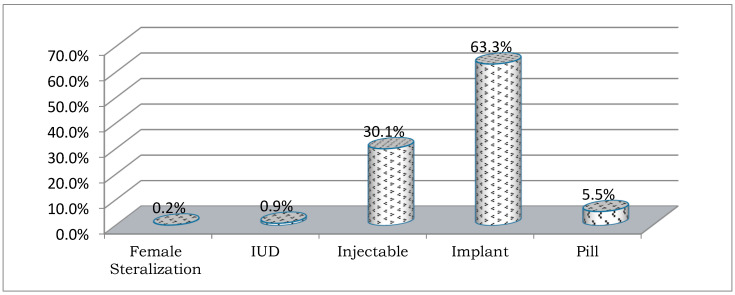
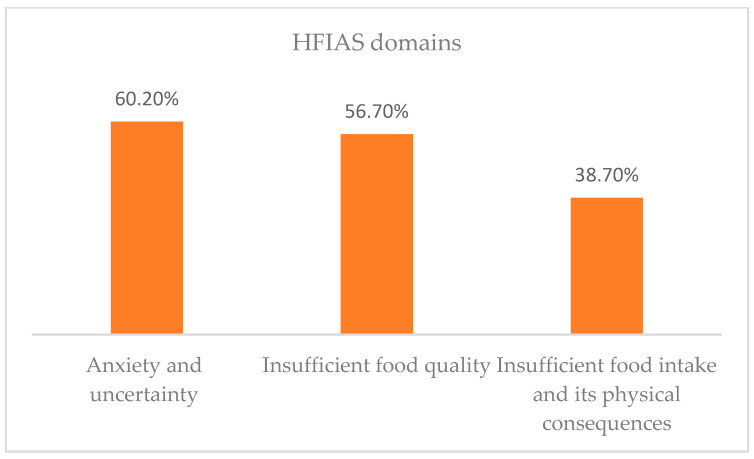
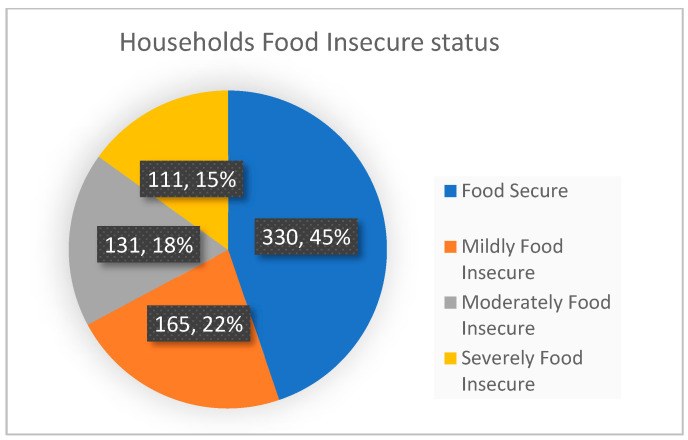
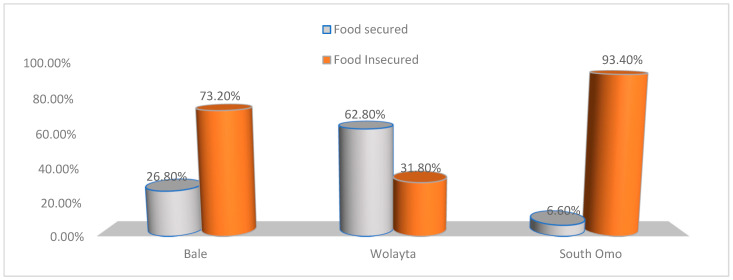
This study aims to explore the effects of voluntary family planning (FP) utilization on food security in selected districts of Ethiopia. Quantitative research methods were used to conduct a community-based study among a sample of 737 women of reproductive age. The data were analyzed using a hierarchical logistic regression constructed in three models. The findings showed 579 (78.2%) were using FP at the time of the survey. According to the household-level food insecurity access scale, 55.2% of households experienced food insecurity. The likelihood of food security was lower by 64% for women who used FP for less than 21 months (AOR = 0.64: 95%CI: 0.42-0.99) in comparison to mothers who used FP for more than 21 months. Households having positive adaptive behaviors were three times more likely (AOR = 3.60: 95%CI 2.07-6.26) to have food security in comparison to those not having positive adaptive behaviors. This study also revealed that almost half of the mothers (AOR: 0.51: 95%CI: 0.33-0.80) who reported being influenced by other family members to use FP had food security, in comparison to their counterparts. Age, duration of FP use, positive adaptive behaviors, and influence by significant others were found to be independent predictors of food security in the study areas. Culturally sensitive strategies need to be considered to expand awareness and dispel misconceptions that lead to hesitancy around FP utilization. Design strategies should take into account households' resilience in adaptive skills during shocks, natural disasters, or pandemics which will be invaluable for food security.
本研究旨在探讨在埃塞俄比亚选定地区,自愿计划生育(FP)利用对食品安全的影响。采用定量研究方法,对 737 名育龄妇女进行了社区为基础的研究。数据采用三级逻辑回归模型进行分析。研究结果显示,78.2%的受访者当时正在使用 FP。根据家庭层面的粮食不安全获取量表,55.2%的家庭经历粮食不安全。与使用 FP 超过 21 个月的母亲相比,使用 FP 不足 21 个月的母亲粮食安全的可能性降低了 64%(AOR=0.64:95%CI:0.42-0.99)。与没有积极适应行为的家庭相比,有积极适应行为的家庭获得粮食安全的可能性要高出三倍(AOR=3.60:95%CI 2.07-6.26)。本研究还表明,近一半(AOR:0.51:95%CI:0.33-0.80)报告受到其他家庭成员影响而使用 FP 的母亲获得了粮食安全,而对照组则没有。研究地区发现,年龄、FP 使用时间、积极的适应行为和他人的影响是粮食安全的独立预测因素。需要考虑采取文化上敏感的策略来扩大意识,消除对 FP 使用的犹豫不决的误解。设计策略应考虑到家庭在冲击、自然灾害或大流行病期间适应技能的弹性,这对粮食安全将是非常宝贵的。