Lv Peng, Yang Jing, Wang Jiacheng, Guo Yi, Tang Qiying, Magnier Baptiste, Lin Jiang, Zhou Jianjun
Department of Radiology, Zhongshan Hospital, Fudan University and Shanghai Institute of Medical Imaging, Shanghai, China.
School of Medicine, Xiamen University, Xiamen, China.
Front Neurosci. 2023 Feb 24;17:1118376. doi: 10.3389/fnins.2023.1118376. eCollection 2023.
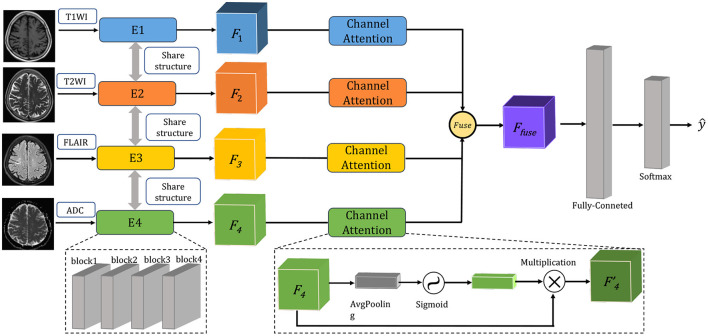
Carotid atherosclerotic stenosis of the carotid artery is an important cause of ischemic cerebrovascular disease. The aim of this study was to predict the presence or absence of clinical symptoms in unknown patients by studying the existence or lack of symptoms of patients with carotid atherosclerotic stenosis. First, a deep neural network prediction model based on brain MRI imaging data of patients with multiple modalities is constructed; it uses the multi-modality features extracted from the neural network as inputs and the incidence of diagnosis as output to train the model. Then, a machine learning-based classification algorithm is developed to utilize the clinical features for comparison and evaluation. The experimental results showed that the deep learning model using imaging data could better predict the clinical symptom classification of patients. As part of preventive medicine, this study could help patients with carotid atherosclerosis narrowing to prepare for stroke prevention based on the prediction results.
颈动脉粥样硬化性狭窄是缺血性脑血管病的重要病因。本研究的目的是通过研究颈动脉粥样硬化性狭窄患者的症状存在与否,来预测未知患者是否会出现临床症状。首先,构建基于多模态患者脑MRI成像数据的深度神经网络预测模型;它将从神经网络中提取的多模态特征作为输入,将诊断发生率作为输出,对模型进行训练。然后,开发一种基于机器学习的分类算法,以利用临床特征进行比较和评估。实验结果表明,使用成像数据的深度学习模型能够更好地预测患者的临床症状分类。作为预防医学的一部分,本研究可以帮助颈动脉粥样硬化狭窄患者根据预测结果为预防中风做好准备。