Department of Immunobiology and Yale Stem Cell Center, Yale University School of Medicine, New Haven, United States.
Center of Molecular and Cellular Oncology and Department of Immunobiology, Yale University, New Haven, United States.
Elife. 2023 Mar 13;12:e83533. doi: 10.7554/eLife.83533.
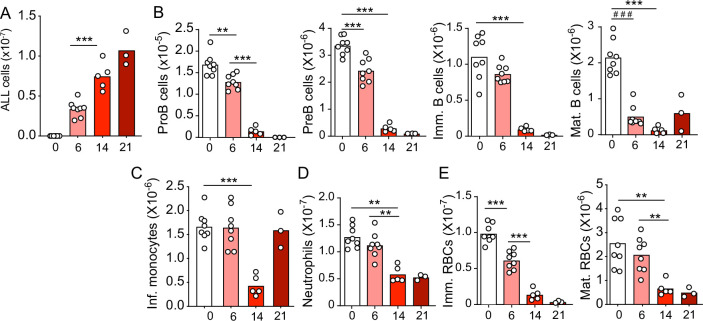
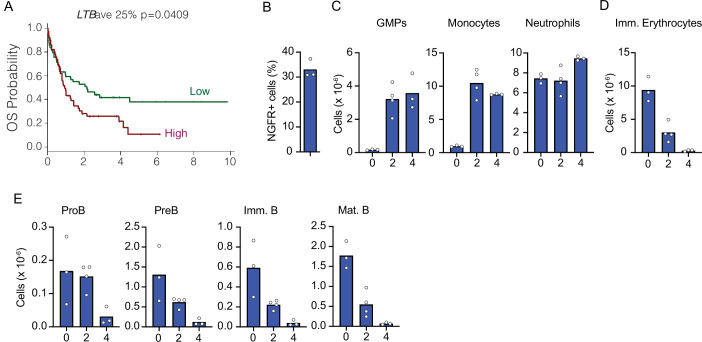
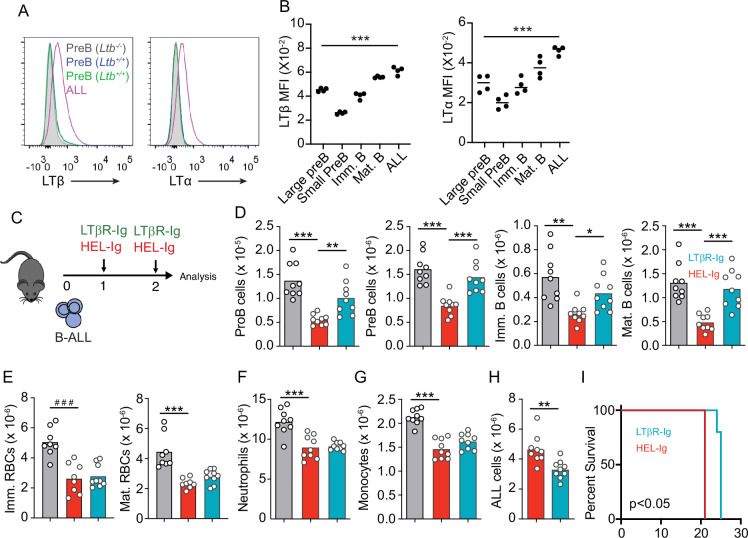
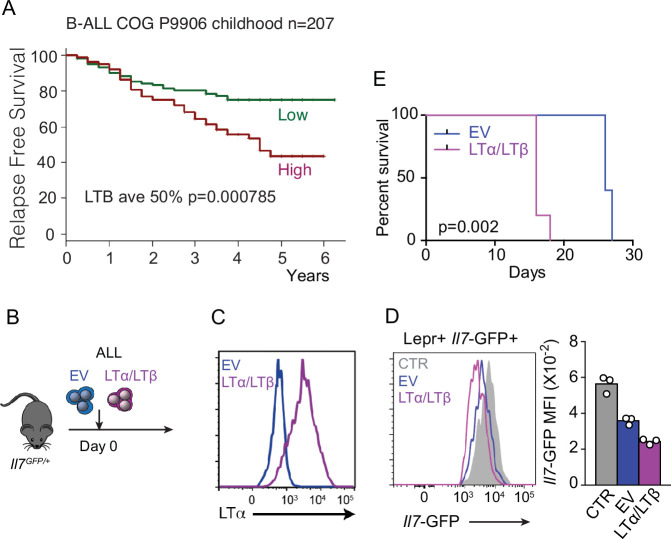
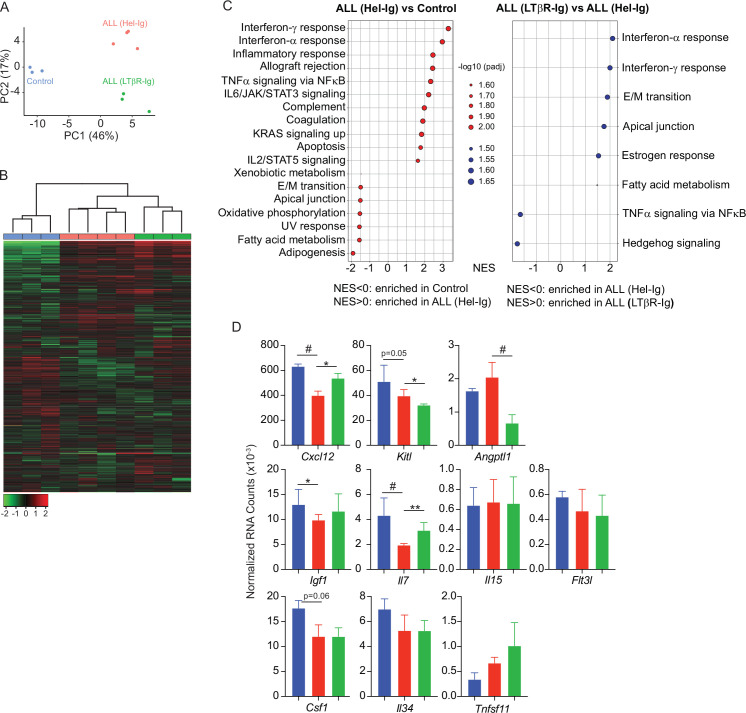
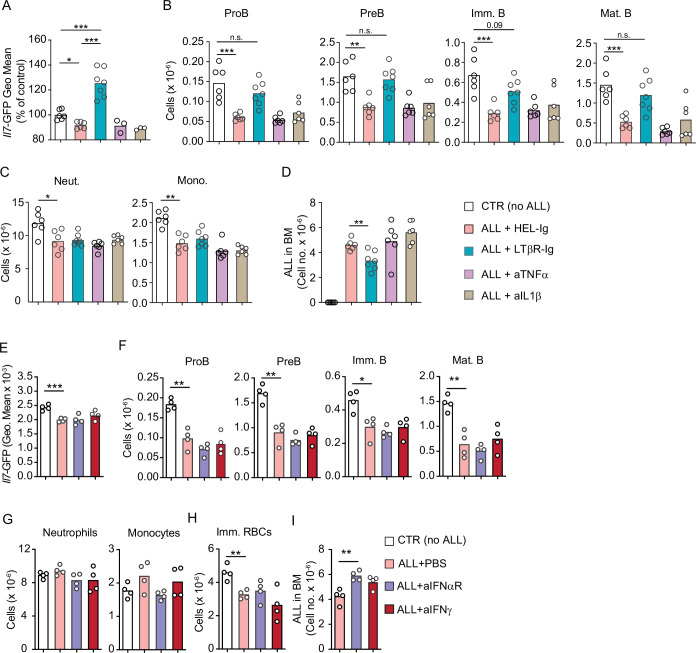
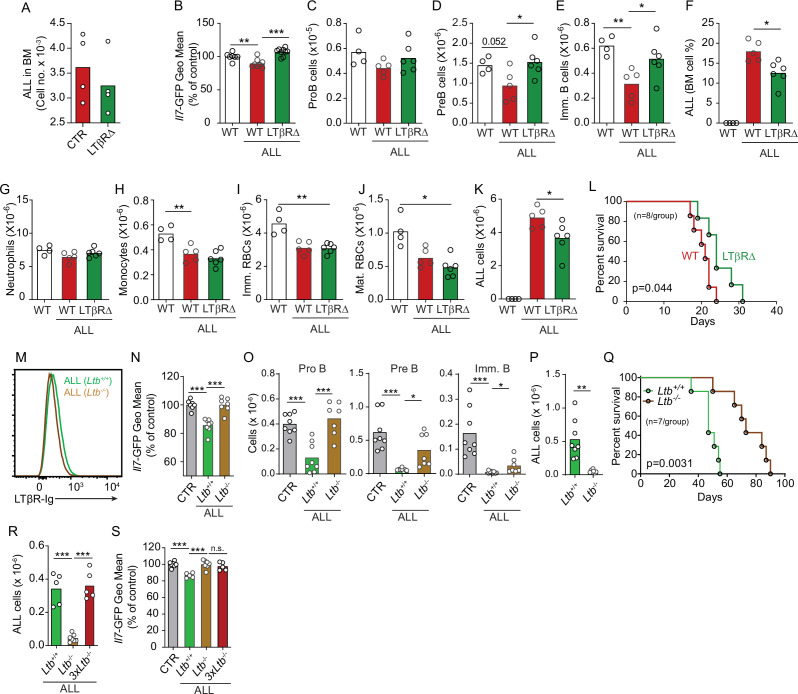
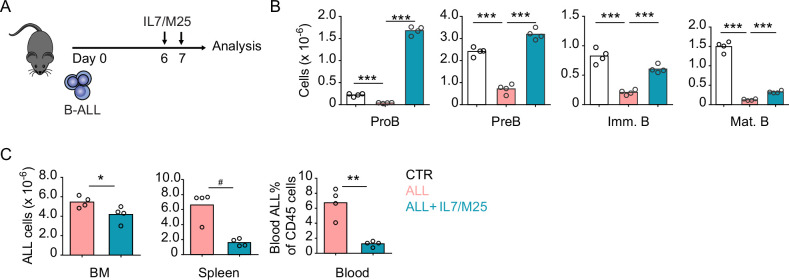
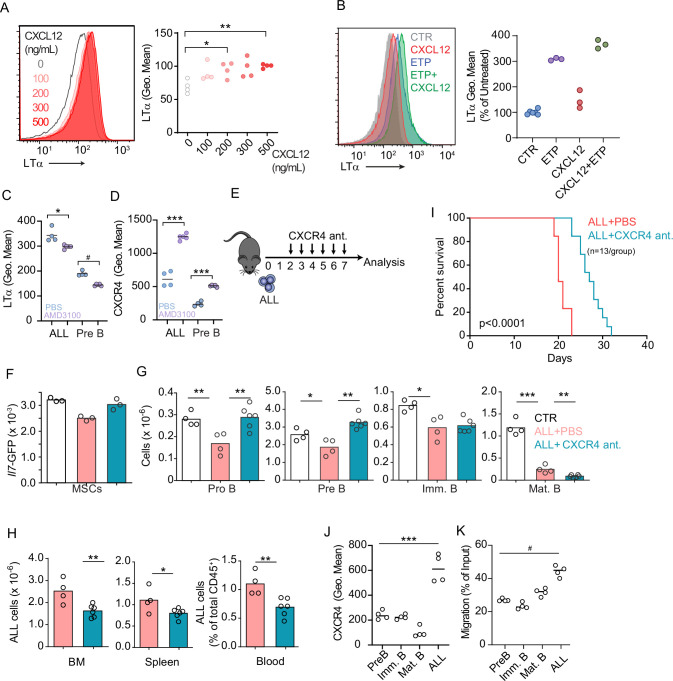
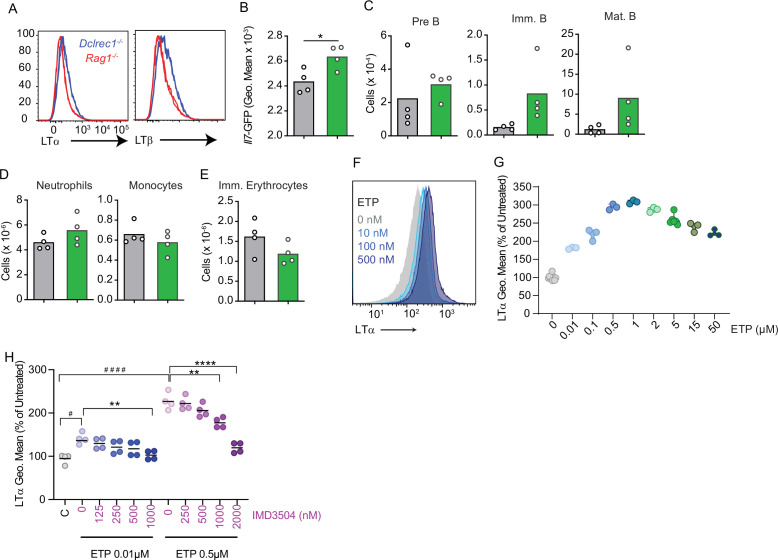
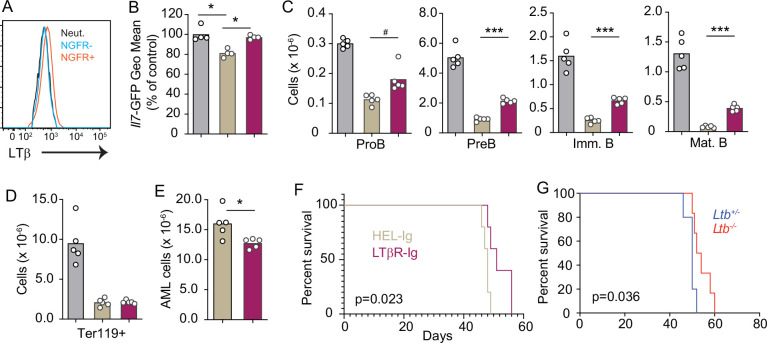
Acute lymphoblastic and myeloblastic leukemias (ALL and AML) have been known to modify the bone marrow microenvironment and disrupt non-malignant hematopoiesis. However, the molecular mechanisms driving these alterations remain poorly defined. Using mouse models of ALL and AML, here we show that leukemic cells turn off lymphopoiesis and erythropoiesis shortly after colonizing the bone marrow. ALL and AML cells express lymphotoxin α1β2 and activate lymphotoxin beta receptor (LTβR) signaling in mesenchymal stem cells (MSCs), which turns off IL7 production and prevents non-malignant lymphopoiesis. We show that the DNA damage response pathway and CXCR4 signaling promote lymphotoxin α1β2 expression in leukemic cells. Genetic or pharmacological disruption of LTβR signaling in MSCs restores lymphopoiesis but not erythropoiesis, reduces leukemic cell growth, and significantly extends the survival of transplant recipients. Similarly, CXCR4 blocking also prevents leukemia-induced IL7 downregulation and inhibits leukemia growth. These studies demonstrate that acute leukemias exploit physiological mechanisms governing hematopoietic output as a strategy for gaining competitive advantage.
急性淋巴细胞白血病和髓细胞白血病(ALL 和 AML)已被证实可以改变骨髓微环境并破坏非恶性造血。然而,驱动这些改变的分子机制仍未得到明确定义。在这里,我们使用 ALL 和 AML 的小鼠模型表明,白血病细胞在定植骨髓后不久就会关闭淋巴细胞生成和红细胞生成。ALL 和 AML 细胞表达淋巴毒素α1β2,并在间充质干细胞(MSCs)中激活淋巴毒素β受体(LTβR)信号,从而关闭 IL7 的产生并阻止非恶性淋巴细胞生成。我们表明,DNA 损伤反应途径和 CXCR4 信号促进白血病细胞中淋巴毒素α1β2的表达。在 MSCs 中遗传或药理学破坏 LTβR 信号会恢复淋巴细胞生成,但不会恢复红细胞生成,减少白血病细胞的生长,并显著延长移植受者的存活期。同样,CXCR4 阻断也可防止白血病诱导的 IL7 下调并抑制白血病生长。这些研究表明,急性白血病利用生理机制来控制造血输出,作为获得竞争优势的一种策略。