Department of Obstetrics and Gynecology, Center for Reproductive Medicine, Affiliated Drum Tower Hospital, Medical School of Nanjing University, Nanjing, China.
State Key Laboratory of Pharmaceutical Biotechnology, Nanjing University, Nanjing, China.
J Assist Reprod Genet. 2023 May;40(5):1135-1146. doi: 10.1007/s10815-023-02762-7. Epub 2023 Mar 13.
This study aims to identify the mechanism of Inhibin Subunit Beta B (INHBB), a member of the transforming growth factor-β (TGF-β) family involved in the regulation of human endometrial stromal cells (HESCs) decidualization in recurrent implantation failure (RIF).
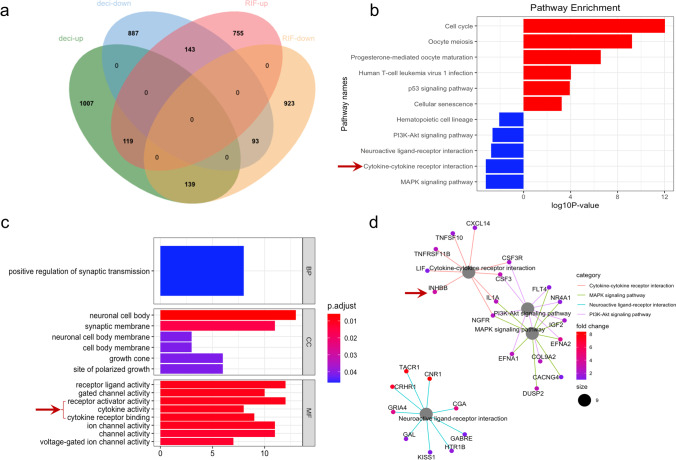
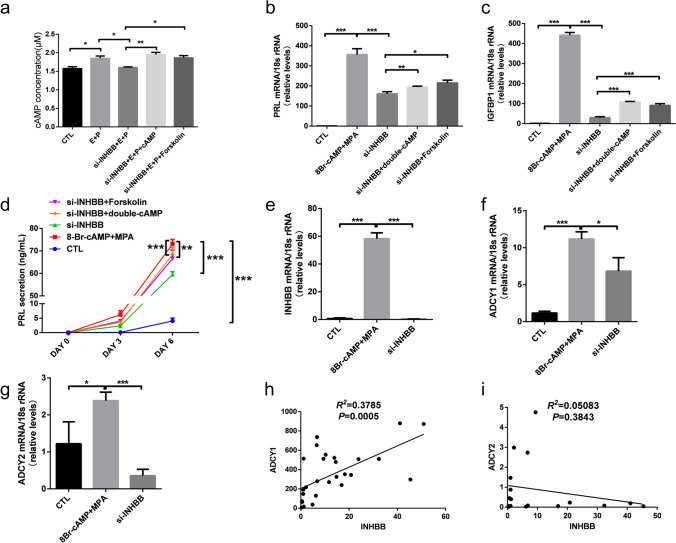
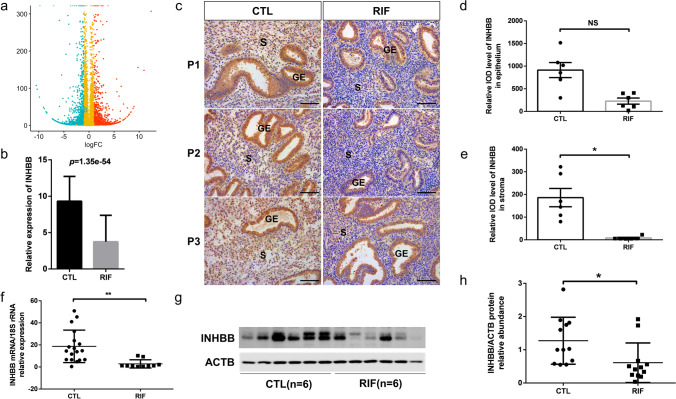
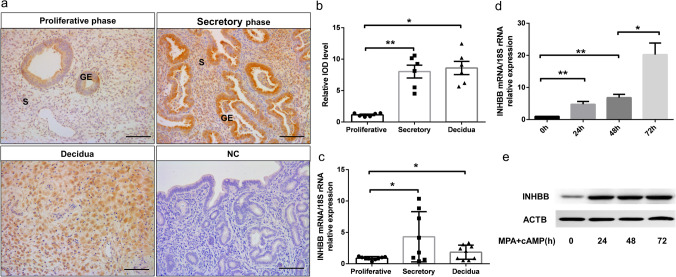
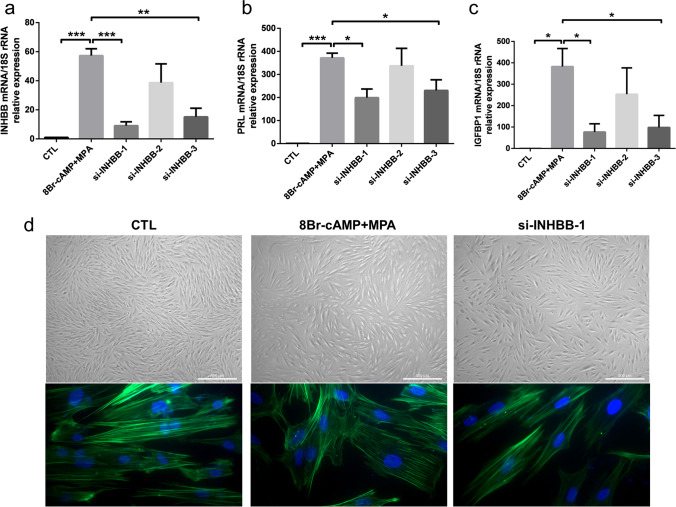
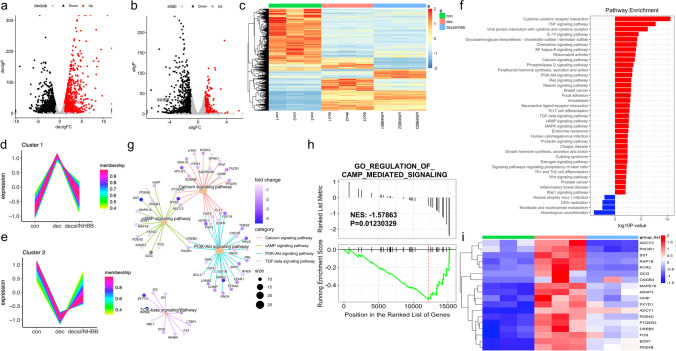
RNA-seq was conducted to identify the differentially expressed genes in the endometria from control and RIF patients. RT-qPCR, WB, and immunohistochemistry were performed to analyse the expression levels of INHBB in endometrium and decidualised HESCs. RT-qPCR and immunofluorescence were used to detect changes in the decidual marker genes and cytoskeleton after knockdown INHBB. Then, RNA-seq was used to dig out the mechanism of INHBB regulating decidualization. The cAMP analogue (forskolin) and si-INHBB were used to investigate the involvement of INHBB in the cAMP signalling pathway. The correlation of INHBB and ADCY expression was analysed by Pearson's correlation analysis.
Our results showed significantly reduced expression of INHBB in endometrial stromal cells of women with RIF. In addition, INHBB was increased in the endometrium of the secretory phase and significantly induced in in-vitro decidualization of HESCs. Notably, with RNA-seq and siRNA-mediated knockdown approaches, we demonstrated that the INHBB-ADCY1-mediated cAMP signalling pathway regulates the reduction of decidualization. We found a positive association between the expression of INHBB and ADCY1 in endometria with RIF (R = 0.3785, P = 0.0005).
The decline of INHBB in HESCs suppressed ADCY1-induced cAMP production and cAMP-mediated signalling, which attenuated decidualization in RIF patients, indicating that INHBB is an essential component in the decidualization process.
本研究旨在鉴定转化生长因子-β(TGF-β)家族成员抑制素亚基β B(INHBB)在复发性植入失败(RIF)患者中调节人子宫内膜基质细胞(HESC)蜕膜化的作用机制。
采用 RNA-seq 技术鉴定对照组和 RIF 患者子宫内膜中的差异表达基因。采用 RT-qPCR、WB 和免疫组织化学法分析 INHBB 在子宫内膜和蜕膜化 HESC 中的表达水平。采用 RT-qPCR 和免疫荧光法检测敲低 INHBB 后蜕膜标记基因和细胞骨架的变化。然后,采用 RNA-seq 技术挖掘 INHBB 调节蜕膜化的作用机制。采用 cAMP 类似物(forskolin)和 si-INHBB 研究 INHBB 是否参与 cAMP 信号通路。采用 Pearson 相关分析分析 INHBB 和 ADCY 表达的相关性。
我们的结果显示,RIF 患者子宫内膜基质细胞中 INHBB 的表达明显降低。此外,INHBB 在子宫内膜分泌期增加,并在体外诱导 HESC 蜕膜化中显著诱导。值得注意的是,通过 RNA-seq 和 siRNA 介导的敲低方法,我们证明了 INHBB-ADCY1 介导的 cAMP 信号通路调节蜕膜化的减少。我们发现 RIF 患者子宫内膜中 INHBB 和 ADCY1 的表达呈正相关(R=0.3785,P=0.0005)。
HESC 中 INHBB 的减少抑制了 ADCY1 诱导的 cAMP 产生和 cAMP 介导的信号转导,从而减弱了 RIF 患者的蜕膜化,表明 INHBB 是蜕膜化过程中的一个重要组成部分。