Centre for Biomolecular Interactions Bremen Faculty 2 (Biology/Chemistry), University of Bremen, P.O. Box 330440, 28334, Bremen, Germany.
Centre for Environmental Research and Sustainable Technologies, University of Bremen, Bremen, Germany.
Neurochem Res. 2023 Jul;48(7):2241-2252. doi: 10.1007/s11064-023-03903-1. Epub 2023 Mar 14.
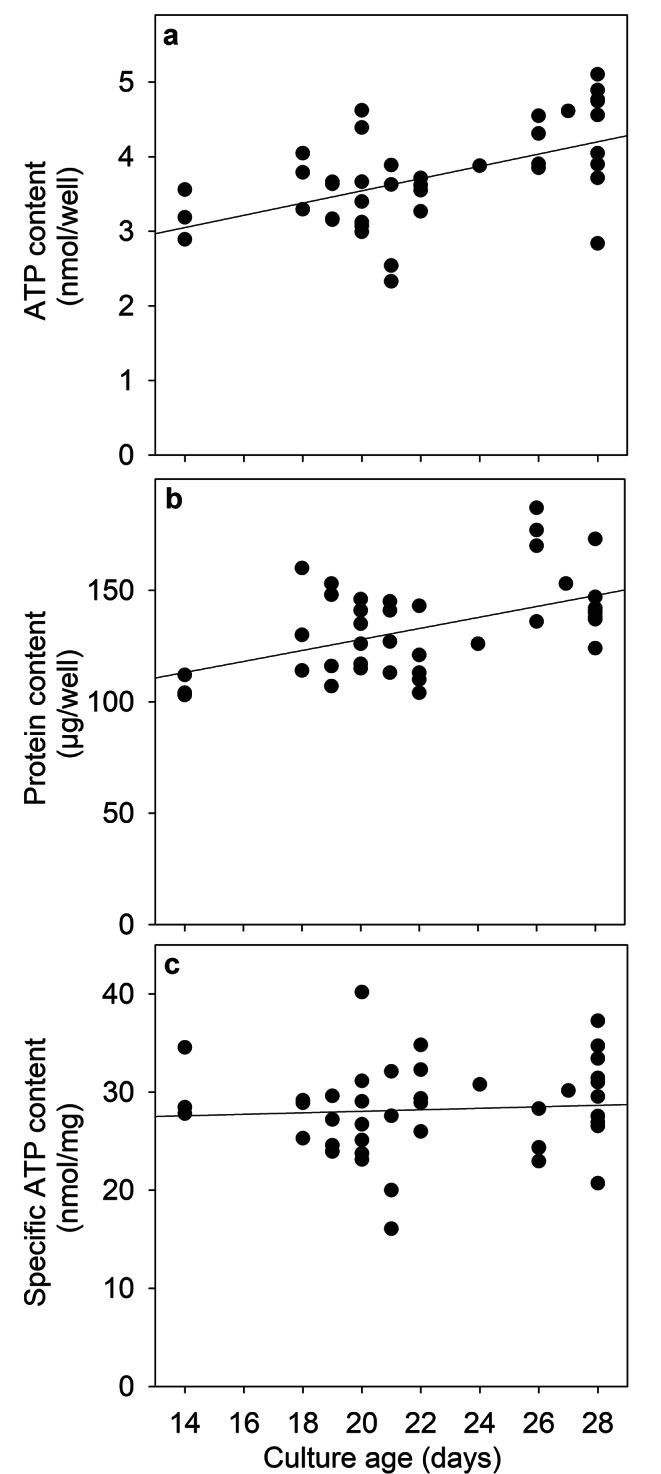
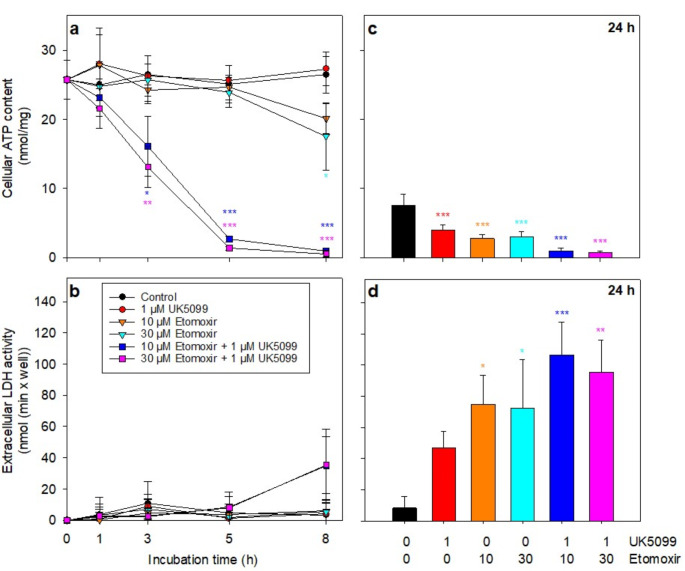
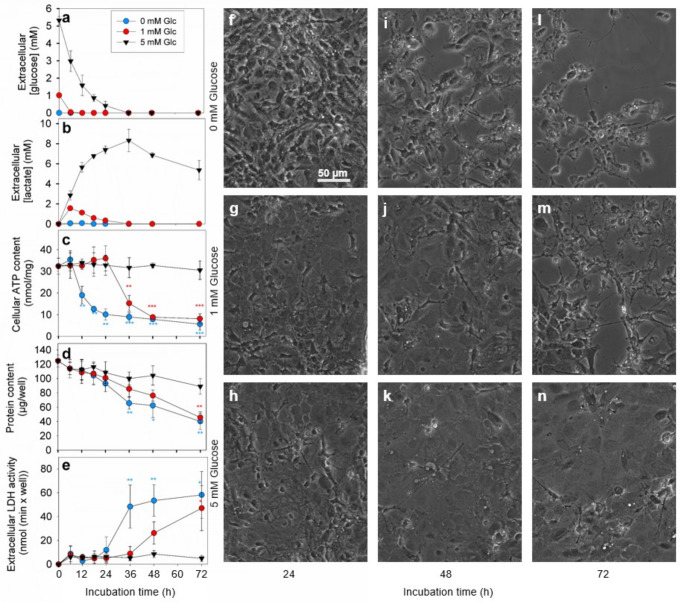
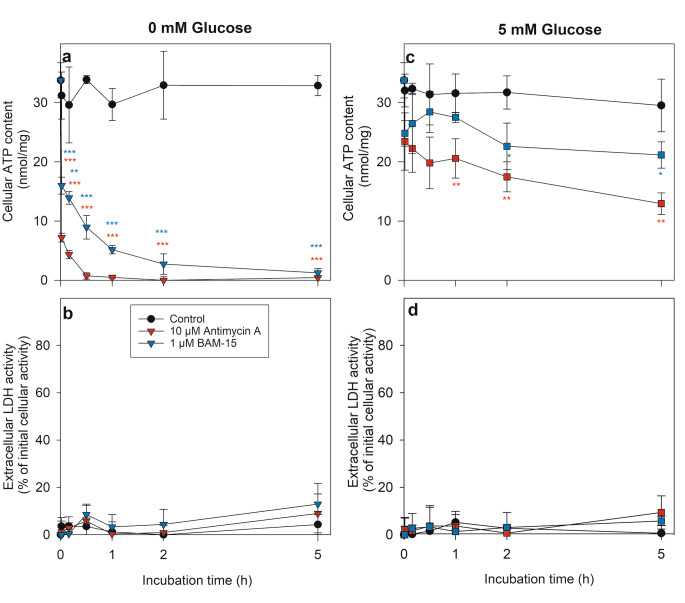
Adenosine triphosphate (ATP) is the central energy currency of all cells. Cultured primary rat astrocytes contain a specific cellular ATP content of 27.9 ± 4.7 nmol/mg. During incubation in a glucose- and amino acid-free incubation buffer, this high cellular ATP content was maintained for at least 6 h, while within 24 h the levels of ATP declined to around 30% of the initial value without compromising cell viability. In contrast, cells exposed to 1 mM and 5 mM glucose maintained the initial high cellular ATP content for 24 and 72 h, respectively. The loss in cellular ATP content observed during a 24 h glucose-deprivation was fully prevented by the presence of glucose, fructose or mannose as well as by the mitochondrial substrates lactate, pyruvate, β-hydroxybutyrate or acetate. The high initial specific ATP content in glucose-starved astrocytes, was almost completely abolished within 30 min after application of the respiratory chain inhibitor antimycin A or the mitochondrial uncoupler BAM-15, while these inhibitors lowered in glucose-fed cells the ATP content only to 60% (BAM-15) and 40% (antimycin A) within 5 h. Inhibition of the mitochondrial pyruvate carrier by UK5099 alone or of mitochondrial fatty acid uptake by etomoxir alone hardly affected the high ATP content of glucose-deprived astrocytes during an incubation for 8 h, while the co-application of both inhibitors depleted cellular ATP levels almost completely within 5 h. These data underline the importance of mitochondrial metabolism for the ATP regeneration of astrocytes and demonstrate that the mitochondrial oxidation of pyruvate and fatty acids strongly contributes to the maintenance of a high ATP concentration in glucose-deprived astrocytes.
三磷酸腺苷(ATP)是所有细胞的中心能量货币。培养的原代大鼠星形胶质细胞含有 27.9±4.7 nmol/mg 的特定细胞内 ATP 含量。在无葡萄糖和氨基酸的孵育缓冲液中孵育时,这种高细胞内 ATP 含量至少能维持 6 小时,而在 24 小时内,ATP 水平下降到初始值的约 30%,但不影响细胞活力。相比之下,暴露于 1 mM 和 5 mM 葡萄糖的细胞分别能将初始高细胞内 ATP 含量维持 24 和 72 小时。在 24 小时葡萄糖剥夺期间观察到的细胞内 ATP 含量的损失完全可以通过葡萄糖、果糖或甘露糖的存在以及乳酸盐、丙酮酸、β-羟丁酸或醋酸盐等线粒体底物来预防。在葡萄糖饥饿的星形胶质细胞中,高初始特定 ATP 含量在应用呼吸链抑制剂安密妥 A 或线粒体解偶联剂 BAM-15 后的 30 分钟内几乎完全被消除,而这些抑制剂仅在葡萄糖喂养的细胞中使 ATP 含量在 5 小时内降低至 60%(BAM-15)和 40%(安密妥 A)。单独抑制线粒体丙酮酸载体 UK5099 或单独抑制线粒体脂肪酸摄取的 etomoxir 对葡萄糖剥夺的星形胶质细胞在 8 小时孵育期间的高 ATP 含量几乎没有影响,而同时应用这两种抑制剂则在 5 小时内几乎完全耗尽细胞内的 ATP 水平。这些数据强调了线粒体代谢对星形胶质细胞 ATP 再生的重要性,并证明了丙酮酸和脂肪酸的线粒体氧化对维持葡萄糖剥夺的星形胶质细胞中高 ATP 浓度具有重要作用。