Liu Qi-Zhi, Yu Hai-Rong, Wang Li-Ping, Zhou Min-Jun, Chen Zhuo, Zhou De-Hua, Chen Jun-Yi, Zhang Nan, Huang Zhen-Xing, Xie Yu-Xiang, Gu Fang-Fang, Li Kun, Tu Xiao-Huang
Department of Gastrointestinal Surgery, Shanghai Fourth People's Hospital, School of Medicine, Tongji University, Shanghai, China.
Department of Traditional Chinese Medicine, First Clinical Medical College, Heilongjiang University of Traditional Chinese Medicine, Harbin, China.
J Gastrointest Oncol. 2023 Feb 28;14(1):233-244. doi: 10.21037/jgo-23-6.
Colorectal cancer (CRC) is the third most common cancer and the fourth most common cause of cancer-related death worldwide. Advanced stage CRC, during the recent past, had a dismal prognosis and only a few available treatments. Pumilio homologous protein 1 (PUM1) is reportedly aberrant in human malignancies, including CRC. However, the role of PUM1 in the regulation of tumor-initiating cells (T-ICs) remains unknown.
The levels of messenger RNAs (mRNAs) were determined by quantitative reverse transcription polymerase chain reaction (qRT-PCR) and immunoblot analyses. Statistical analyses were performed to determine the associations between the levels of PUM1 and tumor features and patient outcomes. Whether PUM1 is a downstream target of miR-218-5p was verified by bioinformatics target gene prediction and qRT-PCR.
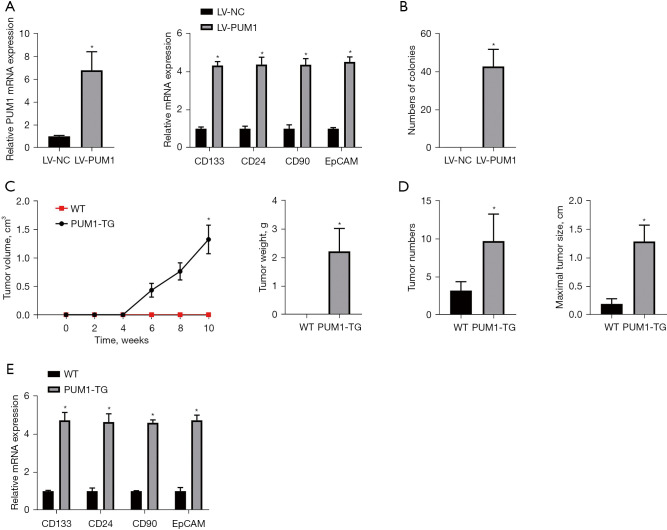
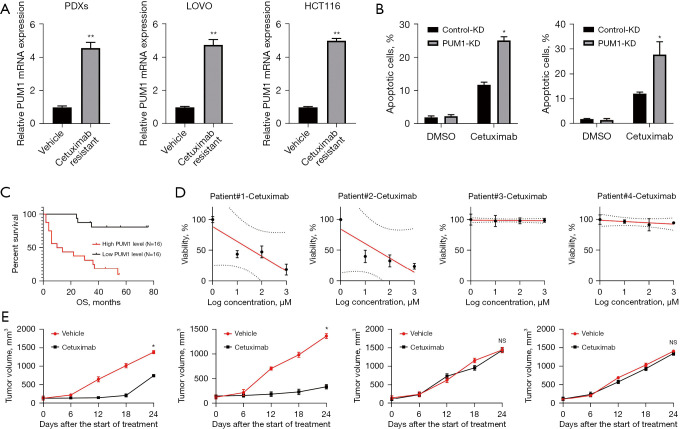
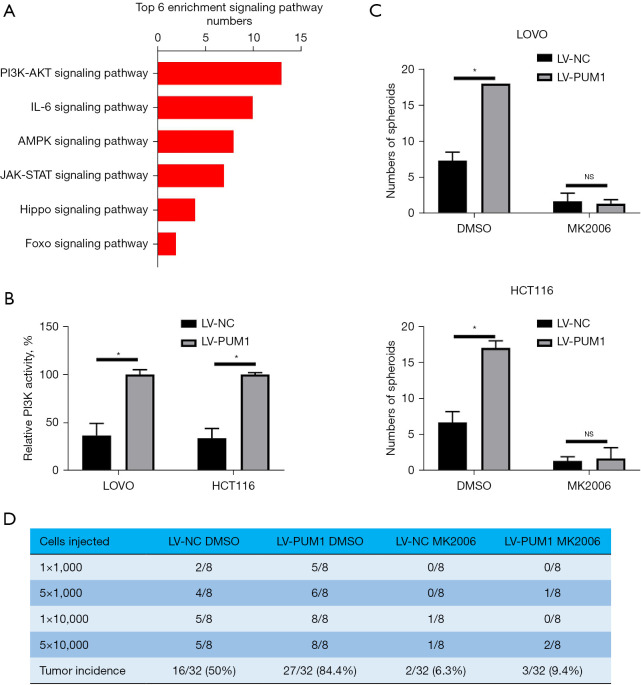
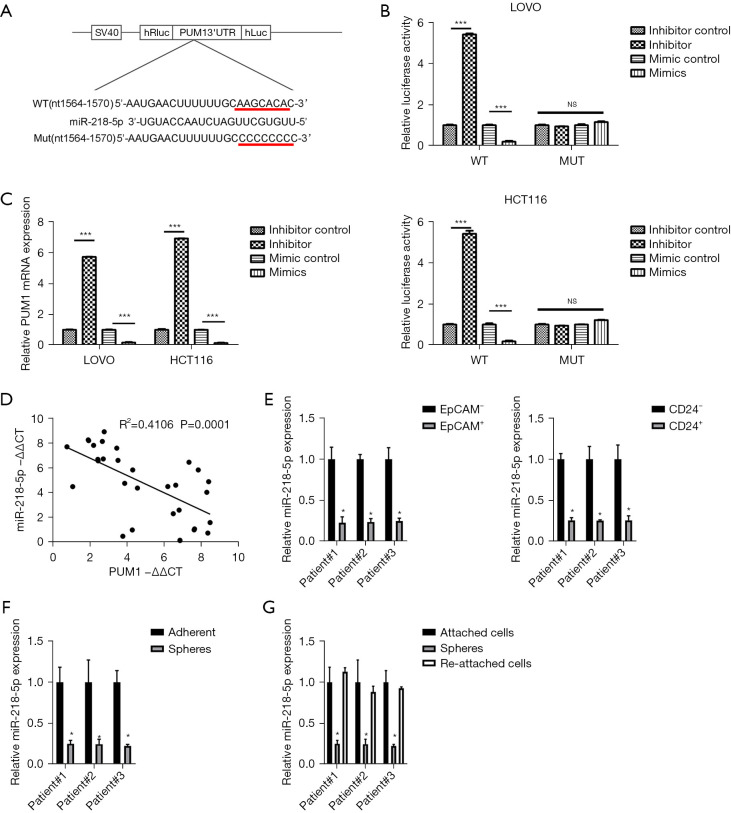
Herein, it was found that T-ICs, chemoresistance, and recurrent CRC samples all manifest increased PUM1 expression. Functional investigations have shown that PUM1 increased the self-renewal, tumorigenicity, malignant proliferation, and chemoresistance of colorectal cells. PUM1 activates the phosphatidylinositol-3-kinase (PI3K)/protein kinase B (AKT) signaling pathway biochemically. Furthermore, it was discovered that miR-218-5p specifically targets T-ICs' PUM1 3'-untranslated region (3'-UTR). More importantly, the PUM1/PI3K/AKT axis regulates CRC cells' responses to treatment with cetuximab, and PUM1 overexpression increased cetuximab resistance. More evidence points to the possibility that low PUM1 may predict cetuximab benefits in CRC patients after analysis of the patient cohort, patient-derived tumor organoids, and patient-derived xenografts (PDXs).
Taken together, the result of this work points to the critical function of the miR-218-5p/PUM1/PI3K/AKT regulatory circuit in regulating T-ICs characteristics and thus suggests possible therapeutic targets for CRC.
结直肠癌(CRC)是全球第三大常见癌症,也是癌症相关死亡的第四大常见原因。在过去,晚期结直肠癌预后不佳,可用的治疗方法有限。据报道,Pumilio同源蛋白1(PUM1)在包括结直肠癌在内的人类恶性肿瘤中存在异常。然而,PUM1在肿瘤起始细胞(T-ICs)调控中的作用尚不清楚。
通过定量逆转录聚合酶链反应(qRT-PCR)和免疫印迹分析来测定信使核糖核酸(mRNAs)水平。进行统计分析以确定PUM1水平与肿瘤特征及患者预后之间的关联。通过生物信息学靶基因预测和qRT-PCR验证PUM1是否为miR-218-5p的下游靶标。
在此发现,T-ICs、化疗耐药性和复发性结直肠癌样本均表现出PUM1表达增加。功能研究表明,PUM1增强了结直肠细胞的自我更新、致瘤性、恶性增殖和化疗耐药性。PUM1在生化水平上激活磷脂酰肌醇-3-激酶(PI3K)/蛋白激酶B(AKT)信号通路。此外,发现miR-218-5p特异性靶向T-ICs的PUM1 3'-非翻译区(3'-UTR)。更重要的是,PUM1/PI3K/AKT轴调节结直肠癌细胞对西妥昔单抗治疗的反应,PUM1过表达增加了西妥昔单抗耐药性。在对患者队列、患者来源的肿瘤类器官和患者来源的异种移植(PDXs)进行分析后,更多证据表明低PUM1可能预测结直肠癌患者对西妥昔单抗治疗的获益。
综上所述,本研究结果表明miR-218-5p/PUM1/PI3K/AKT调控回路在调节T-ICs特征方面具有关键作用,从而提示了结直肠癌可能的治疗靶点。