Aix Marseille Univ, CNRS, ISM, Marseille, France.
PLoS One. 2023 Mar 15;18(3):e0282188. doi: 10.1371/journal.pone.0282188. eCollection 2023.
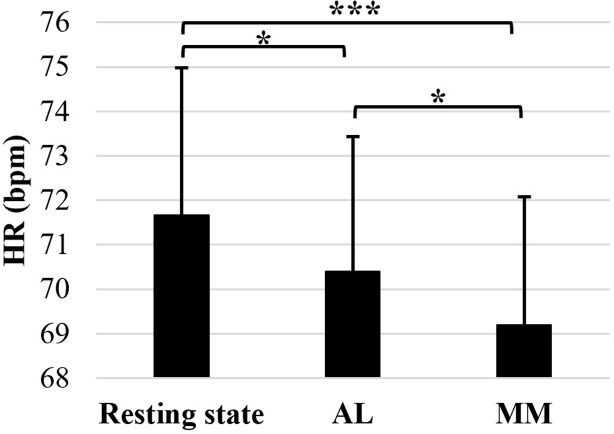
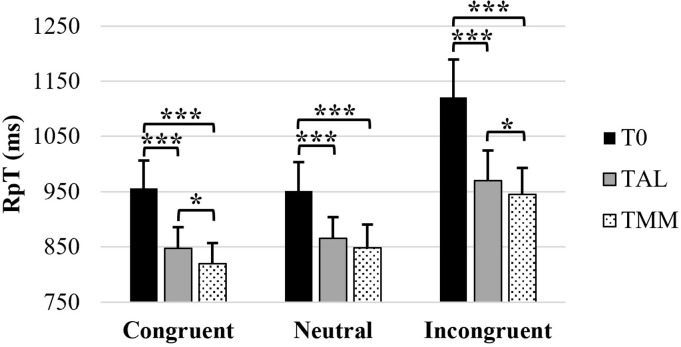
The present study investigated acute cognitive effects of mindfulness meditation (MM) compared to an active control intervention in meditators (n = 22) and novices (n = 20) using a within-subject design. We analyzed reaction times in a digitized Stroop task at baseline, after a 10-minute MM session with a fundamental breathing exercise, and after a 10-minute attentive listening intervention. Interventions order was randomized and a 10 min delay was respected before testing. Relative to baseline, meditators and novices showed faster reaction times after both interventions, but more so after MM for the congruent and incongruent Stroop task conditions that are associated with attention, inhibition and cognitive flexibility. Although the two interventions showed cognitive effects independent of previous meditation experience, MM appeared to induce larger benefits. Our findings are encouraging and support MM's potential as a means to enhance cognitive performance on the short-term without the need of any previous practice.
本研究采用内隐设计,比较了正念冥想(MM)与积极控制干预对冥想者(n=22)和新手(n=20)的急性认知影响。我们在基线、10 分钟基本呼吸练习 MM 后和 10 分钟专注倾听干预后,分析了数字 Stroop 任务中的反应时间。干预顺序随机,在测试前保持 10 分钟的延迟。与基线相比,冥想者和新手在两种干预后反应时间都更快,但在与注意力、抑制和认知灵活性相关的一致和不一致 Stroop 任务条件下,MM 后的反应更快。尽管两种干预都显示出了与先前的冥想经验无关的认知效果,但 MM 似乎能带来更大的益处。我们的研究结果令人鼓舞,支持了 MM 作为一种短期增强认知表现的手段,而不需要任何先前的练习。