Hahn U, Cho A, Schuppan D, Hahn E G, Merker H J, Riecken E O
Department of Medicine, Steglitz Medical School, West Berlin.
Gut. 1987;28 Suppl(Suppl):153-8. doi: 10.1136/gut.28.suppl.153.
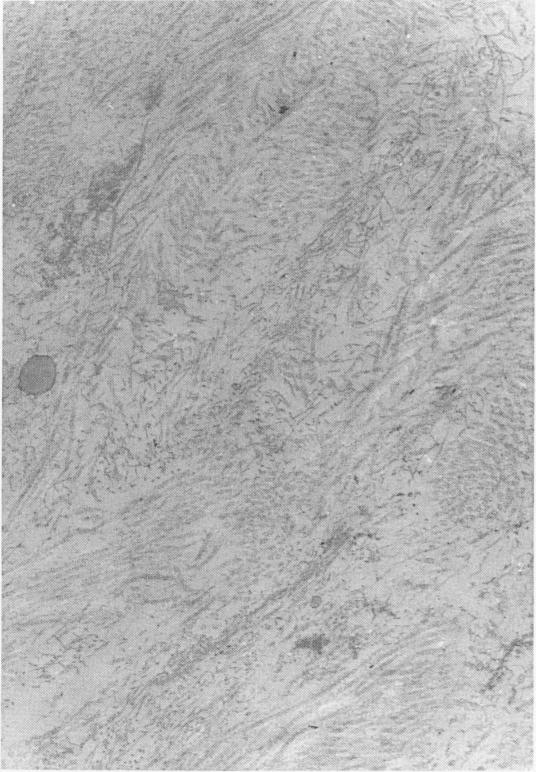
Primary intestinal epithelial cells have a very short lifespan in vitro when cultured free of mucosal elements. Support of the basal plasma membrane by a more natural substrate may thus enhance the initiation of primary cell cultures. A cell free biomatrix consisting of native interstitial collagens, basement membrane fragments and microfibrils was extracted from the lamina propria of human intestinal mucosa. Immunofluorescence revealed the presence of collagens type III, IV, and VI and procollagens type I and III as well as fibronectin, laminin and undulin. Primary crypt cells of suckling mice displayed a significantly increased affinity to pepsin and collagenase solubilised intestinal biomatrix when compared with plastic and fibronectin. Colonies of primary crypt cells survived for up to four days and longer on pepsin solubilised biomatrix but only for 48 hours on fibronectin. The intestinal biomatrix preparation has proved to be a useful substrate for the initiation and prolongation of primary intestinal cell cultures.
在无黏膜成分的情况下体外培养时,原代肠上皮细胞的寿命非常短。因此,由更天然的底物支撑基底质膜可能会增强原代细胞培养的起始。从人肠黏膜固有层中提取了一种由天然间质胶原、基底膜片段和微原纤维组成的无细胞生物基质。免疫荧光显示存在III型、IV型和VI型胶原以及I型和III型前胶原,还有纤连蛋白、层粘连蛋白和内动蛋白。与塑料和纤连蛋白相比,乳鼠的原代隐窝细胞对胃蛋白酶和胶原酶溶解的肠生物基质表现出显著增强的亲和力。原代隐窝细胞集落在胃蛋白酶溶解的生物基质上存活长达四天甚至更长时间,但在纤连蛋白上仅存活48小时。肠生物基质制剂已被证明是用于起始和延长原代肠细胞培养的有用底物。