Emory University School of Medicine, Atlanta, Georgia.
Massachusetts General Hospital, Boston, Massachusetts.
Cancer Res Commun. 2022 Aug 11;2(8):795-805. doi: 10.1158/2767-9764.CRC-22-0060. eCollection 2022 Aug.
NF-κB, a transcription factor essential for inflammatory responses, is constitutively activated in many lymphomas. In preclinical studies, pelabresib (CPI-0610), an investigational (BET) bromodomain inhibitor, downregulated NF-κB signaling and demonstrated antitumor activity . Here we report the safety, pharmacokinetics, pharmacodynamics, and preliminary clinical activity from the first-in-human phase I study of pelabresib in patients with relapsed/refractory lymphomas (NCT01949883).
Sixty-four patients with relapsed/refractory lymphoma (median of 4 prior lines of therapy) were treated with either capsule (6, 12, 24, 48, 80, 120, 170, 230, 300 mg) or tablet (125, 225 mg) doses of pelabresib orally once daily on a 14 days on, 7 days off schedule.
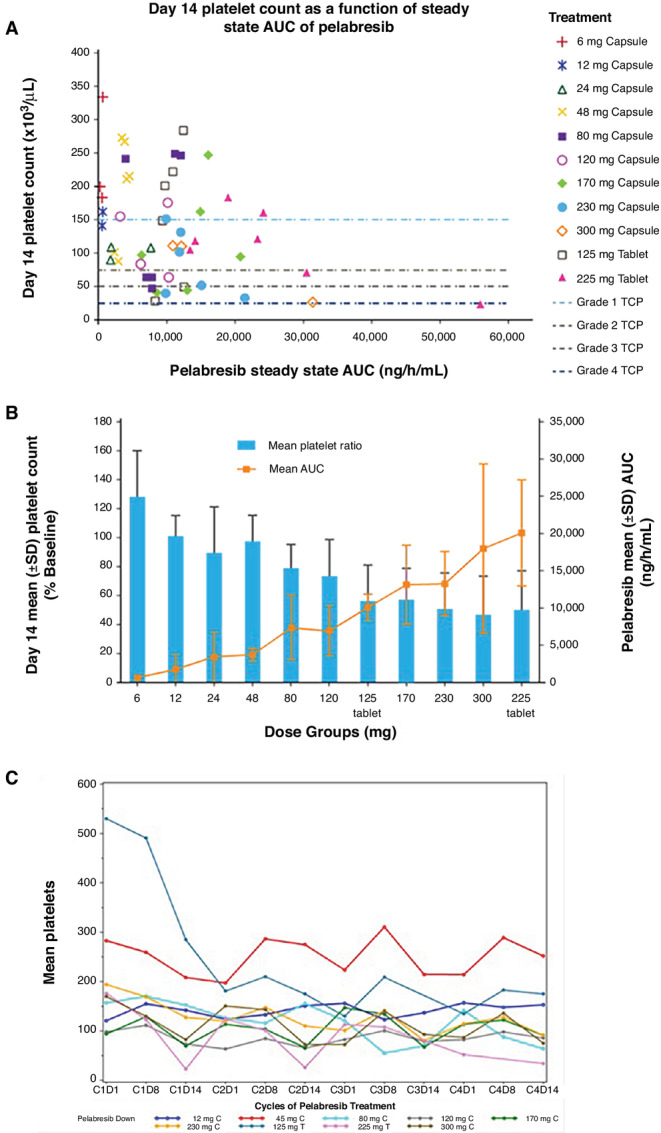
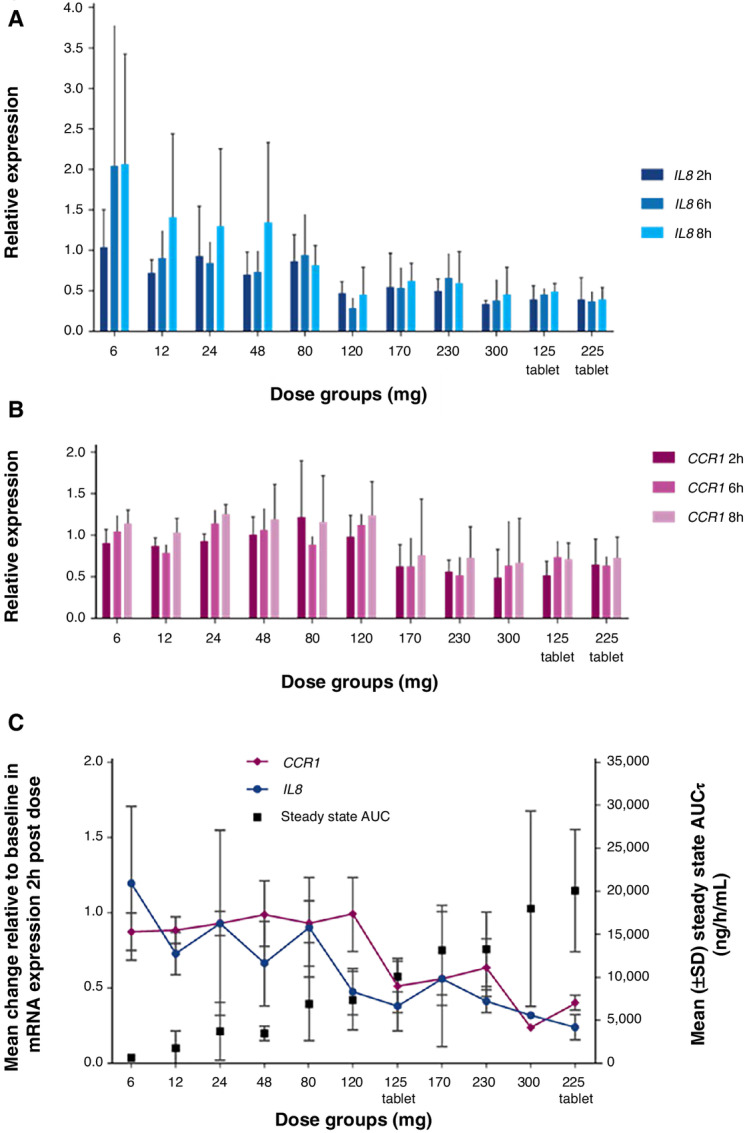
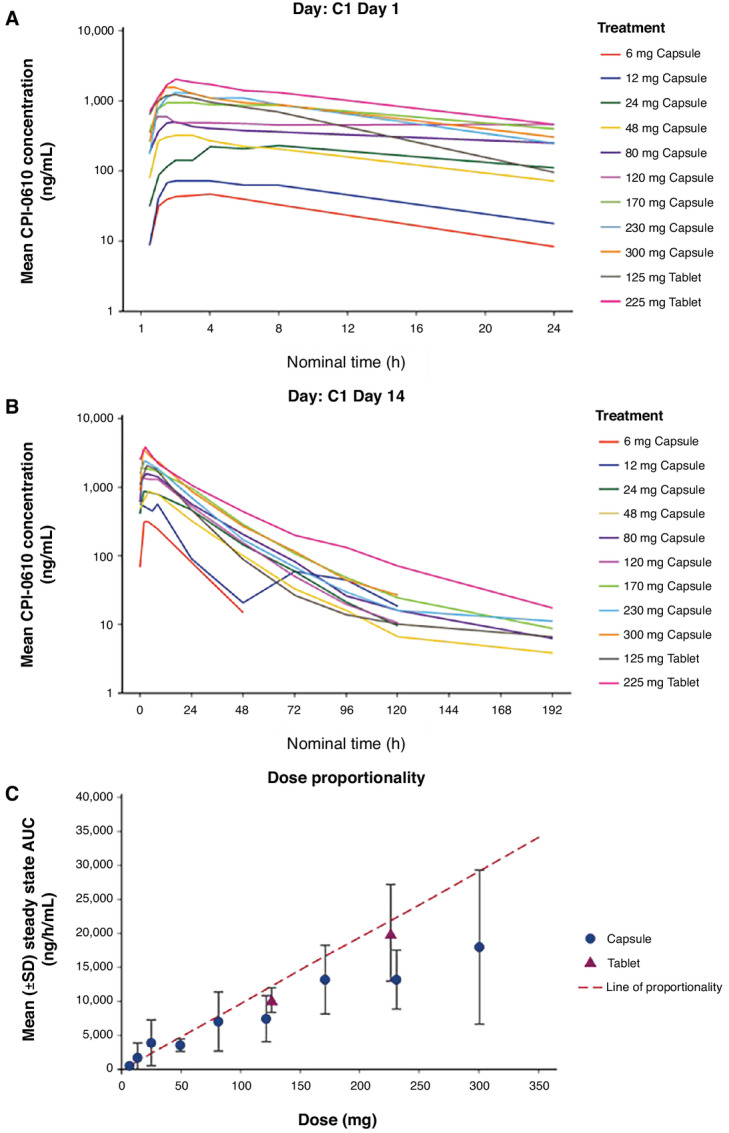
The MTD was determined as the 225 mg tablet daily. The most frequent adverse events were fatigue, nausea, and decreased appetite. Thrombocytopenia, a class effect for all BET inhibitors, was dose-dependent, reversible, and noncumulative. Pelabresib exhibited dose-proportional increases in systemic exposure, rapid absorption, and a half-life of approximately 15 hours (supporting once daily dosing). The bioavailability of the tablet formulation was 60% greater than the capsules. Pelabresib suppressed and mRNA at doses above 120 and 170 mg, respectively. Four patients (6.2%) had an objective response (2 complete response and 2 partial response) and 5 patients had prolonged stable disease.
CONCLUSIONS/DISCUSSION: Pelabresib is capable of BET target gene suppression in an exposure-dependent manner with an acceptable safety profile leading to the recommended phase II dose of the 125 mg tablet once daily.
BET proteins inhibition can potentially modify the pathogenic pathways which contribute to many diseases including malignancies. Pelabresib (CPI-0610), a potent and selective small molecule BET proteins inhibitor, has a MTD of 225 mg once daily for 14 days with a 7-day break, clear pharmacokinetic/pharmacodynamic relationship, and manageable clinical safety profile. These findings are part of the foundation for the ongoing pivotal study of pelabresib in patients with myelofibrosis.
NF-κB 是炎症反应所必需的转录因子,在许多淋巴瘤中持续激活。在临床前研究中,研究性(BET)溴结构域抑制剂 pelabresib 下调了 NF-κB 信号通路并显示出抗肿瘤活性。在此,我们报告了在复发/难治性淋巴瘤患者中进行的 pelabresib 的首次人体 I 期研究的安全性、药代动力学、药效学和初步临床活性(NCT01949883)。
64 名复发/难治性淋巴瘤患者(中位治疗线数为 4 线)接受胶囊(6、12、24、48、80、120、170、230、300 mg)或片剂(125、225 mg)pelabresib 每日一次口服治疗,每 14 天用药 1 天,停药 7 天。
每日 225mg 片剂确定为最大耐受剂量。最常见的不良反应是疲劳、恶心和食欲下降。血小板减少症是所有 BET 抑制剂的一种类效应,呈剂量依赖性、可逆性和非累积性。pelabresib 表现出系统暴露量的剂量比例增加、快速吸收和半衰期约为 15 小时(支持每日一次给药)。片剂制剂的生物利用度比胶囊制剂高 60%。pelabresib 在分别高于 120 和 170mg 的剂量时可抑制和 mRNA。4 名患者(6.2%)有客观反应(2 名完全缓解和 2 名部分缓解),5 名患者有延长的稳定疾病。
结论/讨论:pelabresib 能够以暴露依赖性方式抑制 BET 靶基因,具有可接受的安全性特征,从而确定了每日一次 125mg 片剂的推荐 II 期剂量。
BET 蛋白抑制可能潜在地改变导致包括恶性肿瘤在内的许多疾病的致病途径。Pelabresib(CPI-0610)是一种有效的、选择性的小分子 BET 蛋白抑制剂,每日一次 225mg 持续 14 天,有 7 天的停药期,具有明确的药代动力学/药效学关系和可管理的临床安全性特征。这些发现是 pelabresib 在骨髓纤维化患者中进行的关键性研究的基础。