Kim Ye-Jin, Li Wei, Zhelev Doncho V, Mellors John W, Dimitrov Dimiter S, Baek Du-San
Center for Antibody Therapeutics, Division of Infectious Diseases, Department of Medicine, University of Pittsburgh School of Medicine, Pittsburgh, PA, United States.
Abound Bio, Pittsburgh, PA, United States.
Front Oncol. 2023 Feb 27;13:1124039. doi: 10.3389/fonc.2023.1124039. eCollection 2023.
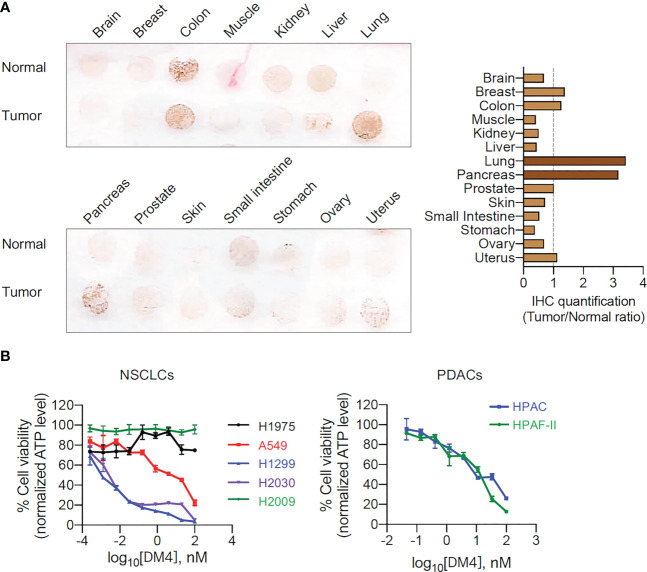
Chimeric antigen receptor-T (CAR-T) cells and antibody-drug conjugates (ADCs) are promising therapeutic strategies in oncology. The carcinoembryonic antigen-related cell adhesion molecule 5 (CEACAM5) is overexpressed in tumors including non-small cell lung cancer (NSCLC) and pancreatic ductal adenocarcinoma (PDAC), and is an attractive target for therapies based on CAR-T cell or/and ADCs. We previously developed a highly specific antibody-based CAR-T cells targeting CEACAM5 and the tumoricidal effect of CAR-T cells was proved against neuro-endocrine prostate cancer (NEPC) cells expressing CEACAM5. Here, we compare the anti-tumor efficacy of our CAR-T cells with that of an anti-CEACAM5 ADC being clinically evaluated against NSCLC. Our anti-CEACAM5 CAR-T cells showed cytotoxicity in a CEACAM5 surface concentration dependent manner and reduced tumor growth in both ADC-responsive and -non-responsive CEACAM5-expressing NSCLC cells and . In contrast, the ADC exhibited cytotoxicity independent on the CEACAM5 cell surface concentration. Even though clinical translation of CEACAM5 targeting CAR-T cell therapies is still in preclinical stage, our CAR-T cell approach could provide a potential therapeutic strategy for CEACAM5-positive cancer patients with resistance to ADCs.
嵌合抗原受体T细胞(CAR-T)和抗体药物偶联物(ADC)是肿瘤学中很有前景的治疗策略。癌胚抗原相关细胞粘附分子5(CEACAM5)在包括非小细胞肺癌(NSCLC)和胰腺导管腺癌(PDAC)在内的肿瘤中过表达,是基于CAR-T细胞或/和ADC的治疗的一个有吸引力的靶点。我们之前开发了一种靶向CEACAM5的高度特异性基于抗体的CAR-T细胞,并证明了CAR-T细胞对表达CEACAM5的神经内分泌前列腺癌(NEPC)细胞具有杀肿瘤作用。在这里,我们将我们的CAR-T细胞的抗肿瘤疗效与正在针对NSCLC进行临床评估的抗CEACAM5 ADC的疗效进行比较。我们的抗CEACAM5 CAR-T细胞以CEACAM5表面浓度依赖的方式表现出细胞毒性,并在表达CEACAM5的NSCLC细胞的ADC反应性和非反应性细胞中均减少了肿瘤生长。相比之下,ADC表现出与CEACAM5细胞表面浓度无关的细胞毒性。尽管靶向CEACAM5的CAR-T细胞疗法的临床转化仍处于临床前阶段,但我们的CAR-T细胞方法可为对ADC耐药的CEACAM5阳性癌症患者提供一种潜在的治疗策略。