Xue Qianqian, Yu Tao, Wang Zhibin, Fu Xiuxiu, Li Xiaoxin, Zou Lu, Li Min, Cho Jae Youl, Yang Yanyan
Department of Pharmacology, School of Pharmacy, Qingdao University, China.
Institute for translational medicine, The Affiliated Hospital of Qingdao University, China.
J Ginseng Res. 2023 Mar;47(2):237-245. doi: 10.1016/j.jgr.2022.08.001. Epub 2022 Aug 6.
Ginsenoside Rg2 (Rg2) has a variety of pharmacological activities and provides benefits during inflammation, cancer, and other diseases. However, there are no reports about the relationship between Rg2 and atherosclerosis.
We used 3-(4,5-dimethylthiazol-2-yl)-2,5-diphenyltetrazolium bromide (MTT) to detect the cell viability of Rg2 in vascular smooth muscle cells (VSMCs) and human umbilical vein endothelial cells (HUVECs). The expression of inflammatory factors in HUVECs and the expression of phenotypic transformation-related marker in VSMCs were detected at mRNA levels. Western blot method was used to detect the expression of inflammation pathways and the expression of phenotypic transformation at the protein levels. The rat carotid balloon injury model was performed to explore the effect of Rg2 on inflammation and phenotypic transformation .
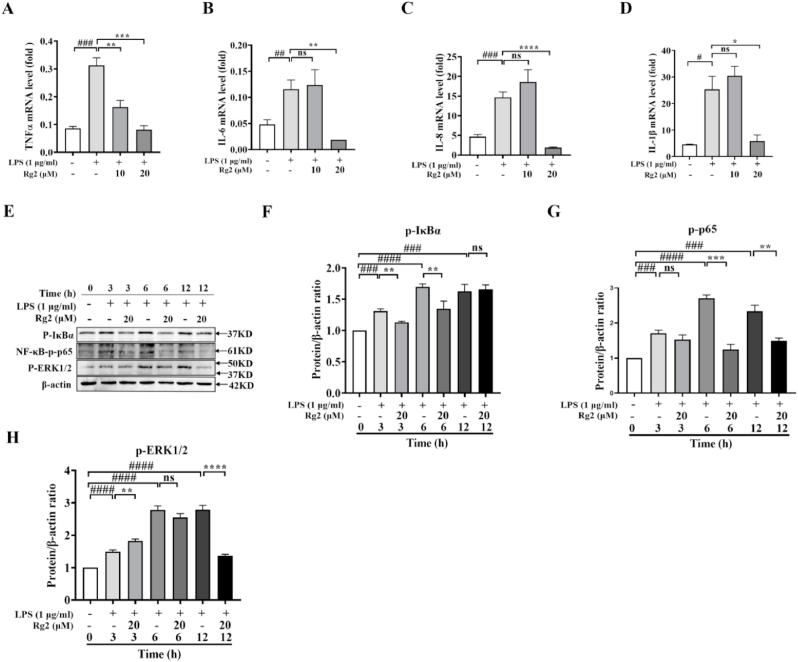
Rg2 decreased the expression of inflammatory factors induced by lipopolysaccharide in HUVECs-without affecting cell viability. These events depend on the blocking regulation of NF-κB and p-ERK signaling pathway. In VSMCs, Rg2 can inhibit the proliferation, migration, and phenotypic transformation of VSMCs induced by platelet derived growth factor-BB (PDGF-BB)-which may contribute to its anti-atherosclerotic role. In rats with carotid balloon injury, Rg2 can reduce intimal proliferation after injury, regulate the inflammatory pathway to reduce inflammatory response, and also suppress the phenotypic transformation of VSMCs.
These results suggest that Rg2 can exert its anti-atherosclerotic effect at the cellular level and animal level, which provides a more sufficient basis for ginseng as a functional dietary regulator.
人参皂苷Rg2(Rg2)具有多种药理活性,在炎症、癌症和其他疾病中发挥有益作用。然而,尚无关于Rg2与动脉粥样硬化之间关系的报道。
我们使用3-(4,5-二甲基噻唑-2-基)-2,5-二苯基四氮唑溴盐(MTT)检测Rg2对血管平滑肌细胞(VSMCs)和人脐静脉内皮细胞(HUVECs)的细胞活力。在mRNA水平检测HUVECs中炎症因子的表达以及VSMCs中表型转化相关标志物的表达。采用蛋白质印迹法在蛋白质水平检测炎症通路的表达和表型转化。进行大鼠颈动脉球囊损伤模型以探究Rg2对炎症和表型转化的影响。
Rg2可降低脂多糖诱导的HUVECs中炎症因子的表达,且不影响细胞活力。这些作用依赖于对NF-κB和p-ERK信号通路的阻断调节。在VSMCs中,Rg2可抑制血小板衍生生长因子-BB(PDGF-BB)诱导的VSMCs增殖、迁移和表型转化,这可能有助于其抗动脉粥样硬化作用。在颈动脉球囊损伤的大鼠中,Rg2可减少损伤后的内膜增生,调节炎症通路以减轻炎症反应,还可抑制VSMCs的表型转化。
这些结果表明,Rg2可在细胞水平和动物水平发挥其抗动脉粥样硬化作用,这为将人参作为功能性饮食调节剂提供了更充分的依据。