Sant Hirdaram Yoga and Nature Cure Hospital, Bhopal, India.
Sant Hirdaram Medical College of Naturopathy & Yogic Sciences for Women, Bhopal, India.
Medicine (Baltimore). 2023 Mar 17;102(11):e33260. doi: 10.1097/MD.0000000000033260.
Personality traits play a role in the progression and management of chronic diseases. However, a change in personality is seldom considered an outcome in the management of chronic diseases. The present study explored if a health education-based yoga & naturopathy lifestyle intervention group (HYNLG) can induce change in the personality traits, vitality, quality of life (QoL), and satisfaction in patients with non-communicable diseases compared to a therapy-centric yoga & naturopathy lifestyle intervention (TYNLG).
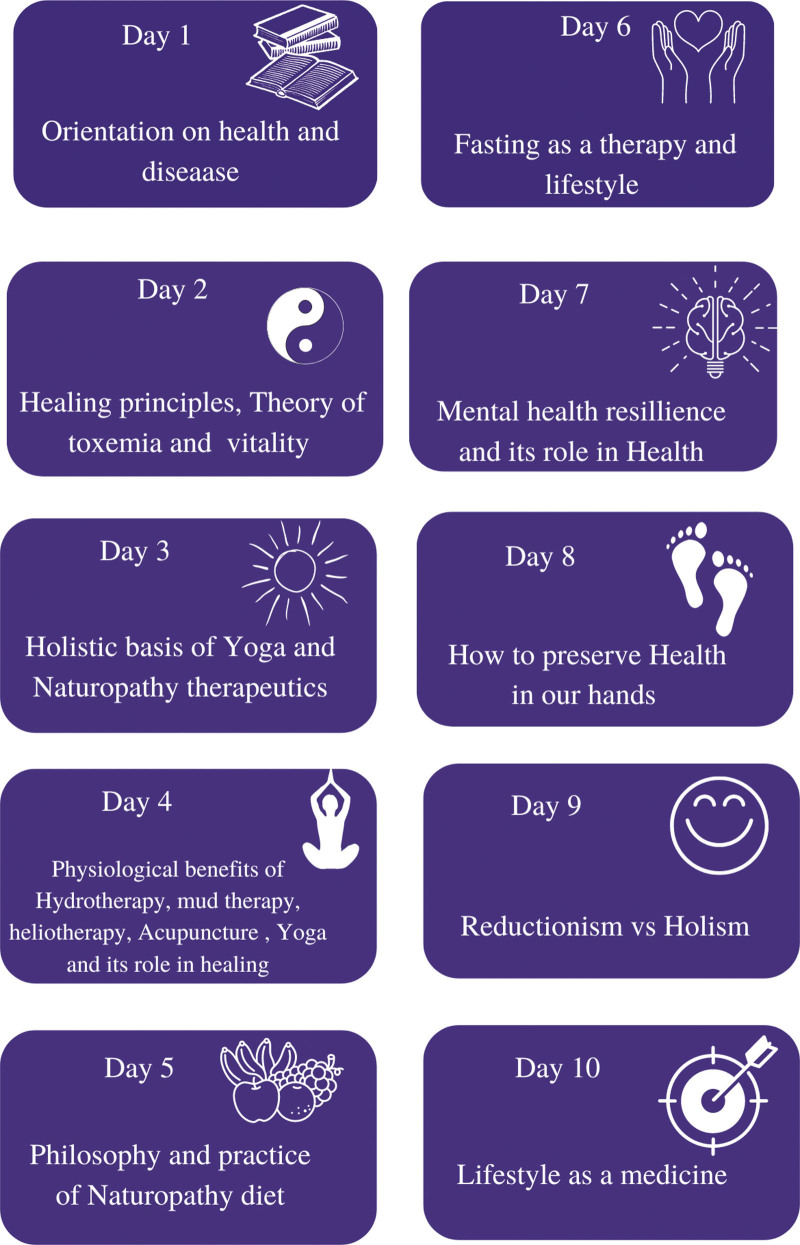
This randomized control trial included 56 participants who were equally randomized into the HYNLG and TYNLG groups. Both groups received a 10-day inpatient regimen that included hydrotherapy, mud therapy, diet therapy, supervised fasting, sunbathing, acupressure, and massage therapy. Additionally, HYNLG received a 10-day orientation (1 h/d) on concepts centered around belief systems, lifestyle changes, and their impact on health. Vedic Personality Inventory, SF-12 QoL questionnaire, visual analog scale, Hamilton Anxiety Inventory, and Visit-Specific Patient Satisfaction Questionnaire were used as outcome measures. The changes between the time points were analyzed using parametric and non-parametric tests, and Pearson correlation was used to investigate the association between the variables.
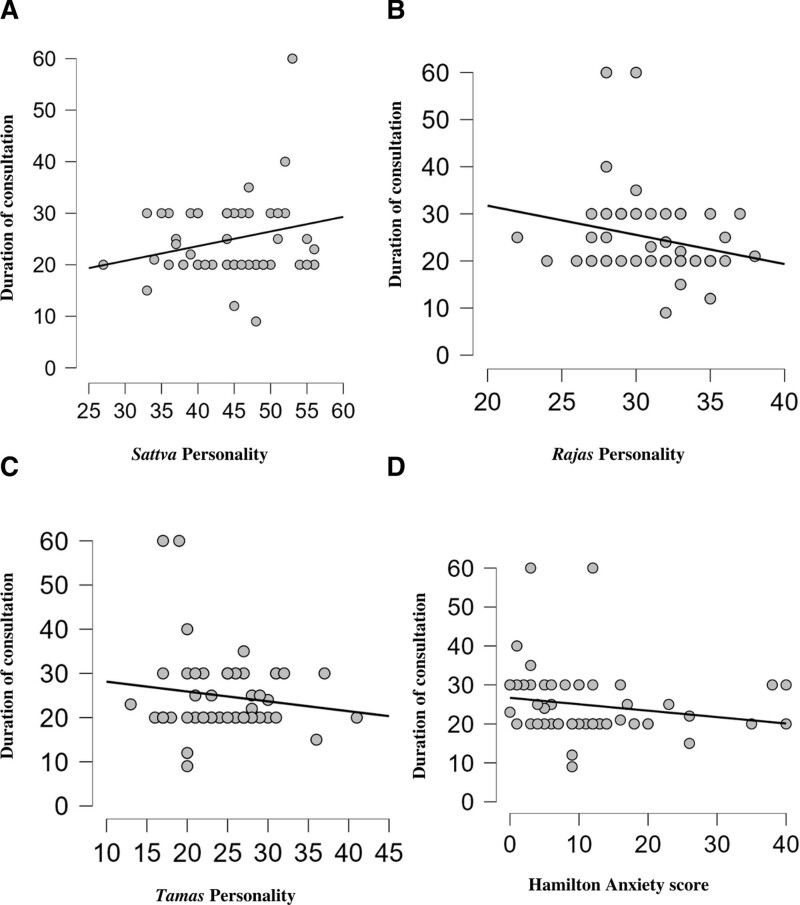
The Sattva (balance and stability) personality trait has significantly increased in HYNLG, while the Rajas (activity and imbalance) and Tamas (inertia and dullness) personalities have decreased. HYNLG also demonstrated a significant improvement in mental QoL, vitality, anxiety reduction, and patient satisfaction when compared to TYNLG.
These findings may have serious clinical and public health implications as they provide insights on the usefulness of introducing a health education component into lifestyle modification programs.
个性特征在慢性病的进展和管理中起着一定的作用。然而,在慢性病的管理中,很少考虑个性的变化。本研究旨在探讨基于健康教育的瑜伽和顺势疗法生活方式干预组(HYNLG)是否可以与以治疗为中心的瑜伽和顺势疗法生活方式干预组(TYNLG)相比,改变非传染性疾病患者的个性特征、活力、生活质量(QoL)和满意度。
这是一项随机对照试验,纳入了 56 名参与者,他们被平均随机分为 HYNLG 和 TYNLG 组。两组均接受 10 天的住院治疗,包括水疗、泥疗、饮食疗法、监督禁食、日光浴、穴位按压和按摩疗法。此外,HYNLG 还接受了为期 10 天的定向(1 小时/天),内容围绕信念体系、生活方式改变及其对健康的影响。采用吠陀人格量表、SF-12 生活质量问卷、视觉模拟量表、汉密尔顿焦虑量表和特定就诊患者满意度问卷作为结局指标。采用参数和非参数检验分析时间点之间的变化,并采用皮尔逊相关分析探讨变量之间的关系。
HYNLG 组的 Sattva(平衡和稳定)个性特征显著增加,而 Rajas(活动和失衡)和 Tamas(惰性和迟钝)个性特征显著降低。与 TYNLG 相比,HYNLG 还在心理 QoL、活力、焦虑减轻和患者满意度方面表现出显著改善。
这些发现可能具有严重的临床和公共卫生意义,因为它们为在生活方式改变计划中引入健康教育内容的有效性提供了新的见解。