Murakami R
Zoological Institute, Faculty of Science, University of Tokyo, Japan.
J Anat. 1986 Dec;149:11-20.
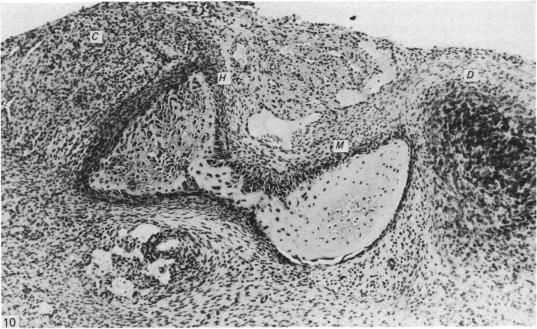
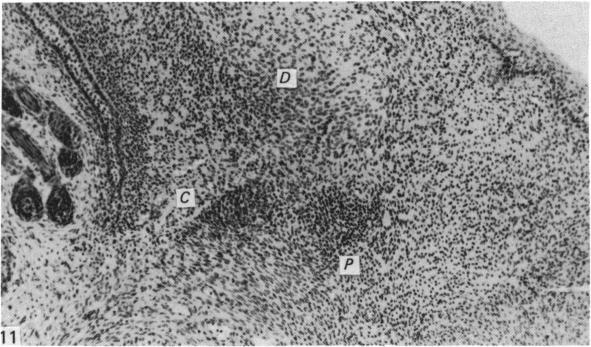
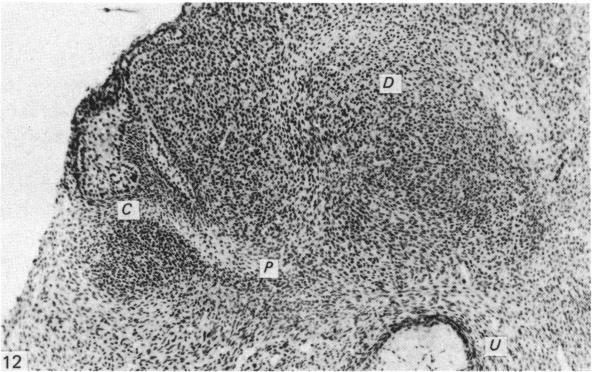
Genital tubercles of male and female rats were cultured beneath the renal capsule of castrated and intact adult male rats treated with androgens, oestrogen, or anti-androgen, and the development of the os penis in the transplants was studied. When the genital tubercles were cultured in normal male hosts, a membrane bone and a hyaline cartilage of the proximal segment of the os penis were formed 8-11 days after transplantation, and a fibrocartilage of the distal segment of the os penis at 11-14 days. In genital tubercles cultured in castrated males, the rudiments of both the proximal and distal segments remained as undifferentiated mesenchymal cell masses. However, similarly cultured genital tubercles were found to develop cartilages and bone when the hosts were treated with high doses of androgens. The potency of androgen-dependent chondrogenesis and osteogenesis was equivalent in the male and female genital tubercles. Chondrogenesis and osteogenesis of the os penis were caused by androgens, while the rudiments of the os penis were formed independently of androgens. The overt differentiation of the corpus cavernosum penis was also caused by androgens.
将雄性和雌性大鼠的生殖结节移植到经雄激素、雌激素或抗雄激素处理的去势成年雄性大鼠和完整成年雄性大鼠的肾被膜下,研究移植组织中阴茎骨的发育情况。当生殖结节在正常雄性宿主中培养时,移植后8 - 11天形成阴茎骨近端的膜性骨和透明软骨,11 - 14天形成阴茎骨远端的纤维软骨。在去势雄性大鼠中培养的生殖结节,近端和远端的原基均保持为未分化的间充质细胞团。然而,当宿主用高剂量雄激素处理时,同样培养的生殖结节会发育出软骨和骨。雄激素依赖性软骨生成和成骨能力在雄性和雌性生殖结节中相当。阴茎骨的软骨生成和成骨是由雄激素引起的,而阴茎骨的原基是独立于雄激素形成的。阴茎海绵体的明显分化也是由雄激素引起的。