Deng Xijin, Sun Tian, Zhao Dengming, Sana Si Ri Gu Leng, Li Wenzhi
Department of Anesthesiology, The Second Affiliated Hospital of Harbin Medical University, Harbin, Heilongjiang Province, 150086, China.
Heilongjiang Province Key Lab of Research on Anesthesiology and Critical Care Medicine, Harbin, Heilongjiang Province, 150086, China.
Heliyon. 2023 Mar 6;9(3):e14337. doi: 10.1016/j.heliyon.2023.e14337. eCollection 2023 Mar.
Postoperative cognitive dysfunction (POCD) is a common postoperative complication in elderly patients. The strong stress response causing by surgical trauma can induce POCD. We hypothesized that stellate ganglion block (SGB) can provide the neuroprotection to POCD by regulating the neuroendocrine response.
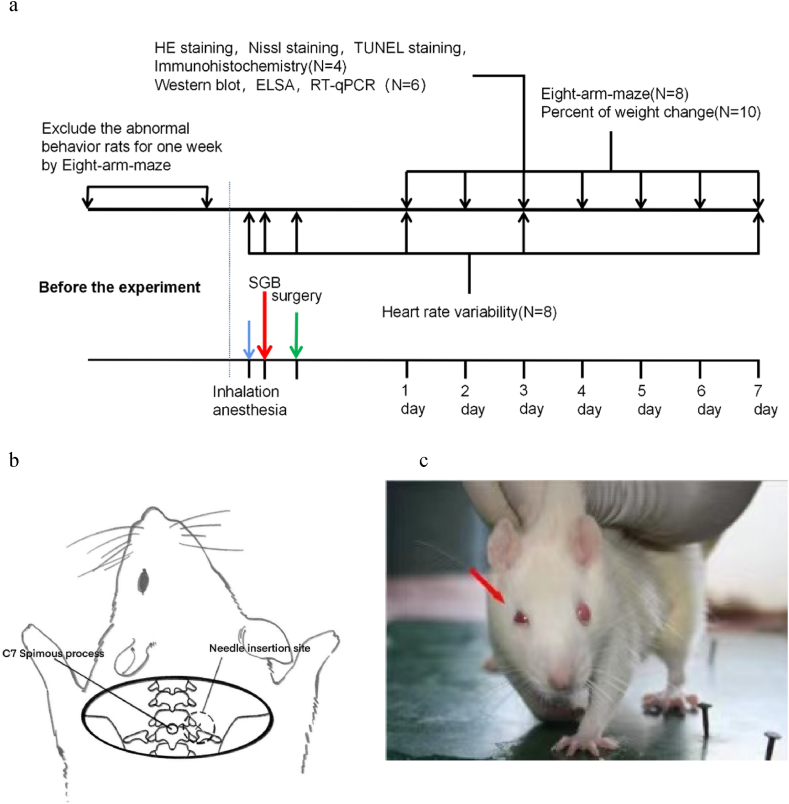
Sprague-Dawley male rats, 18-20 months old and weighing 550-650 g were assigned into four groups: sham surgery group (Sham), sham surgery + saline group (Sham + NS), surgery group (Surgery), and surgery + SGB group (Surgery + SGB). The change of body weight, heart rate variability analysis, behavior testing, neuronal damage, inflammatory response, neuroendocrine hormone level were evaluated by their corresponding methods.
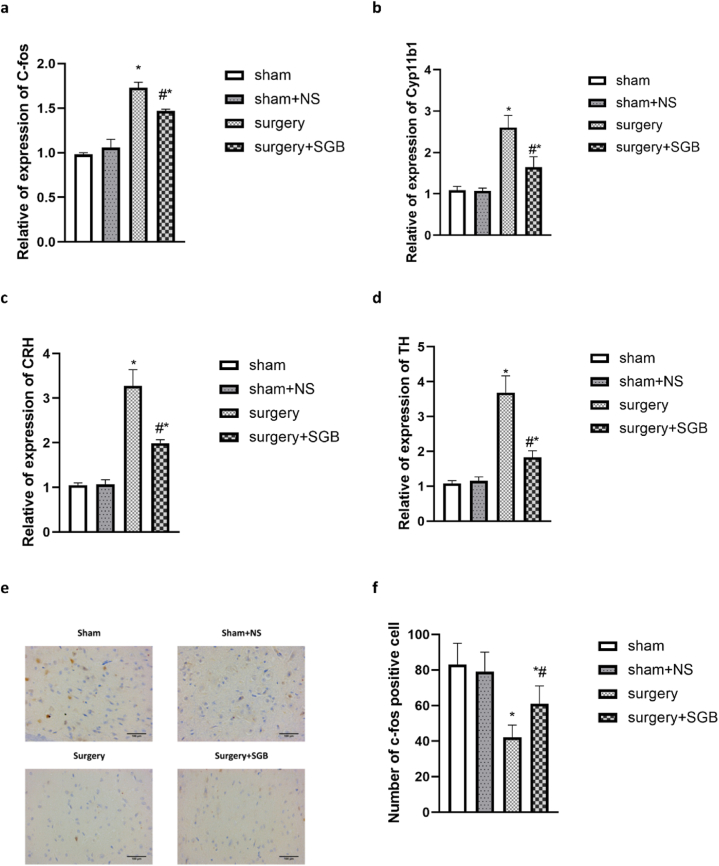
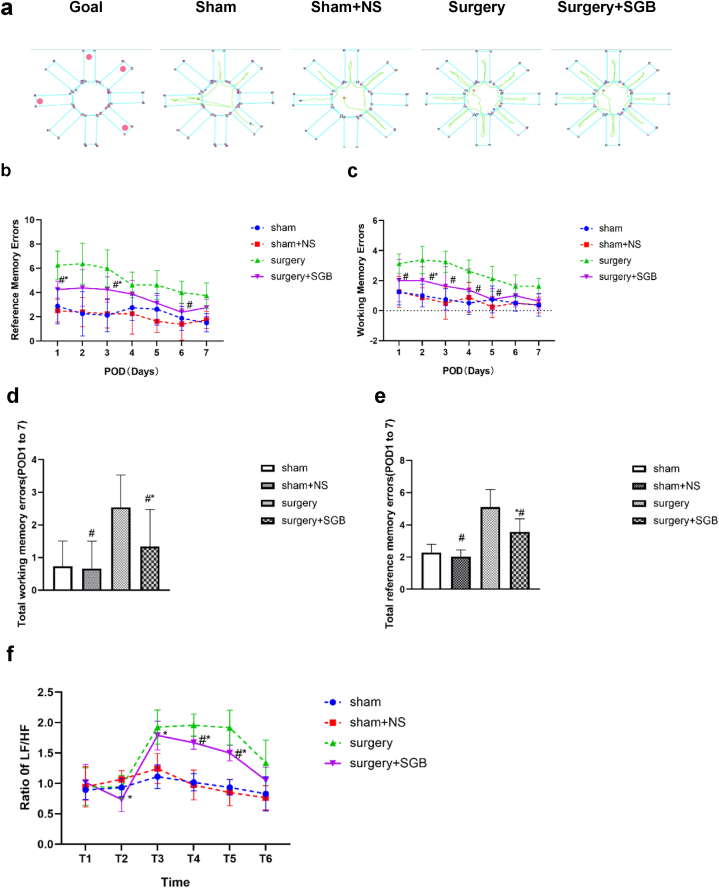
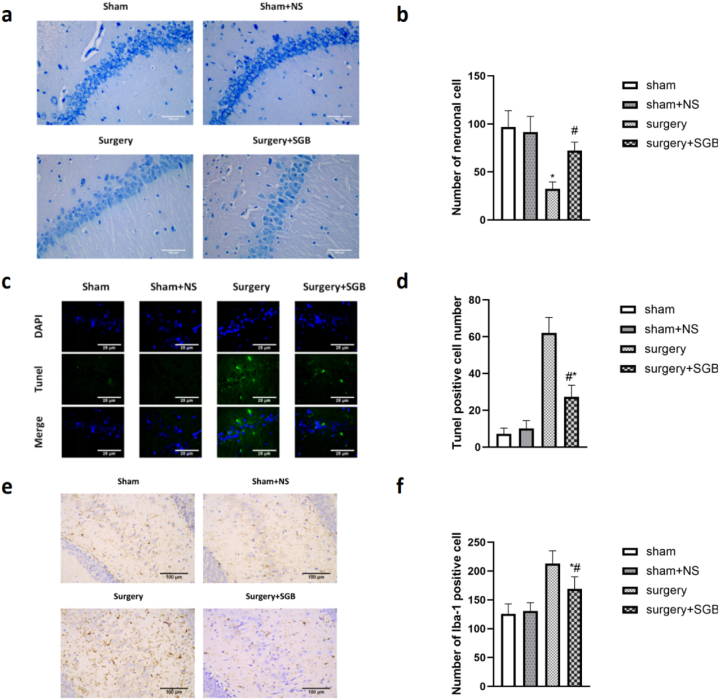
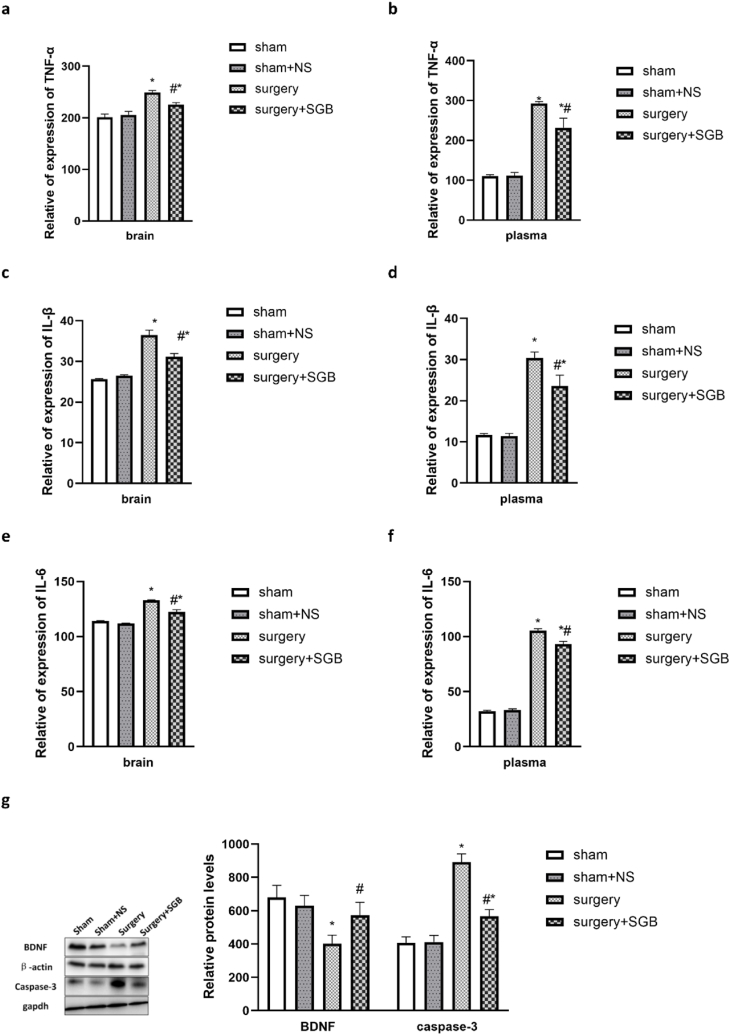
The results showed that SGB can reduce the number of both types of errors in the postoperative eight-arm maze assay, attenuate neural structural damage, inhibit neuroapoptosis, suppress inflammatory responses, increase the release of neurotrophic factors, accelerate postoperative weight recovery, and promote postoperative recovery in rats. Most importantly, SGB reduced the level of neuroendocrine hormone of TH, Cyp11b1, CRH, and SGB also activated dorsal motor nucleus of vagus (detected by c-fos immunohistochemistry).
Our findings indicated that SGB could be a neuroprotective therapy for the cognitive dysfunction induced by exploratory laparotomy model of POCD, which might be attributable for balancing the autonomic nervous system, regulating hypothalamic-pituitary-adrenal (HPA) axis system.
术后认知功能障碍(POCD)是老年患者常见的术后并发症。手术创伤引起的强烈应激反应可诱发POCD。我们假设星状神经节阻滞(SGB)可通过调节神经内分泌反应为POCD提供神经保护作用。
将18 - 20月龄、体重550 - 650 g的雄性Sprague-Dawley大鼠分为四组:假手术组(Sham)、假手术 + 生理盐水组(Sham + NS)、手术组(Surgery)和手术 + SGB组(Surgery + SGB)。采用相应方法评估体重变化、心率变异性分析、行为测试、神经元损伤、炎症反应、神经内分泌激素水平。
结果表明,SGB可减少术后八臂迷宫试验中两种错误的数量,减轻神经结构损伤,抑制神经细胞凋亡,抑制炎症反应,增加神经营养因子的释放,加速术后体重恢复,促进大鼠术后恢复。最重要的是,SGB降低了TH、Cyp11b1、CRH的神经内分泌激素水平,且SGB还激活了迷走神经背核(通过c-fos免疫组化检测)。
我们的研究结果表明,SGB可能是一种针对POCD探索性剖腹手术模型诱导的认知功能障碍的神经保护疗法,这可能归因于平衡自主神经系统、调节下丘脑 - 垂体 - 肾上腺(HPA)轴系统。