Scheper Henk, Mahdad Rachid, Elzer Brenda, Löwik Claudia, Zijlstra Wierd, Gosens Taco, van der Lugt Joris C T, van der Wal Robert J P, Poolman Rudolf W, Somford Matthijs P, Jutte Paul C, Bos Pieter K, Zwaan Richard E, Nelissen Rob G H H, Visser Leo G, de Boer Mark G J
Department of Infectious Diseases, Leiden University Medical Centre, Leiden, the Netherlands.
Department of Orthopaedic Surgery, Alrijne Hospital, Leiderdorp, the Netherlands.
J Bone Jt Infect. 2023 Feb 13;8(1):59-70. doi: 10.5194/jbji-8-59-2023. eCollection 2023.
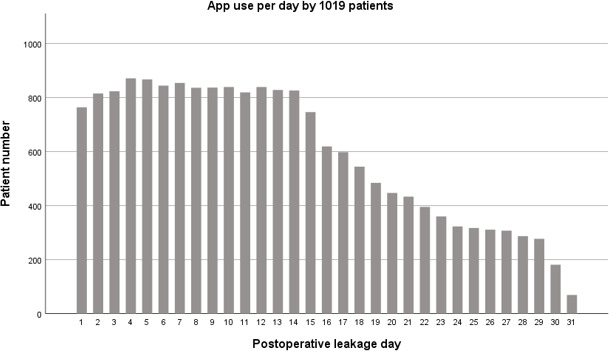
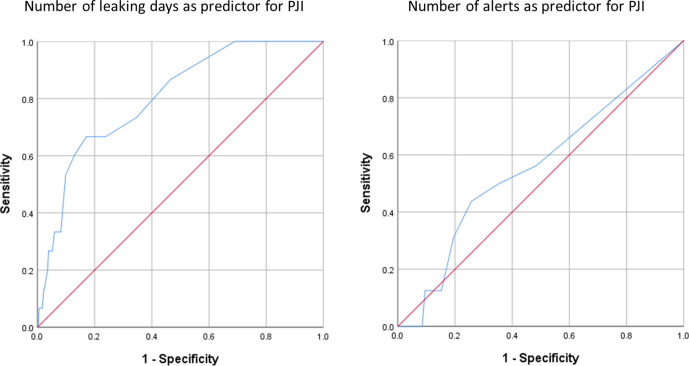
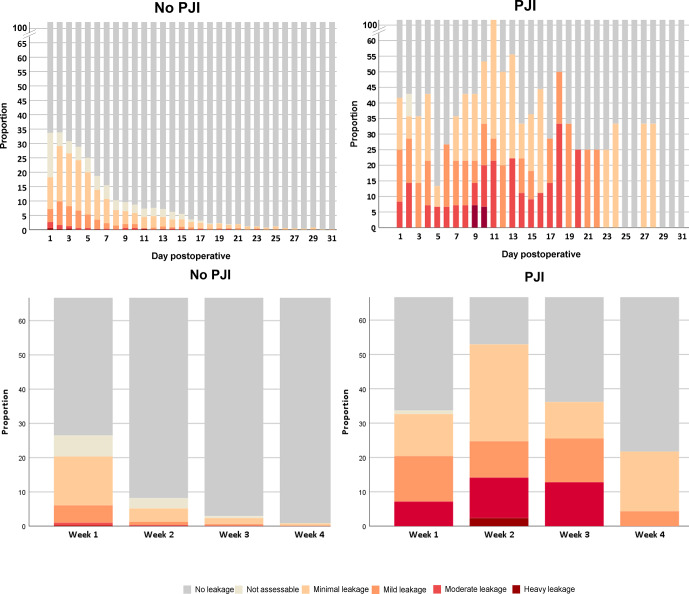
: Differentiation between uncomplicated and complicated postoperative wound drainage after arthroplasty is crucial to prevent unnecessary reoperation. Prospective data about the duration and amount of postoperative wound drainage in patients with and without prosthetic joint infection (PJI) are currently absent. : A multicentre cohort study was conducted to assess the duration and amount of wound drainage in patients after arthroplasty. During 30 postoperative days after arthroplasty, patients recorded their wound status in a previously developed wound care app and graded the amount of wound drainage on a 5-point scale. Data about PJI in the follow-up period were extracted from the patient files. : Of the 1019 included patients, 16 patients (1.6 %) developed a PJI. Minor wound drainage decreased from the first to the fourth postoperative week from 50 % to 3 %. Both moderate to severe wound drainage in the third week and newly developed wound drainage in the second week after a week without drainage were strongly associated with PJI (odds ratio (OR) 103.23, 95 % confidence interval (CI) 26.08 to 408.57, OR 80.71, 95 % CI 9.12 to 714.52, respectively). The positive predictive value (PPV) for PJI was 83 % for moderate to heavy wound drainage in the third week. : Moderate to heavy wound drainage and persistent wound drainage were strongly associated with PJI. The PPV of wound drainage for PJI was high for moderate to heavy drainage in the third week but was low for drainage in the first week. Therefore, additional parameters are needed to guide the decision to reoperate on patients for suspected acute PJI.
区分关节置换术后单纯性和复杂性伤口引流对于避免不必要的再次手术至关重要。目前缺乏关于有无人工关节感染(PJI)患者术后伤口引流持续时间和引流量的前瞻性数据。
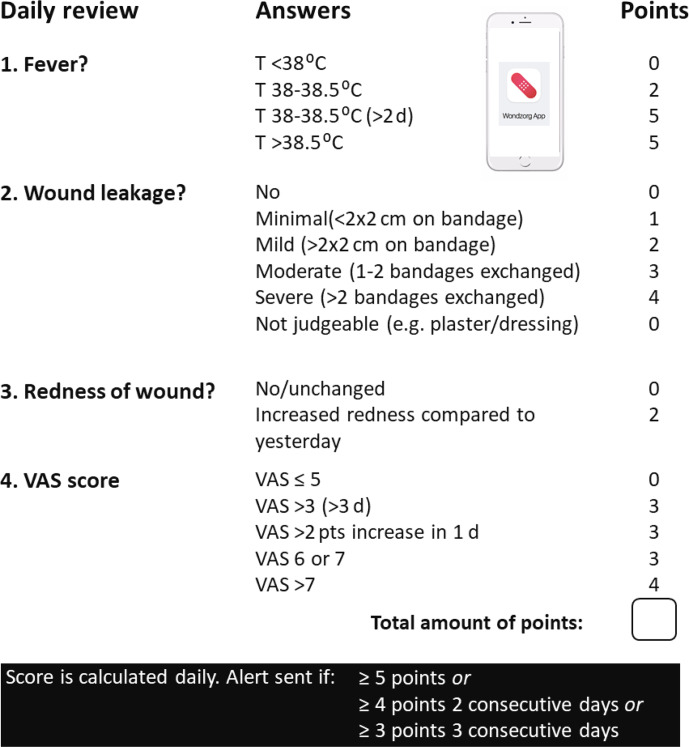
一项多中心队列研究旨在评估关节置换术后患者的伤口引流持续时间和引流量。在关节置换术后30天内,患者在先前开发的伤口护理应用程序中记录伤口状况,并以5分制对伤口引流量进行分级。随访期间关于PJI的数据从患者病历中提取。
在纳入的1019例患者中,16例(1.6%)发生了PJI。术后第一周至第四周,轻度伤口引流从50%降至3%。术后第三周的中度至重度伤口引流以及在一周无引流后第二周新出现的伤口引流均与PJI密切相关(优势比(OR)分别为103.23,95%置信区间(CI)为26.08至408.57;OR为80.71,95%CI为9.12至714.52)。第三周中度至重度伤口引流对PJI的阳性预测值(PPV)为83%。
中度至重度伤口引流和持续性伤口引流与PJI密切相关。伤口引流对PJI的PPV在第三周中度至重度引流时较高,但在第一周引流时较低。因此,需要额外的参数来指导对疑似急性PJI患者进行再次手术的决策。