Department of Psychiatry and Behavioral Sciences, Vanderbilt University Medical Center, Nashville, Tennessee, USA.
Department of Psychiatry, University of Pennsylvania, Philadelphia, Pennsylvania, USA.
J Trauma Stress. 2023 Apr;36(2):359-372. doi: 10.1002/jts.22918. Epub 2023 Mar 20.
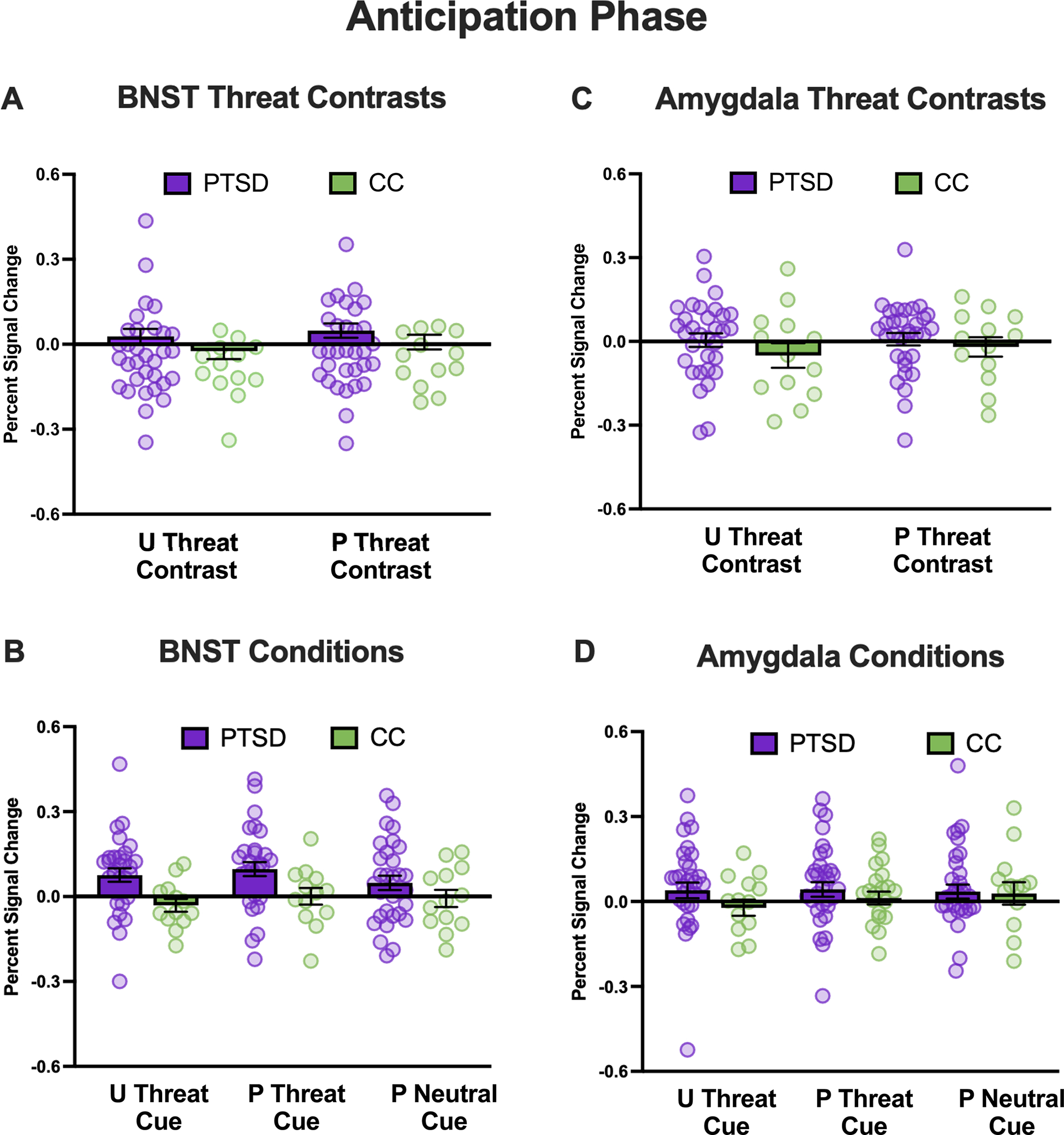
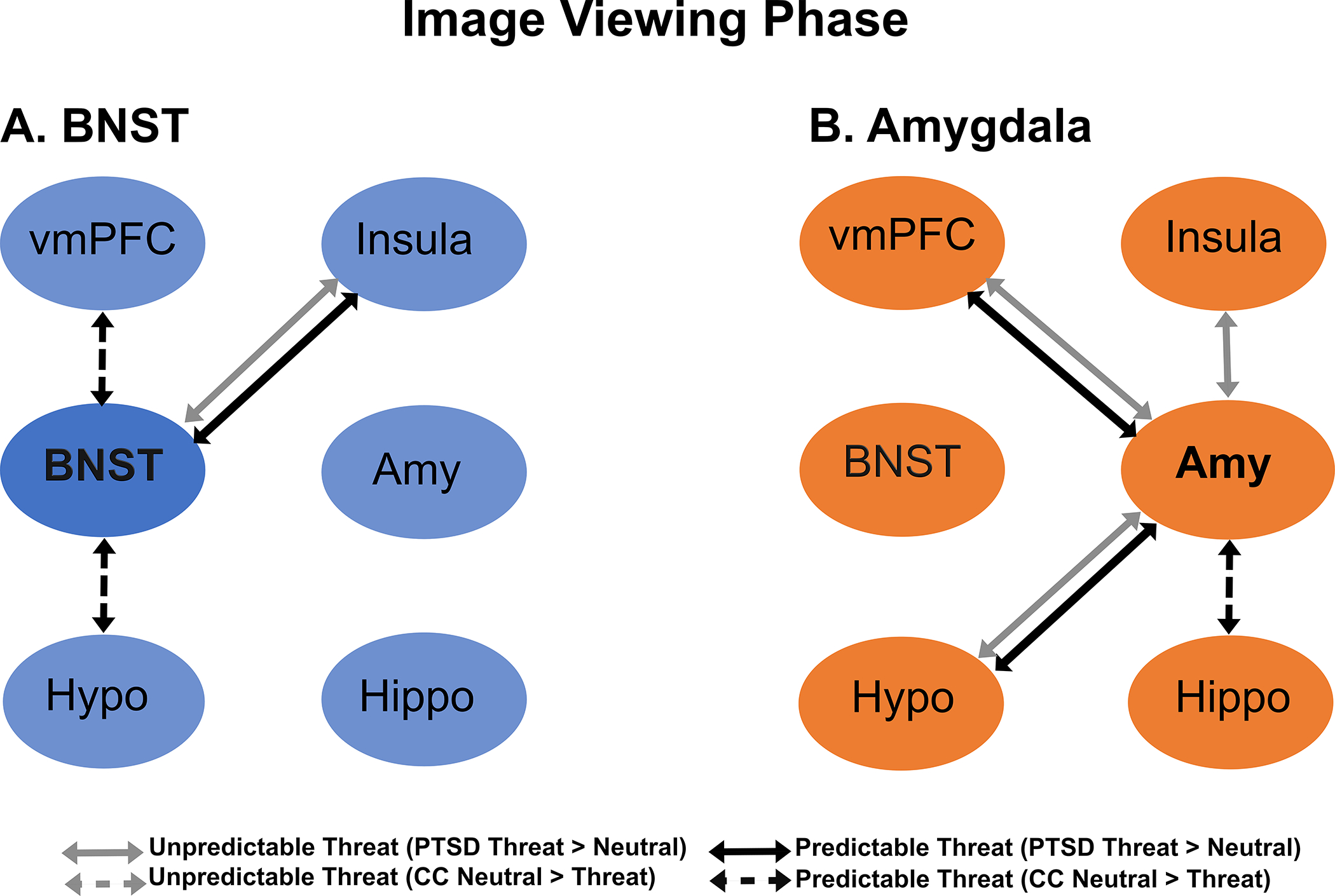
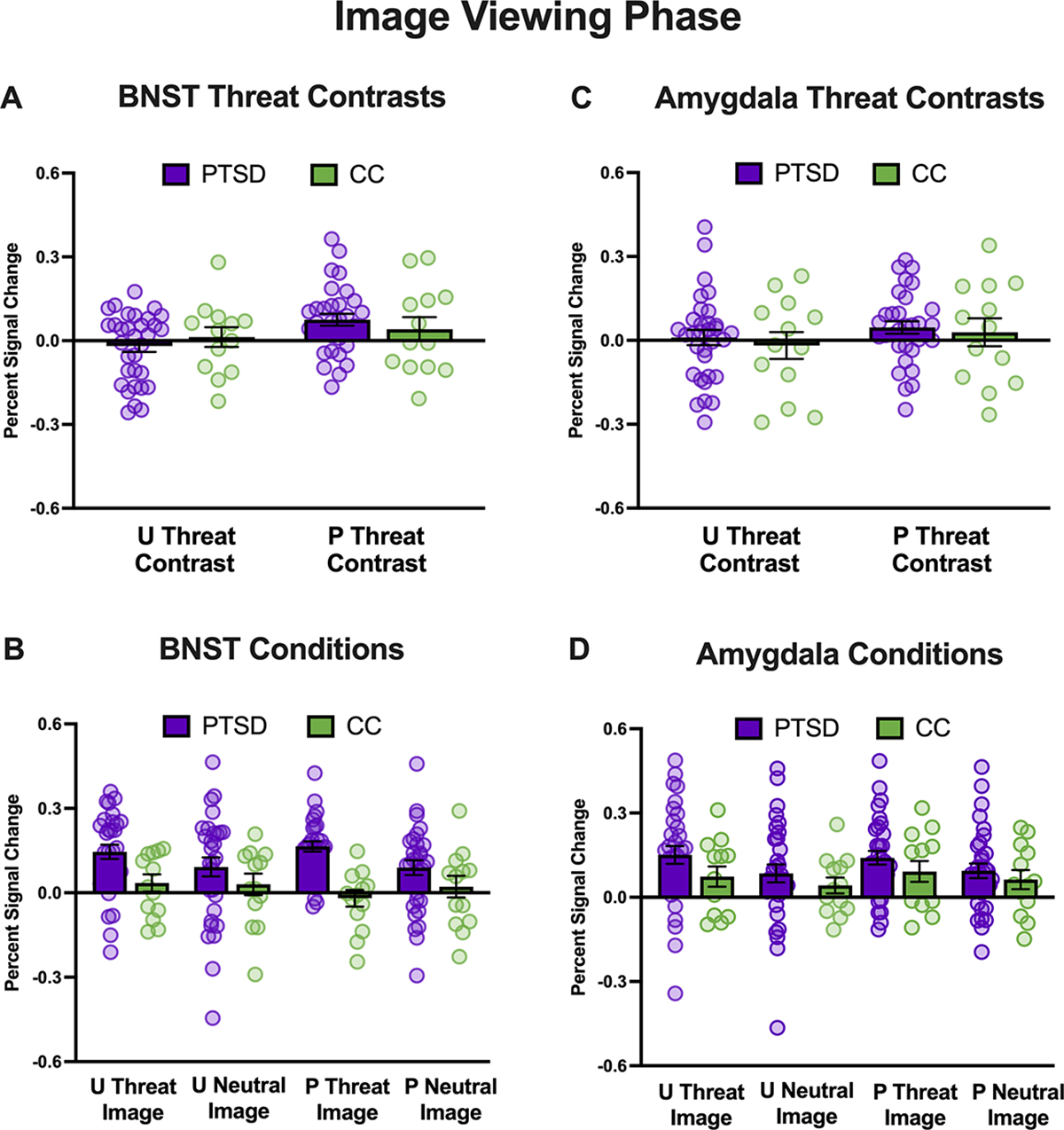
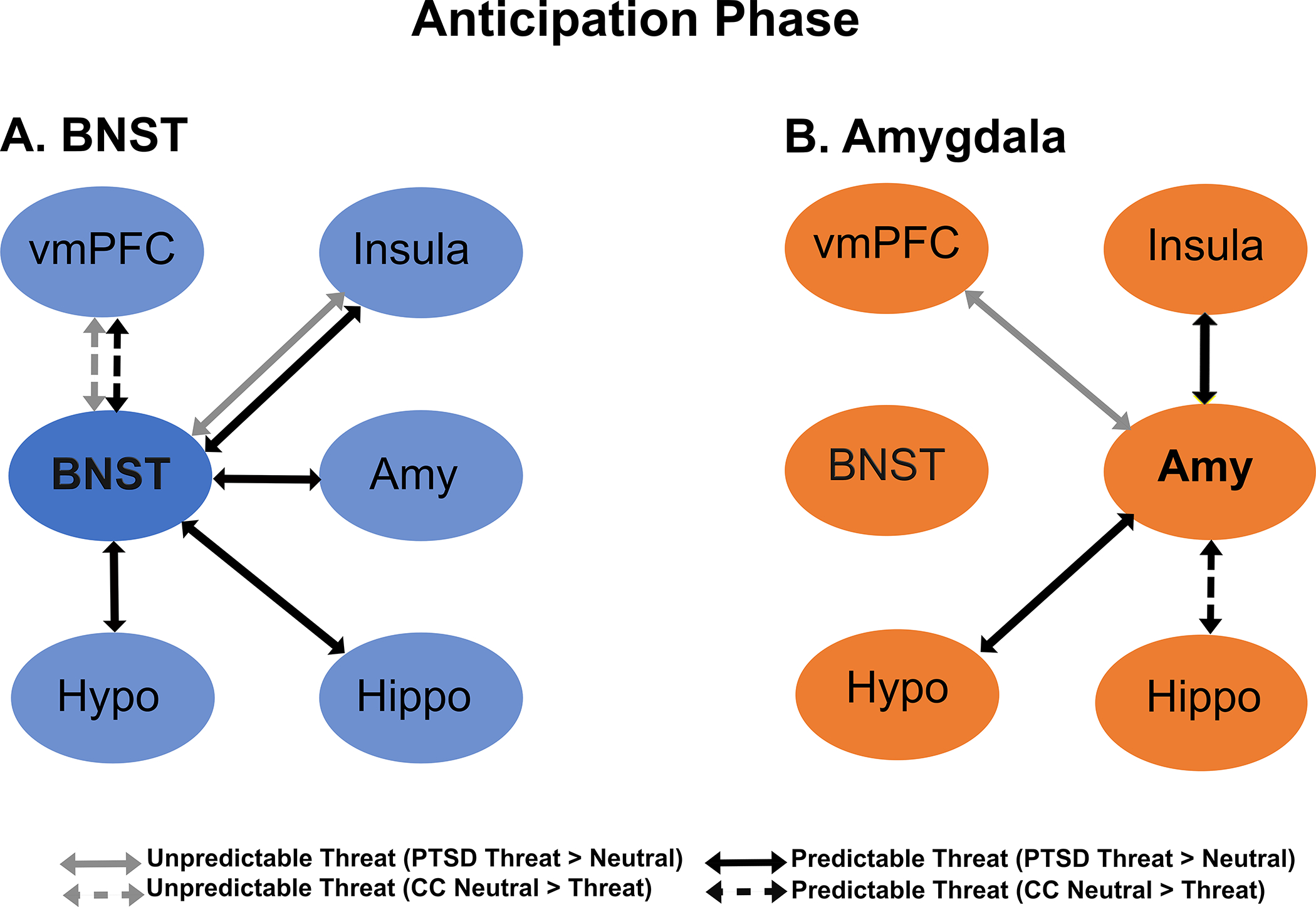
Posttraumatic stress disorder (PTSD) significantly impacts many veterans. Although PTSD has been linked to alterations in the fear brain network, the disorder likely involves alterations in both the fear and anxiety networks. Fear involves responses to imminent, predictable threat and is driven by the amygdala, whereas anxiety involves responses to potential, unpredictable threat and engages the bed nucleus of the stria terminalis (BNST). The BNST has been implicated in PTSD, but the role of the BNST in combat veterans with PTSD has yet to be examined. Identifying alterations in BNST responses to unpredictable threat could provide important new targets for treatment. The current study examined whether veterans with PTSD have altered BNST or amygdala responses (function and connectivity) to unpredictable and predictable threat. The fMRI task involved viewing predictable threat cues followed by threat images, predictable neutral cues followed by neutral images, and unpredictable threat cues followed by either a threat or neutral image. Participants included 32 combat-exposed veterans with PTSD and 13 combat-exposed controls without PTSD. Across all conditions, veterans with PTSD had heightened BNST activation and displayed stronger BNST and amygdala connectivity with multiple fear and anxiety regions (hypothalamus, hippocampus, insula, ventromedial prefrontal cortex) relative to controls. In contrast, combat controls showed a pattern of stronger connectivity during neutral conditions (e.g., BNST-vmPFC), which may suggest a neural signature of resilience to developing PTSD, η = .087-.527, ps < .001. These findings have implications for understanding fear and anxiety networks that may contribute to the development and maintenance of PTSD.
创伤后应激障碍(PTSD)显著影响许多退伍军人。尽管 PTSD 与恐惧大脑网络的改变有关,但该疾病可能涉及恐惧和焦虑网络的改变。恐惧涉及对即将发生的、可预测的威胁的反应,由杏仁核驱动,而焦虑涉及对潜在的、不可预测的威胁的反应,并涉及终纹床核(BNST)。BNST 已被牵连到 PTSD 中,但 BNST 在 PTSD 退伍军人中的作用尚未被研究。确定 BNST 对不可预测威胁的反应改变可能为治疗提供重要的新靶点。本研究探讨了 PTSD 退伍军人是否存在 BNST 或杏仁核对不可预测和可预测威胁的反应(功能和连接)改变。fMRI 任务包括观看可预测的威胁线索,然后是威胁图像,可预测的中性线索,然后是中性图像,以及不可预测的威胁线索,然后是威胁或中性图像。参与者包括 32 名 PTSD 暴露的退伍军人和 13 名无 PTSD 的 PTSD 暴露对照。在所有条件下,与对照组相比,PTSD 退伍军人的 BNST 激活增强,BNST 和杏仁核与多个恐惧和焦虑区域(下丘脑、海马体、岛叶、腹内侧前额叶皮层)的连接增强。相比之下,战斗对照组在中性条件下表现出更强的连接模式(例如,BNST-vmPFC),这可能表明对 PTSD 发展具有弹性的神经特征,η=0.087-0.527,p<0.001。这些发现对理解可能导致 PTSD 发展和维持的恐惧和焦虑网络具有重要意义。